

Śšipūtu: Rituals of protection and exorcism in Mesopotamia

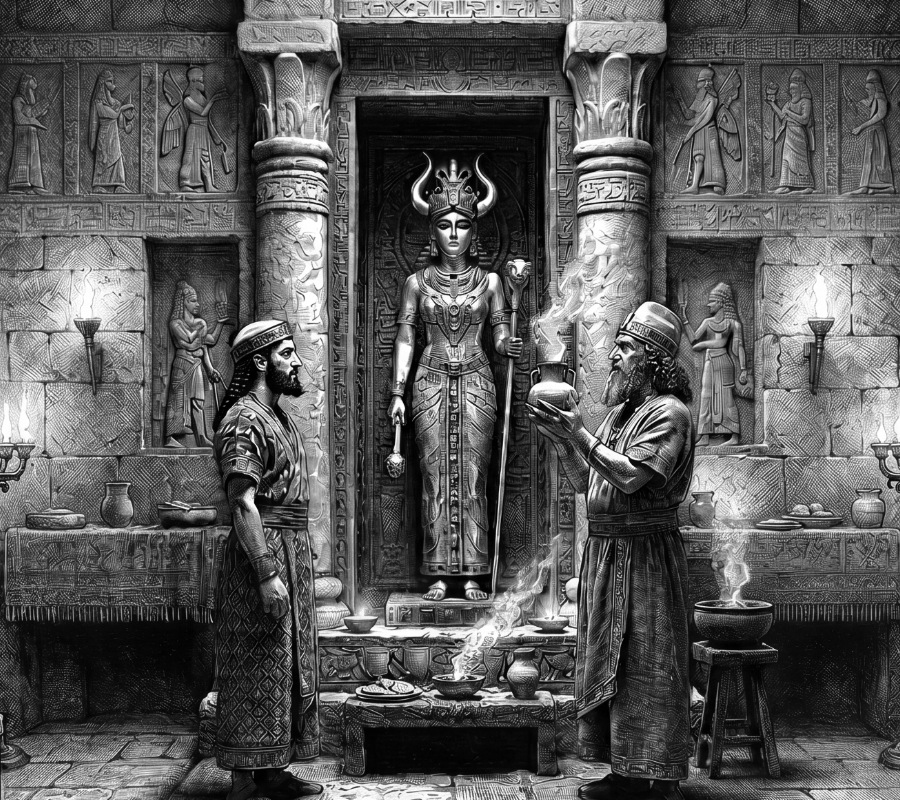
The exorcist arrived before dawn. He brought in one hand a censary with a juniper on, on the other hand a vessel of water in which precious stones and cedar branches had slept all night. A inhabitant of the house he came to had been sick for weeks. He had stepped on the wrong place without knowing, perhaps without wanting the words that should not be said, crossing his eyes with an animal whose appearance on the threshold was, in itself, a message. The man who came to help him was not exactly a priest or a doctor: he was the āšipu, the specialist who knew how to read the invisible and unleash it. And then maybe like that magician of fantastic stories, he spread the flour circle around the bed. He spoke first in Sumerian, then in Acadius. The gods, they understood both languages.

Why your world needed exorcists

In the previous articles of this series we have been through the aromas of war, the perfumes of childbirth, the fragrances that accompanied the king and the dead. In all these routes, one element appeared persistently: the mesopotamic conviction that the world was densely inhabited by forces that humans could attract, offend, misinterpret and, with the right knowledge, negotiate.

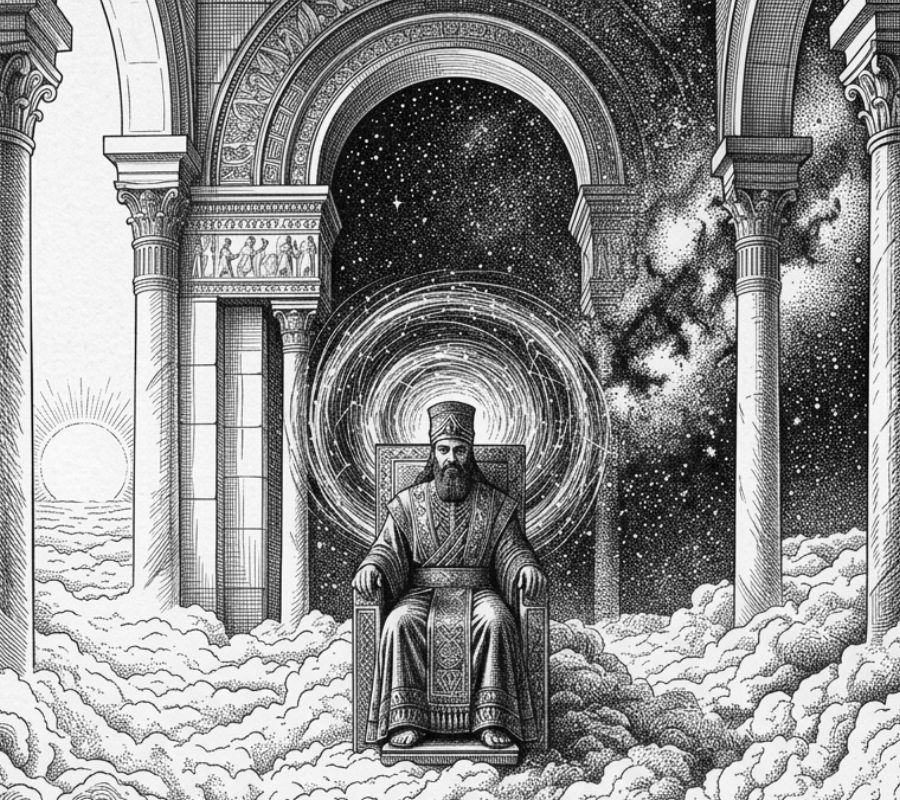
For the inhabitants of Mesopotamia, reality was a text. Everything —the movement of the planets, the flight of a bird on the roof, the shape of the liver of a sacrificed lamb, the appearance of a cat that was mailling without stopping on the ladder— It was information. The gods "wrote" their decisions in nature (the term "acadio" is šaņāru, "inscribing"), and the specialists trained to read them existed precisely for that: to translate that text into the language of human action. When the message was unfavourable, not to stand by was a religious and practical obligation.

This cosmovence explains the existence of the corpus that we are dealing with today: the āšipūtu, literally "the knowledge of the exorcist." This is the set of ritual texts composed and executed by the specialists known as āšipu (also called mašmašu), whose first documented incantations date from around 2500 BC —pre-sargonic period— and whose tradition remained alive until the Seleucide periods and childbirth, that is, until approximately 50 A.D. More than two thousand five hundred years of continuous practice.

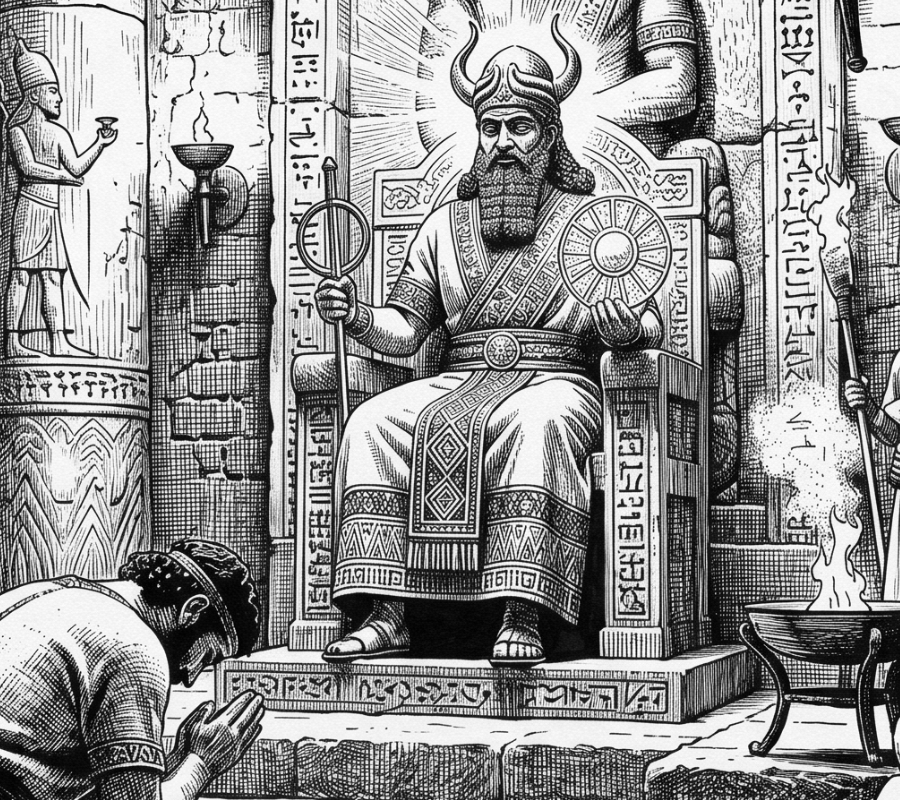
The āšipu occupied a privileged position in the royal court and in the hierarchy of the temple. Its function was multiple: to expel evil in its different forms —demons, spells, angry ghosts, divine curses—, purify the patient and establish lasting protection. The great gods of his trade were Enki-Ea (the god of wisdom and exorcism), Asallu‐ i-Marduk (the divine exorcist par excellence) and Utu-Šamaš (the solar god, judge of the cosmos). The entire architecture of the mesopotamic universe was involved in its rituals: the starry sky, the underground ocean (apsù), the river, the fire, and the supernatural guardians known as apkallu.

Why so many rituals? The answer is in fear, uncertainty and the very structure of mesopotamic thought. In an environment of unpredictable floods, droughts, epidemics and war conflicts, ritual was the available method of managing risk: it gave language to misfortune, grammar to response, and —something that modern scholars increasingly emphasize— real psychological relief to the people who went through it. The researcher Stefan Maul described the namburbù rituals as Zukunftsbewältigung's techniques: "management of the future." The expression can be applied to the whole of the āšipūtu.

A fact that should be kept in mind before entering the specific rituals: the āšipu was a professional with rigorous technical training. There was a curriculum, the so-called "Manual of Exorcist" (KAR 44), which specified which texts should be known and in which order. His interventions combined what we would now separate in different fields: diagnosis (through signs and presagies), theological interpretation (to identify what divine or demoniac force he acted), and ritual execution (to proceed according to the canonical texts). The doctor (asù) and the exorcist (āšipu) often collaborated in the treatment of the same patient.

The following are the nine main rituals of the corpus āšipūtu. Each has its own logic, materials, protagonists and aromas.
What was it? The name says almost everything: in Sumerian, NAM.BURIBI means "undo it," that is, to nullify the evil that an omen has announced. The corpus namburbù included more than 100 individual rituals, critically studied by Stefan Maul in his monumental work Zukunftsbewältigung (1994). Each ritual responded to a specific type of unfavorable omen: lunar eclipses, the appearance of certain animals in the house, weather phenomena, ghost cries, or a dog peed on someone.

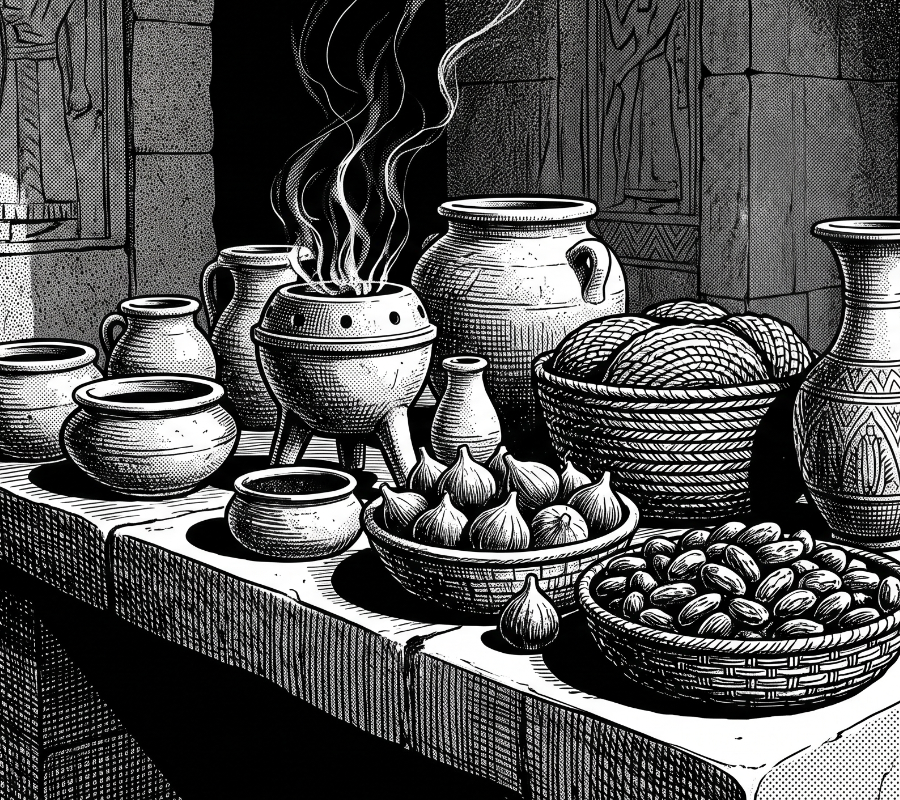
How did it work? Namburbù was a legal and religious act. The patient did not passively accept the divine decree: he appealed it. He stood before the divine court —with Šamaš as supreme judge— and argued that the punishment announced was disproportionate or deserved mercy. The canonical sequence had six steps: preparation of sacred water (mê ellūti) with precious stones, metals and purifying plants; purification of space by sweep and sprinkler; installation of a table of offerings with bread, meat, dates, incense, water and beer; recitation of prayers to the divine court; transfer of evil to an object or animal that would "carry it"; and definitive elimination of that carrier, usually throwing it into the river to be "dragged into the apsù" (primordial sweet waters under the earth).

Who took part? The āšipu led the process. The patient was actively involved: he recited formulas before Šamaš and executed the prescribed gestures. The complexity of the ritual varied according to the economic and social status of the client.

Space and time: The canonical stage was the bank of a river. It could also be done on the roof (ūru) or in open field. The ritual space was defined with a circle of flour (zisurrù). The ideal moment was a "propitious day" (ūmu magru), preferably immediately after observing the omen, because the effectiveness of the ritual depended on intervening before the evil took tangible form.

Plants and aromas: The censary with juniper (burāšu) was practically inseparable from this ritual: its resinous smoke "reached the gods" and purified space. Lebanese cedar branches (erīnu) were also involved in the sacred water, Tamarisco (bīnu) for rods and ritual figurines, and the purifying plant maštakal. Beer and bread offerings could add fermented and roasted notes to the ceremony environment.

What was it? Maqlû means "burning" in acadio. The ritual was the most extensive of all the anti-mesopotamic witchcraft corpus: about a hundred incantations distributed on nine cuneiform tablets. Its canonical composition dates from the second late millennium in Babylon. More than 100 tablets and fragments have been found in the royal libraries of Nineveh, in the library of the exorcist Kišir-Aššur (Assur), and in Iqīšâ (Uruk). The final critical edition is that of Tzvi Abusch (The Magic Ceremony Maqlû, Brill, 2016).

How did it work? The Maqlù conceptualized sorcery as a perverted legal process: the witch had unjustly "slandered" the patient before the gods, causing his illness. The ritual reversed that verdict: the patient was acquitted; the witch received the fate she had set for her victim.

The ceremony was divided into three major sequences. The first, during the night: the exorcist drew a magical circle of flour around a ritual crucible and burned in it figurines of the sorcerer and the witch made of clay, sebo, wax, asphalt, tamarisk or cedar. The clay was broken, the fat melted into contact with fire, symbolically enunciating the destruction of the enemy. The second, in the morning: the destructive rites gave way to the purifiers. The exorcist smoked the house and massaged the patient with oils. The third, at dawn: the ritual culminated with the patient contemplating his own reflection in a pot of pure water under the first light of the sun —rebirth symbol.

Who took part? The āšipu was the main operator. The patient was involved with specific gestures: hand washing, recitation of formulas. The incantations of the Maqlû include different "voices": the patient speaks in the first person against the witch, the exorcist acts as an intermediary, and the gods are summoned as judges.

Space and time It developed mainly on the outside or in the courtyard of the patient's house, under the starry night sky —Celestial visibility was essential because the first incantations invoked the "gods of the night" (the stars). It began after sunset and extended for approximately twelve hours, until dawn. The new moon was the preferred astral moment.

Plants and aromas The smell was a fundamental sensory axis in the Maqlù. Rhinestone (burāšu) and cedar (erīnu), burning sulphur —of acre odour, associated with purification—, burning myrtus (asu, Myrtus communis) of balsamic aroma, and kukru —an aromatic identification plant still under discussion, possibly Inula helenium or Acorus calamus— with his spicy and resinous note. The oil applied in the night massage added perfumed vegetable fragrances.

What was it? Šurpu also means "burning" in acadium, but its object was not an external enemy but the patient's own transgressions. With more than a thousand lines on nine tablets, it is the longest mesopotamic composition dedicated to appeasing divine anger. Probably in the Middle Babylonian period (ca. 1350-1050 BC) from much older incantations, texts are preserved in virtually all the great literary sites of Mesopotamia: Nineveh, Assur, Babylon, Kish, Nippur, Sultanze, Sippar, Ur and Uruk.

How did it work? The Šurpu was based on a premise: every disease or misfortune was the result of a real or accidental transgression that had offended the gods. The patient was under a māmītu —a curse by broken oath or taboo violation— Even though I didn't know exactly what I had done. The list of possible transgressions was extensive and detailed: adultery, theft, perjury, arrogance towards the gods, contact with cursed people, transgression of food taboos, insolence with parents. The aim of reciting them all was to identify the cause before the gods, even if the patient did not remember it.

The central act was analog magic: the patient peeled a garlic, bowed a branch of dates, untied a stick of cane, unleashed a knot of flax or red wool, and threw every object into the fire. With each action, the exorcist recited: "As this onion is peeled, let my evil be peeled today; let the fuego--God, the burner, consume it today." The guilt was transferred to the objects and burned with them.

Who took part? The āšipu led and recited the incantations. The patient performed the physical acts of burning, peeling and throwing objects, and recited the formulas of absolution. The ritual is, of all the corpus, the most directly "moral": it links disease with ethical responsibility and recovery with the recognition of that responsibility.

Space and time Šurpu could be performed inside the patient's home or in a purified outer space. Unlike the Maqlù, it did not require an exclusively night stage. It was executed when the āšipu diagnosed the presence of māmītu, choosing good days from the liturgical calendar.

Plants and aromas The aromatic profile of the Šurpù was the most domestic of the corpus: burnt garlic and onion (sulfurated notes, acres, spicy), roasted cane (dry vegetable aroma), juniper smoke (resinous, fresh), and rough note of flax and burning wool. A mixture that would be strange today, but that for its participants was the smell of sin that was gone.

What was it? The term Sumerian uš.bur.ru.da can be translated as "dissolving witchcraft." The Ušburruda was an anti-witchcraft ritual in which the sorcerers were "handed over" to the underworld, entrusted to the barber of the dead "umuğ -tabal" ("Take him fast!") so that he would have them there forever. The Corpus de Rituals Anti- sorceria de Mesopotamia (CMawR) classifies these texts as "Group 7." His most important testimonies are the Oracc paleobabilonic tablet and the late BM 47806 + tablet, edited by Schwemer in Iraq 72 (2010).

How did it work? The ritual combined burning and burial of sorcerer figurines. The exorcist made figurines representing the sorcerer and the witch in clay on both sides of the river, sebo, wax, tamarisk or cedar. He cursed them by invoking the solar god Šamaš, and requested that, on his night trip to the underworld, he give these figures —and the beings they represented— the guardian of the world of the dead. The burned figurines ascended to heaven as smoke (celestial destruction); the buried ones descended to the underworld (eternal prison).

The logic was strong: the underworld (erħetu) was a prison without return. What was sent there could never come back to do harm.

Who took part? The āšipu as the main performer; the patient as a beneficiary who could recite some formulas. Šamaš acted as a divine intermediary who carried the sentence to the underworld during his night journey.

Space and time The burial of the figurines was carried out in open field (Đēru) or in the steppe outside the limits of the settlement, in a place that symbolized the border between the world of the living and the rule of the dead. The burning could be done in the courtyard of the house or in the open air. The time was night, synchronized with the journey of Šamaš to the underworld —some texts specify "when Šamaš is deep," that is, midnight or the hours before dawn.

Plants and aromas The predominant smell was the juniper smoke on the incensary, combined with the excavated ground smell of the ritual hole and the resinous aromas of the cedar and the burning tamarisk.

What was it? The name Sumerian zi.ku ¥.ru.da means "throat cut." The Zikurudù designated one of the most feared forms of mesopotamic witchcraft —an aggressive magic directly intended to cause the patient's death—, and the anti-Zikurudù ritual was the canonical response. The corresponding texts are classified in the "Group 10" of the CMawR and appear along with other types of serious witchcraft such as Kadabbedù and zīru.

How did it work? The exorcist swept the ground, sprayed pure water and erected a shack of rods (bītu ša qanê) before the constellation of Ursa Major, the Big Bear —a focal point of astral power in the mesopotamic sky. In front of this cabin was a standard decorated with red wool and blue wool, and a portable altar (paššūru) on which dates and fine flour were spread. The incantation was recited three times, calling on the astral deities to annul the witchcraft. The astral orientation was decisive: constellations served as a channel of communication with the forces that could reverse the most lethal magic.

Who took part? The āšipu as the main operator. The patient as a recipient of the release. The astral deities —in particular the stars of Ursa Major— were the divine witnesses and executors of the verdict.

Space and time Outdoor, under the night sky, with direct visibility of the constellation of Ursa Major. The ritual corresponds to the periods of maximum visibility of this constellation on the mesopotamic horizon.

Plants and aromas The offerings on the altar included dates and flour: their sweet and roasted aromas were floating in the open night. In the parallel rituals of the CMawR the juniper appears as standard incense. Given the night and exterior character of the ceremony, the olfactory environment was essentially that of the mesopotamic night: wet earth, fresh cane, and the breeze of the river.

What was it? Ka.dab.bé.da in Sumerian: "holding of the mouth." Kadabbedù was a form of witchcraft that left the patient unable to defend himself before judges and superiors. —and that in its most severe forms it was manifested as real disorders of speech and thought. In Mesopotamia, the ability to speak and appear before judges was the basis for a person's social and legal existence. To lose that capacity was to be "tied" or "gagged" in the cosmic-social order. The rituals against Kadabbedû are part of the CMawR Group 10.

How did it work? The operating principle was the reversion: "The witchcraft of mouth-holding that you have practiced against me... I practice against you." The ritual included the burning of figurines, recitation of specific incantations that "open the mouth" of the patient, and the application of medicinal-magical ointment to the oral and pharyngeal region. In some cases the doctor (asù) worked with the exorcist by providing herbal preparations for physical speech disorders. The adversary's figurine was made with his right hand covering his own mouth and the left covering the anus, sealed with šubù stone and lapislazuli, and buried or crushed with the heel.

Who took part? The āšipu as a specialist; the doctor (asù) in cases with specific physical symptoms. The patient performed some ritual gestures.

Space and time In the patient's home space or in the house yard. The diagnosis was established by observing that the patient had difficulty speaking, expressing or defending himself in legal processes.

Plants and aromas Cypress oil (šamnu ša šurmēni) —resinous, fresh, balsamic aroma— used in ointment to restore power and facundia. Kukru smoke on carbon (spicy, resinous). Tamarisco (bīnu) in complementary formulations. The combination resulted in an aromatic profile dominated by fresh resins and dry spices.

What was it? Zīru means "hate" in acadio. This form of witchcraft transformed the patient into an object of hostility.

and widespread social isolation: the sorcerer sought to be detested, rejected and removed from the victim by all those around the victim. It was the direct investment of rāmu (love, magic of attraction). In the mesopotamic cosmovence, the network of social relations —family, community, employers, personal gods— It was the fundamental sustenance of existence. The zīru broke that network leaving the individual unprotected. The anti-zīru rituals are frequently listed with other forms of witchcraft in the great incantations of the Maqlù.

How did it work? The anti-zīru rituals followed the general anti-witchcraft pattern: retaliatory invocation, burning of the sorcerer figurines, purification of the patient with water and fumigations, and application of aromatic oils to restore the social charism and favor of the gods. The central formula after anointing with oils was recited three times by the patient: "I am favored, I am favored!." Then the appeal to the deities: "I am favored before Utu, I am favored before Anu... that the God may unbind my heart!"

Who took part? The āšipu; in complementary treatments also the doctor when the symptoms had associated physical manifestations.

Space and time Purified home or outside space. The texts mention preference for new moon nights.

Plants and aromas Aromatic oils with "attraction" properties —the opposite of the zīru—, juniper (burāšu) in purifying fumigation, and kukru with atāňišu on coal: their ashes were poured seven times in water, which was then sprayed throughout the house. The aromatic profile was that of the general anti-sorcery corpus: resinous notes of juniper, dried spices of kukru, and vegetable oils with sweet and balsamic aromas.

What was it? É.gal.ku ¥.ra in Sumerian: "enter the palace." It was a category of rituals designed to help an individual win legal cases, succeed before the authorities and be well received by the king or the nobles. Unlike other rituals of the corpus, the Egal-kura had a strong component of what we would today call behavioral psychology: its object was not a demon or a sorcerer, but the self-fear and hostility of the social environment.

How did it work? The logic of the ritual rested on magic by analogy and in language games. The most documented procedure prescribed rubbing animal uteros (rēmu) on the patient's face: in acadio, rēmu means both "uterus" and "mercy." The act symbolized attracting the leniency of the authorities to the individual. The magnetite (šadânu Śābitu), with its physical property of attraction, was used to "attract" the favor of gods and powerful. Collars with seven specific stones were made —carnelian, silver, gold— intended to serve as "divine intercessors" in the face of the stress of facing a superior.

Who took part? The āšipu and the patient, who was to carry out the acts of anointing and recitation. The ritual led the patient to "become brave and strong" in situations of high anxiety as a legal process.

Space and time In the patient's home space, before an appearance before the king, a court, or a senior official.

Plants and aromas The sources document composite oils that included cypress, cedar, myrrh and sweet cane. Wheat and barley flour spread in protective circles. The result was a rich aromatic profile: wood, eastern resins and warm myrrh notes, all oriented —at least in ritual intent— that the patient's body emanated a favourable fragrance, attractive to the divine and human powers.

What were they? Bīt mēseri means "House of Confinement" or "House of Enclose" in acadio. It was a ritual preserved on four cuneiform tablets intended to protect a house against the attack of demons when one of its inhabitants had been ill. The oldest specimens are neo-Assyrian, from the Assurbanipal library, but there is also a late-Babylonian recension (IV-III BC centuries) copied in Uruk. The text is listed in the Exorcist Manual as part of the compulsory curriculum of the āšipu.

Šēp lemutti (literally: "blocking the foot of evil in a man's house") was the preventive complementary text: the Bīt mēseri was executed when the disease had already broken out; the Šēp lemutti established the barriers before that happened. Together they constituted the complete system of domestic security in the mesopotamic conception of the world.

How did they work? The ritual was extended for five days, according to the analysis of F.A.M. Wiggermann in his work Mesopotamian Protective Spirits: The Ritual Texts (1992). The first two days the exorcist went to the forest to prepare cornwood for the first group of statues, returned to the city and carved a set of seven apkallu figures —the half-life former sages, guardians of the cosmic order. On the third day, the exorcist visited the clay well, bought ritual clay and made 17 groups of additional figurines. On the night of the third day, the statues were taken to the bank of the river and purified. On the fourth day, they moved to the threatened house, offered to deity groups at night. On the fifth day, at dawn, the house was swept away, the waste thrown into the river was recited the incantation "Go out, evil!" and the statues were buried in their canonical positions: at the head of the bed, at the foundations, at the threshold of the domestic chapel, at the door and at the center of the main room.

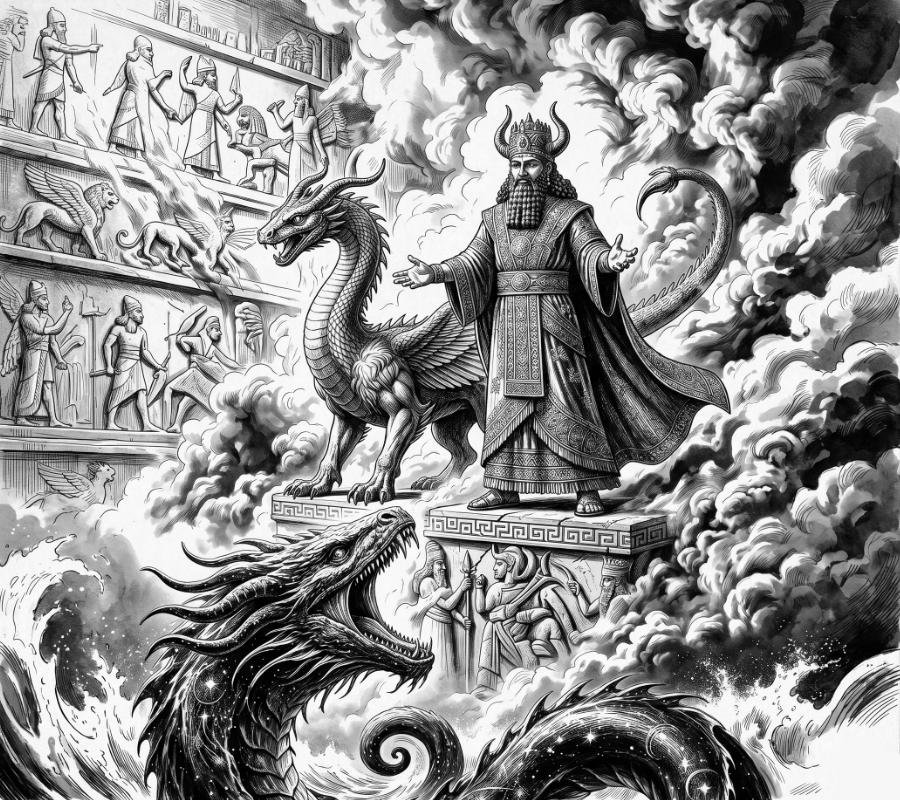
The statues transformed the physical structure of the house into a space protected by permanent supernatural guardians. The Aššur version added a rite with Pazuzu —the devil-king of the south-west wind, adversary of the demonic Lamastu—as well as application of ointment and burning of multiple incense.

Who took part? The āšipu as technical director of the entire process. He could have assistants for the size and manufacture of the statues. The head of the family (bēl bīti) was the beneficiary and participated in the night offerings.

Space and time The ritual began in the forest, continued in the clay well and on the river bank, and was completed inside the threatened house. According to the Neo-Assyrian text, it was carried out regularly in the months of Tašrītu (septibre- October) and Arağ samna (octubre- November). It was also called as a matter of urgency when someone in the house fell ill with symptoms of demonic origin.

Plants and aromas The rite of Aššur explicitly documents multiple incense burning —including the juniper— along with aromatic ointment. The fresh wood of tamarisk and newly carved cornejo in the forest added vegetable notes in the first days. The censary with juniper accompanied the offerings to Šamaš. The tamarisk (bīnu) performed a purifying function in both statues and in sacred water; the cornejo (eħlu) was the defensive wood par excellence, associated with the apotropaic warrior force.

  1. Abusch, Tzvi, and Daniel Schwemer. "The Chicago Maqlù Fragment (A 7876)." Iraq 71 (2009): 53-87.
  2. Maul, Stefan M. "Namburbi." In Reallexikon der Assyriologie und Vorderasiatischen Archäologie, edited by D.O. Edzard, vol. 9. Berlin: De Gruyter, 1998.
  3. Schwemer, Daniel. "Bīt mēseri at Aššur." In Sources of Evil: Studies in Mesopotamian Exorcistic Lore, edited by Greta Van Buylaere et al. Leiden: Brill, 2018.
  4. Schwemer, Daniel. "Entering the Witches to ∞ umuğ -tabal: The Ušburruda Ritual BM 47806 +." Iraq 72 (2010): 63-78.
  5. Schwemer, Daniel. "Magic Rituals: Conceptualization and Performance." In The Oxford Handbook of Cuneiform Culture, edited by Karen Radner and Eleanor Robson, 418-442. Oxford: Oxford University Press, 2011.
  6. Schwemer, Daniel. "The Ancient Near East." In The Cambridge History of Magic and Witchcraft in the West: From Antiquity to the Present, edited by David J. Collins, S.J., 17-51. Cambridge: Cambridge University Press, 2015.
  7. Simons, Frank. "Burn Your Troubles Away: The Magic Ceremony Šurpu." REPAC (ERC Grant no. 803060). Vienna, 2020. https: / / doi.org / 10.25365 / phaidra.229.
  8. Geller, Markham J. "The Exorcist's Manual (KAR 44)." In Assyrian and Babylonian Scholarly Text Catalogues: Medicine, Magic and Divination, edited by Ulrike Steinert, 292-312. Boston; Berlin: De Gruyter, 2018.
  9. Howe, Adam. "Mesopotamian Exorcistic Texts." Database of Religious History, University of British Columbia, 2022. https: / / religiiondatabase.org / browse / 1484.
  10. Corpus of Mesopotamian Anti- witchcraft Rituals Online (CMawRo). Würzburg University. Access 2026. https: / / www.phil.uni-wuerzburg.de / cmawro /.
  11. Cuneiform Comments Project (CPC). Yale University. Access 2026. https: / / ccp.yale.edu.
  12. Open Richly Annotated Cuneiform Corpus (Oracc). University of Pennsylvania Museum. Access 2026. https: / / oracc.museum.upenn.edu / cmawro /.

The literature and additional research, explanation, didactics and study materials are provided only to Myrodia Khartes subscribers.

Bee wax (fused or partially burned)
Chemical sign: Bee wax is a complex mixture of esters, fatty acids and long-chain hydrocarbons. Its distinctive chemical signal comes from: Long chain reach (mainly Heneicosan C-H-and Tricosan C-H-H-), which provide a fat and cherry background. Phenylacetaldehyde (C-H-O) and 2-phenylethanol (C-H-O-O): aromatic compounds that evoke sweet notes, honey, flowers and propolis (originating from essential oils of flowers visited by bees). Octanoic acid (C-H) and decanoic acid (C-H-H-O): medium-chain fatty acids, which, when heated, provide a fatty, slightly acid and sweaty nuance, very different from the dry and sulphide smell of proteins or the terrous of soil microbes.

Lana (Ovino)
Chemical sign: Isovaleric acid - smell of sweat, sheep, rancid. Scatol - fecal / dirty smell in low concentration. Lanoline (low volatile, but when heated it releases short chain fatty acids: butyric acid, caproic acid). In combustion (palingenesia): thiophenols and sulphides (smell of horn / protein burning).

Blood
Chemical sign: is a complex profile where compounds of lipid origin predominate, the most characteristic being the trans-4,5-epoxy (E) -2-10 (also known as E2D) and 1-octen-3-one. E2D, an aldehyde that is formed by oxidation of blood fats when exposed to air, is the main responsible for its metallic and distinctive smell. This compound is so characteristic that it is extremely attractive to carnivores. The 1-octen-3-one has a metallic and fungal aroma, and its detection threshold is extremely low.

Sebo (animal fat heated or in combustion)
Chemical sign: When the fat is subjected to heat (triglyceride pyrolysis), short chain volatile compounds and unsaturated aldehydes are released: Acroliin (propanal, C-H-O): unsaturated aldehyde of acre, irritating and greasy odour. Butyric acid (C-H-O-O-C): a short-chain volatile fatty acid with the smell of rancid, vomiting and cheese. Hexanal (C-H): aldehyde that provides green notes, to cut grass and oxidized fat, together with alkanes and ketones derived from lipid oxidation.

Visas
Chemical sign: the animal viscers (heart, liver, lung, rumen and intestine) is even more complex and variable, as each organ has a distinctive chemical profile defined by a specific mixture of volatile compounds. For example, in the bovine heart, the compounds responsible for their characteristic odour are mainly aldehyde such as E, E-2,4-nonadienal, hexanal and (E) -2-octenal.. In the liver, 1-nonanol, ethyl hexanoate and 2-octanone stand out, while in the rumen are the heptaldehyde, octanal and p-cresol. In the intestine, 1-octen-3-ol and E-2-nonrenal are the main contributors to its smell.. In all cases, the aromatic profile of the viscers is the result of a complex interaction of aldehydes, ketones and alcohols, many of them generated by the oxidation of lipids and, in decomposition states, by the bacterial action that produces amines such as cadaverine and putrescin.

Sugar
Chemical sign: Sulphur dioxide (SO) - Acre smell, spicy, with a burning match. Hydrogen sulphide (H-S) - smell of rotten egg (if there are traces of moisture or reduction). Carbon disulphide (CS) - to a lesser extent, the smell of pure hot sulphur. Tyols (methanothiol, ethanothiol) - generated by heat impurities. Mineral sulphur cold It has very little smell; its olfactory signal appears strong by combustion or friction.

Betun / natural asphalt
Chemical sign: Naphthalene, phenantrene, aliphatic hydrocarbons, tyophenes.

Earth (wet or excavated)
Chemical sign: The ground smell is produced by metabolites of soil actinobacteria. Its distinctive compounds are: Geosmine (dimethyl-9-decalol, a seschitterpenic alcohol C-H-h- O): ulworking detection threshold (5 parts per trillion), responsible for the smell of wet ground and beet. 2-methylisoborneol (C): a terpenic alcohol that accompanies the geosmine and strengthens the earthly and moisture note.
Baked bread
is a complex mixture of more than 540 volatile compounds, resulting from fermentation and, above all, from baking.
The Soul of the Cortex: Pyrazins: Pyrazins are the heart of the aroma of bread. These molecules, formed during Maillard's reaction, are the ones that bring the coveted notes to toasted, walnut and "burned" such characteristics of the bark. For example, 2-ethyl-3- methylpyrazine and 2-vinylpyrazine are key contributors.
The Aroma to "White Bread": A star molecule is 2-acetyl-1-pyrolin. This compound, which is also generated by the reaction of Maillard, has a very powerful aroma that recalls that of the newly baked white bread or the cracker.
Dulce and Caramel: Furtaneol (4-hydroxy-2,5-dimethylfuran-3-ona) is responsible for sweet and caramel notes, providing a sweet balance to the toasted profile. Complementary nuances: Diacetyl may add a manteous touch; a variety of aldehydes bring fresh, green or fruit notes; and alcohols and esters, from the fermentation of the yeast, complete the aromatic profile
We appreciate your contribution.

Open access sustained by cultural co-responsibility.