

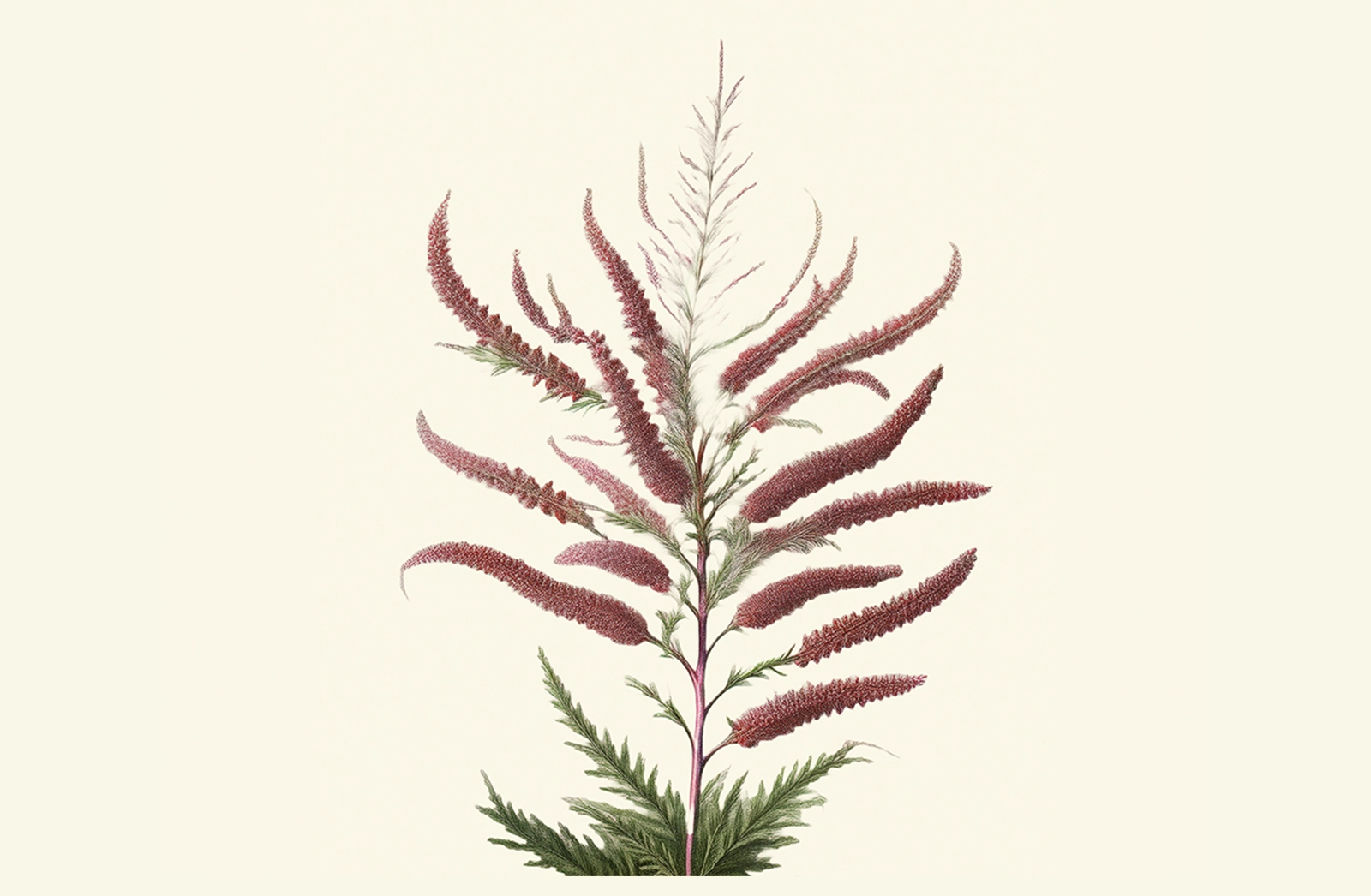
Gender Tamarix It is native to arid and semi-arid areas of Eurasia and Africa, with a diversity centre in the Mediterranean basin and Central Asia. Historically, it has been used to set dunes, as short springs and as ornamental for their high tolerance to salinity. However, some species (such as Tamarix ramosissima) have become aggressive invaders in other regions such as the southwest of the United States, where riparian ecosystems are altered.
- Distribution and Biomas: These are characteristics of arid and semi-arid biomas, such as steppes, deserts and coastal Mediterranean bushes. They typically grow in dry river beds (wadis), saline marshes and coastal dunes, where they are of the few plants capable of tolerating very saline soils and conditions of extreme drought.
- Major Producers: There is no large-scale commercial cultivation. Its "production" is limited to: Mediterranean countries (Spain, Italy, Greece, Israel) and North Africa: where native species are used to control erosion and gardening. In regions like the US and Australia, their "production" is involuntary and a lot of money is spent on programs to control and eradicate invasive species..
Fast source: Royal Botanic Gardens Kew
Species & Culture
Use: Construction / shelter (posts, frameworks, structural delimitation), raw material (wood), fuel
Evidence: In Ohalo II, Israel (~23,000 years BP), carbon wood fragments were identified from Tamarix as one of the main fuels and construction materials. The analyses revealed fragments up to 5 cm in diameter forming oval lines that delimited the floors of the cabins, demonstrating direct structural use. The tamarisk wood was used for both construction (poles and ceiling frames) and fuel. The architectural remains show the oldest cabins ever found with plant species identified for building walls, representing direct evidence of the use of plant resources for shelter by Homo sapiens.
Fast source: Academy
I am text block. Click edit button to change this text. Lorem ipsum pain sit amet, consectetur adipiscang elit. Ut elit tellus, luctus nec ulamcorper mattis, pulvinar dapibus leo.
Steam distillation is the main method used to extract essential oils from Tamarix spp. This process uses water vapour to extract volatile compounds from the dry air parts of the plant. Performance varies by species: T. bovjana produces approximately 0.33% essential oil after 3 hours of distillation using a Kaiser Lang device. The optimal temperature ranges from 100-150 ° C, as temperatures above 175 ° C can degrade some components and produce extracts with burning odour.
Hydrodistillation (Hydrodistillation)
Hydrodistillation is an alternative method using a clevenger-type device. T. ramosissima achieve its highest performance (0.23-0.30%) during the flowering phase, with an extraction process of approximately 4 hours. This method is widely used for species of the genus Tamarix and allows efficient extraction of aromatic compounds.
What Aromatic Molecules contains
Tamarix boveana
The essential oil of T. bovjana has a unique composition dominated by sesquiterpenes (37.9%) and monoterpenes (26.01%). The main compounds include γ-cadinene (9.41%), β-cariophylline (6.71%), lemonene (6.5%), and p-cimeno (6.16%). These molecules confer antioxidant, anti-inflammatory and antimicrobial properties on oil, which explains its pharmacological potential.
Tamarix ramosissima
This species is characterized by a high content of fatty acids and their esters (45.43%), followed by oxygen terpenes (23.06%). Tetrahydrogeranilacetone (21.35%) is the majority component, accompanied by nonane (12.63%) and decanoic acid (9.82%).
Tamarix chinensis
The analysis of T. chinensis revealed 63 constituents representing 81.76% of the total oil. Hexadecanoic acid (22.22%) is the main component, indicating a different chemical profile compared to other species of the genus.
Specific Aromatic Molecules for Perfume
The compounds identified with potential for perfumery include:
- Limonene: Fresh citrus note (present in several species)
- β -Cariophylline: Spicy and weaned aroma
- p-Cimene: Herbal aromatic note
- Terpinen -4-ol: Antimicrobial properties with herbal aroma
- γ-Terpinene: Citrus-spicy note
Fast sources: PubMed
The essential oils of Tamarix spp. are not specifically restricted in the IFRA (International Fragrance Association) standards in force or in Annexes II or III to the EU Cosmetics Regulation (EC) No. 1223 / 2009. This means that they can be used in perfumery following general regulations for essential oils.
General regulatory compliance
For use in cosmetics and perfumery in the EU, essential oils of Tamarix must comply with:
EU Cosmetics Regulation (EC 1223 / 2009)
REACH (Registration, Evaluation, Authorisation and Restriction of Chemicals)
CLP Regulation (EC 1272 / 2008) for classification and labelling
Technical Documentation Required
Suppliers should provide:
Technical data sheet (TDS)
Safety Data Sheet (SDS)
Certificate of Analysis (CoA)
Statement of allergens
Tracability information to source
Responsible supply policies and practices
Declaration of Alérgens
Although no specific allergens were identified in the Tamarix studied, it is mandatory to declare any of the 26 known allergens if they are present above:
0,001% in unclarified products
0,01% in products with clearance
Specific restrictions
No specific IFRA restrictions were found for Tamarix spp., but some individual components such as lemonene are subject to mandatory declaration when they exceed the established limits. The β-cariophylline, present in T. bovjana (6.71%) is not among the restricted allergens in the updated EU list.
Space under construction by collaborators.
The section Technical information and has a general arguative character. It is presented for information purposes to promote responsible knowledge. Because of the risks associated with the incorrect use of botanical extracts, aromatic molecules and the increase in unregulated practices in the production of aromatic products, Myrodia Khartes has chosen not to disclose complete extraction methodologies or specific concentrations that may compromise public safety. Health, ethics and scientific integrity guide our decision to limit the exposure of certain technical data.
- European Commission. (2009). Regulation (EC) No 1223 / 2009 on Cosmetic Products. Official Journal of the European Union, L 342, 59-209.
-
IFRA (International Fragrance Association). (2023). IFRA Standards Library: 52nd Amendment.
- The Good Scens Company. (2025). Fragrance Raw Materials Database

