approx. 300,000 - 50,000 a. C.

The Denisovans

Critical question

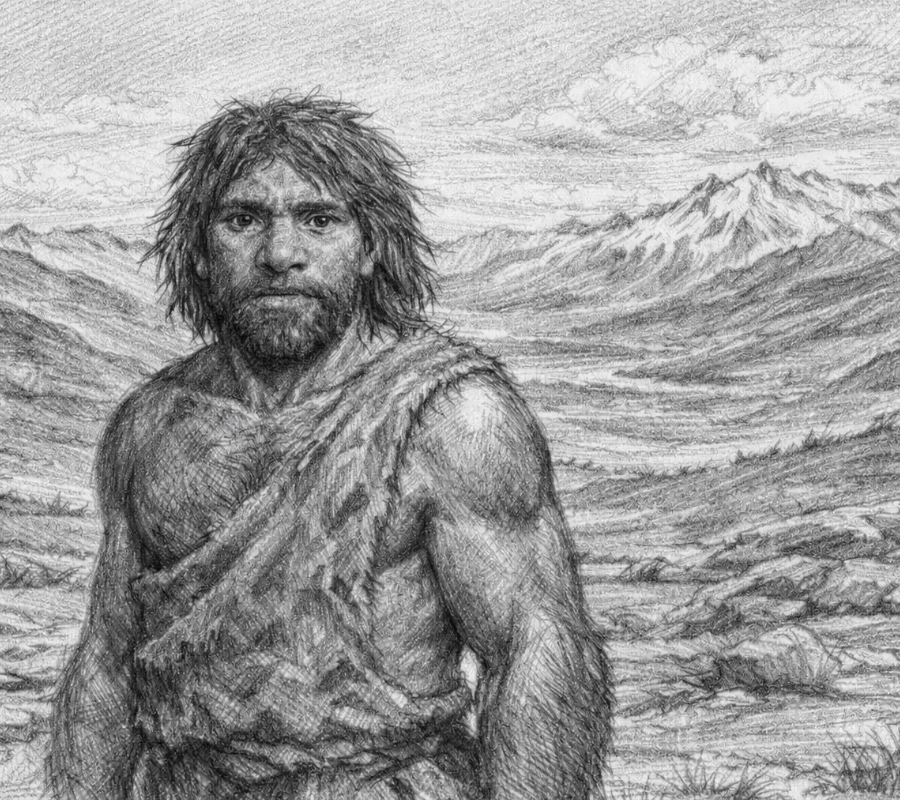
What did a denisovan smell as his lungs were struggling to breathe at 4,000 meters? Four times more intense honey, thermal spring sulfur and the wet leather of its newly hunted prey. His nose became hypersensitive to the sweet and the rotten... maybe not to fail on the roof of the world. Adaptation or addiction to the extreme?

The World in an Aspiration: The Olfate of Denisovan

Nasal Anatomy and Climate Adaptation

Distinctive craniofacial morphology
The denisovans exhibited a unique nasal configuration within the lineage Homo. Harbin's skull, genetically confirmed as denisovan by mitochondrial DNA and proteomal analysis, reveals key anatomical characteristics: a large, bulbous nose, a wide nasal bridge with evidence of nasal bone hypoplasia, and a significantly wider face than both modern and neandertal humans. The facial structure included a large mouth, massively developed superciliary arches, wide and square eye orbits, and a longer dental arc than modern humans.

The skull of Harbin, with a maximum cranial length exceeding any other species of Homo, it housed a brain of approximately 1.420 ml, within the range of modern humans but combined with archaic traits. This configuration suggests an advanced cognitive capacity coupled with specific morphological adaptations.

Respiratory and climatic adaptations
The denisovans inhabited a variety of extreme environments, from the Siberian subarctic to the Tibetan altiplano at altitudes of 2,300-2,700 meters above sea level. This geographical distribution involved adaptations to subarctic and temperate climates with monzonic influence, occupying boreal biomas and seasonal forests.

The nasal morphology, characterized by its amplitude and height, probably facilitated the conditioning of the inhaled air in cold and dry conditions. Although there are no simulations of specific fluid dynamics for denisovans, comparative studies in modern neanderthals and humans show that high and narrow nasal cavities above optimize air warming and humidification in cold climates. The denisovan configuration, with a wide nasal bridge and a prominent nose, suggests a different but functionally convergent adaptive strategy.

The EPAS1 gene, crucial for the regulation of the production of hemoglobin under low oxygenation conditions, was inherited by modern Tibetan populations from denisovans, demonstrating metabolic adaptations at altitude that complemented respiratory anatomical adaptations. -

Metabolic demands and respiratory capacity
The estimated body mass of denisovans, based on the size of the molars and the cranial proportions, suggests robust individuals with high energy requirements. Bence Viola estimates a lean body mass of about 100 kilograms (220 pounds), which would involve daily caloric demands higher than those of modern humans of comparable size, potentially reaching 3,500-4,000 calories daily given adverse weather conditions and the physical activity associated with megafauna hunting.

Genetic and Olfactory Sensitivity

Repertory of olfactory receptors
The denisovans had a repertoire of olfative receptors fundamentally similar to that of modern and neandertal humans, with approximately 30 olfative receptor genes (OR) studied in detail. However, they had nine unique novel variants not found in modern or neandertal humans, of which two were synonymous and seven resulted in amino acid changes that altered the function of the receptor.

The olfactory genetic diversity in denisovans was considerably low: extinct lineage (including denisovans and neanderals) showed only 0.19% nucleotide variants through 17 genes, compared to 0.82% in 30 genes of modern human populations of the 1000 Genomes project. This low diversity, also observed in other denisovan genetic systems, suggests small populations subject to demographic bottlenecks.

Differential olfactory sensitivities
Experimental reconstructions of denisovan olfactory receptors in the laboratory revealed distinctive sensitivity patterns:

Increased sensitivity (versus modern human):

  • Aromas: 4 times more sensitivity
  • Balsamic aromas (vanilla, chocolate): 3 times more sensitivity
  • Sweet honey and aromas: markedly high sensitivity
  • Spicy aromas: greater comparative response

Reduced sensitivity:

  • Floral aromas: less sensitivity than modern humans

These differences reflect specific adaptations of the denisovan olfactory system to its particular ecological niche, optimizing the detection of high caloric food sources while reducing sensitivity to less relevant signals for their survival.

Specific genes with denisovan variants

OR7D4 (androstenone receptor)
The OR7D4 gene, crucial for the detection of steroids such as androstenone (present in sweat and urine), had two variants in the denisovan genome: a shared with modern humans and a novel exclusive of this lineage. The denisovan mutation altered the structure of the receptor but, surprisingly, the functional tests did not show statistically significant differences in the response to androstenone compared to the modern human receptor. This contrasts with neanderthals, whose OR7D4 receptor was functionally identical to that of modern humans.

OR10G3 (vanilla receptors)
The denisovan variants S73G2.52 and E197K5.36 in the OR10G3 receptor provided significantly stronger responses to vaniline and ethyl vaniline compared to modern humans. These compounds, present in various plants and characterized by their dulces- balsamic notes, represent chemical signs of high-energy foods. -

OR10J5 (lyral receptor)
The G21RNter variant in the OR10J5 receptor, located at the N-terminal end before the start of TM1, resulted in a lower response to the lyral odorant (floral-aldehydic aroma) compared to modern humans. -

OR1A1 and OR2C1
These new variants showed doubly intense responses versus human equivalents to aromas perceived by modern humans as spicy, balsamic and unpleasant, but not to floral aromas. -

Loss of function in receptors
Comparative genomic analyses identified eight denisovan olfative receptors with evidence of function loss. Four of these (OR2S2, OR2T8, OR4C12, OR5AC2) had unique function loss mutations to the denisovan lineage, while four additional (OR2L8, OR5M11, OR8I2, OR51Q1) showed meaningless mutations identical to those found in some modern humans. This selective loss of function in specific receptors may reflect relaxation of selection over detection of odorants of little relevance in denisovan environments. -

Molecular sensitivity mechanisms
Functional studies showed that, despite the higher number of new variants in denisovans compared to neandertal, the responses of the denisovan olfative receptors showed a significant correlation (R ² = 0.87) with the human reference responses. This indicates that the differences were of sensitivity (dosis- dependent responses) rather than specificity (repertoire of detectable odorants), confirming a shared olfactory repertoire in the gender Homo with local adaptive specializations.

Quick link: Pubmed

The Enigma of a newly discovered species: Physical and Genetic Evidence

The reconstruction of the Denisovans is a triumph of the paleogenetic. From a few bone fragments, it has been possible to outline the portrait of a sister species of neanderthals, different and fascinating.

Fossil Remains: A Fragmented Puzzle

  • Shortage of material: The fossil evidence is extremely limited and fragmented. The initial finding that defined them (Denisova 3) was the falange of a teenager. The rest are mainly isolated teeth and small fragments of bone.
  • Key findings: The Xiahe (Tibet) jaw is the most complete fossil identified to date. A molar of a young denisovana was also found in the Cobra Cave (Laos), showing its wide distribution in Asia.

Cranial and Facial Anatomy: A Unique Face

  • Cranial capacity: They had a large brain, with an endocranial volume comparable to and even higher than modern and neandertal humans, estimated at 1,100 to 1,800 cm ³ (average of 1,350 cm ³). Folders such as those of Xujiayao and Lingjing reach 1,555-1,781 cm ³.
  • Form of the skull: Low, elongated skulls with a narrow, almost triangular vault. Strong reclined front and massive superciliary arches (eyebrows), though with a possible interruption in the center, unlike the continuous neandertal "visor."
  • Facial traits: The jaw (e.g. Xiahe) is robust, with no chin and similar to that of H. heidelbergensis. The position of the mandibular foramen suggests a less projected and more flat face than that of the neanderthals, approaching H. sapiens. Pomples and large and rectangular eye orbits.

Dental Anatomy: Giant Molars and a Genetic Signature

  • Macrodontia: They had very large, primitive and robust molars, with a wide occlusal surface that suggests a diet with an important plant component.
  • Distinguishing feature: A unique feature is the presence of three roots in the second molar, a very rare trait in H. sapiens non-Asian (3.5%) but common in Asian and native American populations (40%), suggesting inheritance for mending with denisovans.

Body Anatomy: Robust and Cold Adaptation

  • Complexion: Sturdy and corpulent body, with thick and dense bones, substantial pelvis and strong limbs. Reconstructions based on the skeleton of Jinniushan's wife (1.68 m, 78 kg) indicate a powerful complexion.
  • Tomax: Denisova 3's DNA methylation profile predicts a broad and bell-shaped chest, similar to that of neanderthals, associated with high metabolism for protein and fat processing, and heat conservation.
  • Appearance: Denisova 3 genes are associated with dark skin, brown hair and brown eyes. Its general appearance was similar to that of neanderthals: low, robust and muscular, well adapted to cold environments.

Sexual Dimorphism and Activity

  • Dimorphism: There was sexual dimorphism. Harbin's man is described as very robust, while Jinniushan's wife was more graceful, despite having similar cranial capabilities. This difference in robustness is also visible in the size of the molars.
  • Diet and tools: His dentition suggests a plant-based diet, but they also hunted large prey (horses, bison, mammoths). They used musterian-type stone tools (skin scrapers) and possibly weapons or wood or bamboo traps.

Climate Adaptation: Masters of All Environments

  • Altitude: They had a version of the EPAS1 gene that provided a unique physiological adaptation to live in high-altitude and low-oxygen (hypoxia) environments, such as the Tibetan altiplano (at 3,280 m), for at least 160,000 years.
  • Cold: His robust body, with short limbs and massive torso, was efficient to keep heat. Evidence of dental wear suggests the use of skin to shelter.
  • Tropics: Much of its population thrived in the tropical South-East Asia, adapting to the forest pathogens and transmitting beneficial genes for immunity to modern humans who arrived later.
Clan Life: Social Structure and Cognitive Capacities

Despite the shortage of fossil remains, genetic and archaeological evidence allows the Denisovans to infer that they developed a complex social structure and advanced cognitive capacities, including symbolic thinking and possibly forms of communication.

Social Structure and Group Size

  • Social organization: It is inferred that they formed organized social groups, similar to contemporary Neanderthals. They were hunters who worked as a team to track and take down large and dangerous dams, which required coordination and defined roles.
  • Habitat: The Denisova Cave was large enough to house several families or tribes, suggesting that they lived in moderate-sized groups. However, the populations in Siberia were somewhat isolated, divided into small, dispersed subpopulations or "Denisovan clans."
  • Interaction with other hominids: The coexistence with neanderthals and Homo sapiens could vary between cooperation, conflict or indifference. The Denisovans were the children of migrants, indicating mobility and possible cultural exchange.
  • Population dynamics: At some point, the Denisovans could outnumber the Neanderthals, especially towards the end of the existence of both species. The technological progress of the Middle Paleolithic boosted greater social complexity.

Endogamy and Genetic Diversity

  • Evidence of endogamy: The low genetic variation in samples such as Denisova 3 (low heterosigosity) indicates a history of endogamy, especially in isolated populations. However, they practiced less enrogamy than their Neandertal cousins.
  • Genetic isolation: The low genetic diversity suggests that they received less genetic flow of modern neanderthals or humans, while being relatively isolated in some regions.

Emotions and Symbolic Thought

  • Symbolic capacity: There is evidence of symbolic thinking. Abstract marks recorded in 100,000-year-old bones have been found in Lingjing, China, attributed to archaic hominids, probably Denisovans.
  • Personal ornaments: In the Denisova Cave, artifacts such as a green rock bracelet, rings and beads of 45,000 years ago were discovered, considered personal ornaments and symbolic artifacts. Although the authorship is discussed, the evidence suggests an association with Denisovanos.
  • Emotional interference: The creation of ornaments and engravings implies an emotional and cultural complexity, although there is no direct evidence of specific emotions or rock art.

Communication and Language Capacities

  • Communication for hunting: Its ability to hunt in a group suggests advanced communication, possibly by vocalizations, gestures or signs.
  • Oral language: The genetic basis for language is mixed. They shared with neandersuch genes such as KIA0319 (related to language disorders), but did not have specific genetic changes in Homo sapiens in genes such as FOXP2, ROBO1, ROBO2 and CNTNAP2, which indicates that their language could have been limited compared to modern human.
  • Vowel anatomy: If their phenotype was similar to that of neanderthals (with flat cranial base and high larynx), they would have had difficulties articulating a complex language, but it is not completely discarded. It is speculated that they complemented communication with manual signs.
  • Cognitive capacity: Its large brain size (endocranial volume of 1,100-1,800 cm ³) suggests high intelligence and capacity for advanced forms of communication.

Symbolic Beliefs and Practices

  • Possible spiritual beliefs: The disposal of remains in caves (as in Denisova) suggests funeral practices and possible belief in a life after death, similar to neanderthals. However, there is no evidence of specific cults, such as "cavern bear worship."
  • Cultural contribution: The Denisovans were able to influence the cultural development of Homo sapiens through genetic flow, contributing to the emergence of advanced art and symbolism about 40,000 years ago.

Ritual behaviour: Bone ornaments and engravings may indicate rituals or expressions of group identity, although the evidence is indirect.

The Denisovana Table: Diet and Subsistence in a Landscape Mosaic

They proved to be opportunistic omnivores with a remarkable ability to adapt their diet to an incredible variety of ecosystems, from the cold Siberian steppes to the dense tropical forests of Southeast Asia.

Anatomy and Diet: Dental and Isotogenic Evidence

  • Dental adaptation: They had very large and robust molars (macrodontia) with complex occlusal surfaces up to seven cusps. This morphology suggests a diet that included a significant amount of fibrous, hard and abrasive plants that required intense chewing, similar to the adaptations observed in Homo erectus.
  • Stable isotopes: The analyses of δ13C and δ15N in Siberian hominide bone collagen (including denisovans) confirm that their diet was based mainly on terrestrial mammal proteins, especially herbivores. Land-based food resources were the basis for their subsistence.

Food Hunting and Processing Strategies

  • Megafauna hunt: They were effective hunters of great prey. Their robust and strong complexion allowed them to face animals such as horses, bison, mammoths and lanud rhinoceros. The marks of cuts and carnage in fauna bones in deposits such as Denisova and Baishiya confirm this practice.
  • Musterian toolkit: They used a set of musterian-type stone tools, which included skin scrapers and legal lascas for the quartering of animals. In some areas, such as the Sanggan River basin, they produced simple tool assemblies to process a large number of dams.
  • Use of fire: They are very likely to dominate the use of fire to cooking food, which improves digestibility and nutritional value, in addition to using it for protection and heat.
  • Metabolism adapted: Genetic studies indicate that they had a fat metabolism similar to that of neanderthals, optimized to process large amounts of meat and animal fat, a crucial adaptation to survive in cold climates and seasonal environments.

Dietary Differences by Habitat: Two Worlds, Two Diet

  • Northern Denisovans (Siberia and Tibet):
  • Environment: Stepas, meadows, tundras and cold temperate forests.
  • Diet: Focused on the hunt for great herbivores like the lanudo rhinoceros, mamut, steppe bison, horse, ibice and argali. The cave served as a basic shelter for processing and consumption.
  • Strategy: They were hunters specialized in megafauna, with a high dependence on animal protein and fat to generate energy and body heat.
  • Tropical Denisovans (Southeast Asia):
  • Environment: Tropical forests and savannas.
  • Diet: Carbon isotopes indicate a dependence on resources from open environments (savannah and open forests), not from the dense forest. They were hunting a variety of dams, from tapers and babiruses to buffalo and elephants, possibly using wooden / bamboo stakes and traps.
  • Collection: The collection it was a fundamental part of its livelihood, including seeds, edible plants, fungi, berries, fruits and other plant resources. They exploded river corridors where the vegetation was more open.

Aquatic Resources: A Possibility

  • Attempted evidence: A high value of δ15N in the hybrid individual Denisova 11 and in another possible Denisovans in the same cave suggests that they could supplement their diet with aquatic resources, such as freshwater fish. The finding of abundant fish bones in the nearby Okladnikov Cave supports this possibility, although the evidence is not conclusive.

Conclusion: Flexibility as the Key of Success
The persistent dependence on the resources of open meadows and forests to hunt herbivores and collect fibrous plants was a constant. However, its real success was based on the flexibility to adjust its subsistence strategy according to the resources available in each extreme environment that they inhabited.

Stone Tools: Atisbos of a Complex Culture

Technology: Multiple Materials Domain
Musterian Lite Industry:

  • Levallois technique: They dominated this advanced stone-carving technique, which consisted of preparing a silex core to extract predetermined and sharp lasps, allowing them to create a wide range of efficient tools.
  • Type of tools: Its stone tool kit, typical of the Middle Paleolithic, included scrapers, toothed tools (with notches) and tips. They were functional and effective tools for hunting, food processing and clothing development.
  • Simplicity and opportunism: In the north, many of its political sets were simple, consisting of a few lasques obtained from raw material nuclei, suggesting opportunistic behavior. However, they were also able to manufacture more refined and specialized tools.

Bone and ivory tools:

  • Early innovation: They produced bone tips in the Denisova Cave between 43,000 and 49,000 years ago, representing the oldest evidence of this type of technology in northern Eurasia.
  • Garments: They also made simple bone tools and, crucially, personal ornaments made of bone, mammoth ivory and animal teeth.

The Organic World: Wood and Bamboo:

  • Hunting weapons: They are most likely to use sharp, fire-hardened wooden stakes to hunt large dams, a technique also attributed to neanderthals.
  • Asian specialization: Unlike their European cousins, they had access to bamboo, a material that could transform into knives and sharp weapons, ideal for hunting in the forests of South-East Asia. His technology may have been more oriented to plant materials than to stone.

Fire Domain:

  • controlled use: They used and created fire in a regular way to cook, provide heat, protect themselves from predators and possibly to work materials (hardening wooden tips). Microscopic fire tracks (melted phytolytes, coal, burned bones) are found in the oldest layers of the Denisova Cave, up to 200,000 years old.

Skin and clothing processing

  • Clothing techniques: The musterian scrapers found in their fields were key tools for skin processing, allowing them to clean and soften the skins of the animals they were hunting.
  • Direct and indirect evidence: The characteristic wear on the front teeth of Jinniushan's woman (a possible denisovan individual) indicates the practice of chewing skin for flexibility, a documented behavior in neanderthals. This, together with the tools, suggests that they were dressed with skins to survive the glacier winters of Siberia.
Artistic Expression and Symbolism: The First Atisbos

Abstract Recorded (Lingjing, China):

  • Critical evidence: The discovery of abstract marks deliberately recorded in two fragments of 100,000-year-old bone is one of the most solid evidence of symbolic thinking in archaic hominids. The presence of an archaic hominide skull in the same layers points firmly to denisovans as authors.

Personal ornaments (Cueva Denisova):

  • Arcaica jewelry: The finding of artifacts such as a polished cloritous green rock bracelet, rings and beads, dated about 45,000 years ago, indicates a concern for aesthetics and personal identity. These objects transcend the mere function and fall within the scope of the symbolic.
  • Discussion on authorship: The exact attribution of these ornaments is the subject of scientific debate due to the simultaneous occupation of the cave by Denisovanos and Homo sapiens. Modern human DNA found in sediments attached to a pendant in layer 11 suggests that some of the most elaborate objects of the Upper Paleolithic could be work of H. sapiens. However, the evidence indicates that the Denisovans already practiced basic forms of personal ornaments.

A Culture in Shadows
Although its material culture did not reach the complexity and variety of the Upper Paleolithic Homo sapiens, the Denisovans were much more than simple manufacturers of stone tools. Their ability to innovate with different materials (bone, bamboo) and their first steps in abstract art and personal ornamentation reveal them as a species with a more rich cognitive and cultural life than was believed.

The World Living: Description of landscapes and ecosystems.

The Biomas of the Denisovans: From the Tundra to the Trophic

  • Cold Mountains of Siberia (Cueva Denisova):
  • Landscape: A dynamic mosaic that alternated between temperate forests of pines, birches and trees of caduca leaf during interglacial periods, and herbaceous steppes, meadows and tundras open during glaciations. The Altai region was a "cold environment of Siberia" with long and rigorous winters.
  • Fauna: Megafauna adapted to the cold such as the lanudo mamut, the lanudo rhinoceros, the steppe bison, horses, deer and the argali.
  • The Toy of the World (Tibetan Altiplano - Baishiya Cave):
  • Landscape: Alpine meadows dominated by herbs, with some forest areas on mountain and coastal slopes. A high altitude environment (3,280 - 4,500 msnm) with rarity air (hypoxia) and extreme temperatures.
  • Fauna: A diverse community of herbivores such as rhinoceros, equidae, large vaults and cervids, all adapted to life at altitude.
  • The Tropical Jungles (Southeast Asia - Cobra Cave, Sundaland):
  • Landscape: A vast continent now partially submerged (Sundaland), characterized by dense and humid tropical forests, but also by open and savannah forests. This landscape fluctuated between more open and more closed phases due to the glacial cycles.
  • Fauna and challenges: Rica in biodiversity but also in infectious pathogens. Home of large cats like tigers, as well as tapers, babirusas, elephants and a multitude of primate species.

Environmental Challenges and Key Adaptions
The Denisovans developed a unique set of adaptations to survive in these different worlds.

Adaptions to the Cold and Altitude (North):

  • Altitude genetics: They had a version of the EPAS1 gene that gave them a unique physiological advantage: the ability to live in environments with low oxygen without suffering from bad height, improving circulation and heart function.
  • Body complement: Its robust, wide torso body and short limbs (reconstructed from fossils like Jinniushan's) was an efficient heat-conservation machine, similar to that of neanderthals and modern inuit.
  • Metabolism and diet: A specialized fat metabolism, governed by genes such as FADS1 and TBX15, allowed them to process diets rich in meat and animal fat, crucial for generating energy in the cold.
  • Behaving: The use of skin ropaje (inferred by scraping tools and dental wear) and the shelter in caves such as Denisova's were essential to survive the glacier winters.

Adaptation to the Trophic (South):

  • Immune system: They developed genetic defenses against the pathogens of tropical forests. This immune legacy was later inherited by modern humans who arrived in Oceania, giving them a crucial advantage in colonizing these environments.
  • Body morphology (inferred): It is speculated that the southern denisovans had a less robust complexion and longer, slender limbs to dissipate heat more efficiently in warm climates, although the fossil evidence is scarce.
  • Survival strategies: His diet focused on open and savannah forest resources, partly avoiding the dense forest. The possible use of bamboo and wood tools was key to hunting and mobility in this plant maze.
  • Isolation: Changes in sea level genetically isolated the populations of Sundaland in archipelagos, possibly creating unique subpopulations.

Masters of Adaptation
Its ability to inhabit such disparate environments —from the pituxic roof of the world to the jungle diseases— it has no parallel between other hominids. His history is a testimony to the extraordinary human biological and cultural flexibility.

The Genetic Legacy: The Denisovan Footprint in Modern Human DNA

Extinction: A Occaso Slow
Chronology: The denisovans inhabited Eurasia for hundreds of thousands of years. The last unambiguous fossils in the Denisova Cave are between 51,600 and 76,200 years old, but mitochondrial DNA in sediments of the Baishiya Cave (Tibet) suggests that they survived until only 45,000 years ago. Mestización con Homo sapiens It happened even later, perhaps until 15,000 years ago, which means they survived their Neandertal cousins.

Causes of your Declive: Its extinction was a complex process, probably caused by a combination of factors:

  • Competition and Asimilation: The arrival of Homo sapiens, numerically higher, could generate fierce competition for resources. The theory of "genetic dilution" suggests that frequent mestización with larger modern human populations ended up absorbing and assimilating the remaining Denisovan groups.
  • Environmental changes: For the southern populations, the expansion of the dense tropical forests was able to fragment and isolate their territories, leading them to a population decline.
  • Rapid Adaptation Incapacity: Although they were well adapted to their environments, they may not be able to respond quickly enough to the rapid cultural and demographic changes brought about by modern humans.

Genetic Legacy: Archaic Gifts for the Modern World
Denisovano DNA is a fundamental ingredient in the genetic recipe for Asia and Oceania, conferring adaptations that were key to human survival.

Distribution in Modern Populations:

  • Oceania: The world's largest population (3 to 6 per cent in groups such as the Ayta Magbukon of the Philippines and the natives of New Guinea and Australia).
  • East Asia and Native American: They are between 0.13% and 0.17% denisovan DNA, a minor but widespread footprint.
  • South Asia: Populations such as the Adivasi of India and the Islanders of Andaman also maintain significant percentages (2% -3%).
  • Multiple Mestización: Modern humans did not cross with a single denisovan group, but with at least two different populations at different times and places during their expansion in Asia.

Wound Beneficiaries Adaptions:

  • Living in the World's Dining: Modern Tibetans inherited a version of the EPAS1 gene that allows them to thrive at extreme altitudes (> 4000 msnm) with low oxygen, an adaptation that emerged in the Denisovans of the altiplano.
  • Disease Defenses: The populations of Melanesia and Oceania inherited denisovan genetic variants that strengthened their immune system, providing them with resistance to the pathogens of the tropical forests they found when colonizing these regions.
  • Fat Metabolism: Denisovan genes related to lipid metabolism (such as FADS1 and TBX15) may have helped Asian populations adapt to fat-rich diets and regulate body fat in response to cold.

Cultural Legacy: An Eco in the Shadow
Although more difficult to track, their cultural heritage persists in a more subtle way.

  • Technology: Its domain of the Levallois technique and the manufacture of bone tools are part of the technological heritage of the Paleolithic of Eurasia.
  • Symbolic thought: The abstract engravings of Lingjing (China, 100,000 years) and the personal ornaments of the Denisova Cave (bracelets, beads) remain the most solid evidence that they were capable of symbolic thinking, a cognitive legacy that could influence the first artistic expressions of Homo sapiens in the region.

Ghosts in Our Genes
The Denisovans, rather than being completely extinct, found a form of immortality. By mixing with us, we were donated essential genetic pieces that allowed our species to conquer some of the most hostile environments on the planet. Today, every Tibetan who easily breathes at the altitude and every Pacific island resistant to local diseases carries within a living fragment of this mysterious relative, Makingo to the Denisovans one of the most successful and enduring chapters of human evolutionary history.

The literature and additional research, explanation, didactics and study materials are provided only to Myrodia Khartes subscribers.
Body pheromones
Chemical sign: androstenone, androstadione
Common scenarios: Social interaction in caves, proximity between individuals, couple selection.

Human sweat
Chemical sign: Carboxylic acids (isovaleric, butyric), sulphide compounds
Common scenarios: Intense physical activity (hunting, size), inside caves, shared spaces.

Fresh blood and viscers
Chemical signal: 1-octen-3-ol, volatile amines
Common scenarios: Carnicery of large dams (mammoth, bison, horse), initial break areas.

Fresh hides and skins
Chemical sign: Medium-chain fatty acids, nitrogenated compounds
Common scenarios: Initial processing of skins for clothing and shelter.

Freshwater fish
Chemical sign: Aminas, trimethylamine, sulphide compounds
Common scenarios: Exploitation of aquatic resources in rivers and lakes (attempted evidence in caves).

Excrements and urine
Chemical sign: Scatol, indol, ammonia
Common scenarios: Cave room areas, organic waste areas.

Sílex Tallado
Chemical sign: volatile silicon compounds, ozone by impact
Common scenarios: Litic-sized workshops, tool manufacturing, seasonal camps.

Cave's Smoke Stone
Chemical sign: Geosmine, 2-methylisoborneol, volatile clay compounds
Common scenarios: Cave interiors, rocky shelters, rainy seasons.

Oxides and Colorful Lands
Chemical sign: Volatile iron oxides, metal compounds
Common scenarios: Preparation of pigments, symbolic and ritual activities, body decoration.

Cold ash
Chemical sign: alkaline carbonate, volatile potassium compounds
Common scenarios: Open homes, food processing areas, land preparation for conservation.

Dry earth / mineral dust
Chemical sign: volatile clay compounds (such as adsorbed short chain aldehydes), calcium and magnesium ions (in mixture with residual moisture)
Common scenarios: Dry steppes, ventilated caves, daily outdoor activity areas.

Thermal waters / mineral sources
Chemical sign: Hydrosulfic acid (H-S), volatile sulphide compounds
Common scenarios: Thermal sources in the Altai or Southeast Asia, if there was contact.

Wet Land (Petricor)
Chemical sign: Geosmine, 2-methylisoborneol
Common scenarios: External after the rain, collection areas, coastal environments.

Meat rot
Chemical sign: Putrescin, cadaverine, dimethyl sulfide, isovaleric acid
Common scenarios: Organic waste areas, abandoned butcher areas, decomposing food remains.

Accidental Fermentation
Chemical sign: Ethanol, ethyl acetate, acetic acid
Common scenarios: Storage of fruit, accumulation of wet plant matter, organic containers.

Moho de Cueva
Chemical sign: 1-octen-3-ol (fungal alcohol), microbial terpenoid compounds
Common scenarios: Unventilated areas of caves, storage of organic materials, areas of constant humidity.

Smoke of fire
Chemical sign: Guayacol, sirengol, phenolic compounds, polycyclic aromatic hydrocarbons
Common scenarios: Central homes, meat and fur smoking, shelter heating.

Asada meat
Chemical sign: 2-methyl-3-furanitiol, alkyl sulphides, pyrazins (Maillard Reaction products)
Common scenarios: Kitchen stoves, food preparation, after-hunting celebrations.

Abedul tar
Chemical sign: Pyrolyzed Betulin, cresolves, xylenes
Common scenarios: Manufacture of composite tools, adhesives workshop, utensils repair.

Tired Leather
Chemical sign: Rust fatty acids, degradation carbonylcompounds
Common scenarios: Advanced processing of skins, manufacture of clothing and containers.

Petricor (post-rain)
Chemical sign: Geosmine released by mechanical impact, petricorces
Common scenarios: Rain after storms, collection areas after precipitation, cave entrances.

Burn coal / wood (not complete combustion)
Chemical sign: Phenol, cresol, furfural, light aromatic hydrocarbons
Common scenarios: Manufacture of fire-hardened tools, household remains, controlled combustion management.

Hot / melted animal fat
Chemical sign: Alifatic aldehydes (hexanal, nonanal), oxidized volatile fatty acids
Common scenarios: Tuetane and sebo heating for consumption or storage, fat processing for technological or food use.

We appreciate your contribution.

Open access sustained by cultural co-responsibility.