
approx. 400,000-40,000 a. C.

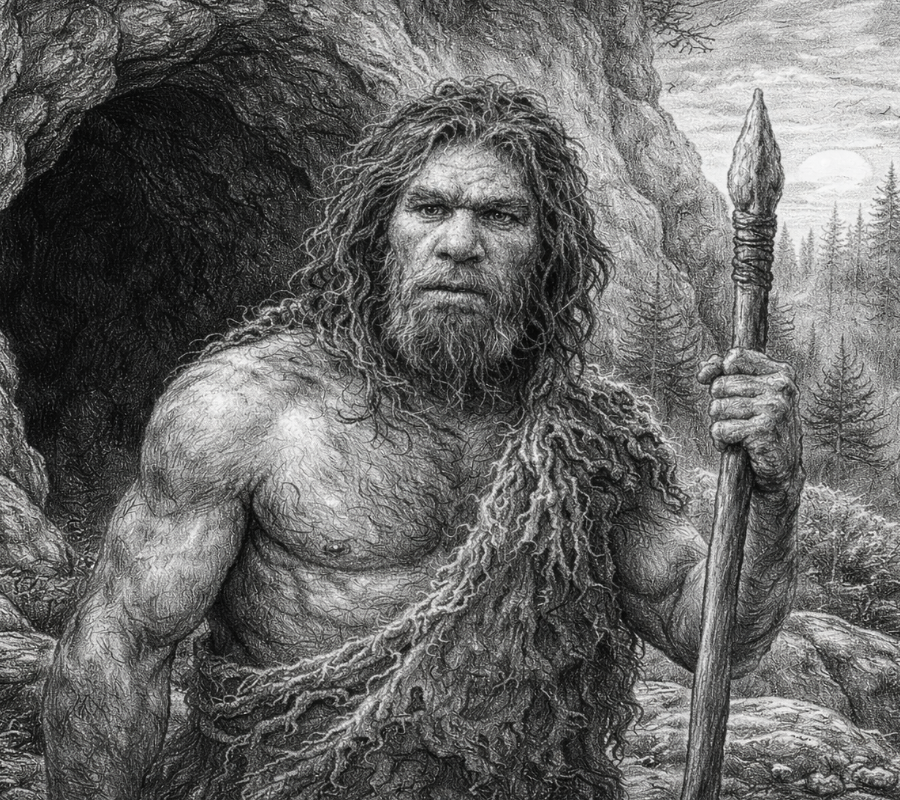
Homo Neanderthalensis

Critical question

Why would a neandertal, a body-to-body mammah hunter, smell the flowers three times worse? Maybe because your wide nose is not specifically designed to smell, but to heat glacial air at -20 ° C. By losing sensitivity to the floral and other sweat, he gained tolerance for the shared cave. Specialization... or the price of closeness?

The World in an Aspiration: The Olfate of Neandertal

Nasal Anatomy and Cold Adaptation:

Single nasal structures: They had triangular bone projections in the inner nasal cavity, not present in modern humans or other primates, which increased the mucous surface for air conditioning.

Cold respiratory efficiency: Fluid dynamics simulations show that their nasal morphology allowed a more efficient fluid residence time, being the second most effective after the Asian populations in the north-east to heat and humidify cold and dry air.

Improved air flow: Its prominent and wide nose not only facilitated air conditioning but also supported a higher volume of air flow, essential for a metabolism that required up to 4,480 calories per day.

Genetic and Olfactory Sensitivity:

Repertoire of recipients: Neanderthals had a repertoire of olfactory receptors similar to that of modern humans, but with specific differential sensitivities.

Sensitivity reduction: The reconstruction of ancient olfactory receptors reveals that they were up to three times less sensitive to green, floral and spicy aromas compared to modern humans.

Loss of detection of androstadienone: Individuals from the Chagyrskaya site in Siberia showed a complete loss of ability to detect androstadiadone, a steroid present in human sweat and urine, possible adaptation for cave life during glacial periods.

Specific genetic change: The OR7D4 gene, crucial for the detection of steroids such as androstenone, had specific mutations that reduced sensitivity to certain aromatic compounds.

Low olfactory genetic diversity: Comparative studies of 30 olfactory receptors showed that neanderthals had the least genetic diversity in these receptors among the hominids studied, indicating adaptive specialization rather than functional loss.

Stabilising selection: This genetic conservation suggests a stabilising selection in response to the specific demands of the European glacial environment.

Compared to Other Hominines:

Differences with denisovans: While the neanderthals showed reduced sensitivities, the denisovans showed greater sensitivity to sweet and puffy aromas, particularly the smell of honey.

Advantage of modern humans: The Homo sapiens maintained greater olfactory diversity, which possibly facilitated adaptation to a greater variety of food environments and sources.

Functional and Evolutionary Implications:

Dietary specialisation: The reduced olfactory capacity for certain floral and vegetable aromas is correlated with its predominantly carnivorous diet and its specialized hunting approach in megafauna.

Social advantage: The lower sensitivity to body odors could represent an adaptive advantage for living in reduced spaces during the maximum glaciers.

Research methodologies:

Rebuilding of receivers: Laboratory techniques that recreate olfactory receptors from old DNA.

Computer simulations: Modeling fluid dynamics to analyze nasal flow and respiratory efficiency.

Comparative genomics: Analysis of multiple genomes of ancient and modern human populations.

Morphometric studies: Detailed analysis of nasal cavities in fossil specimens.

Evolutionary Interpretation:

The neandertal olfactory differences represent specific adaptations to the glacial climate rather than sensory deficiencies. Its olfactory system evolved towards a specialization that optimized the detection of signals relevant to survival in cold environments, demonstrating that the evolution of the human olfactory system followed the paths of specialization according to specific ecological demands.

Quick link:

A Body to Survive: Anatomy and Adjustments.

General Robust and Sexual Dimorphism:

Robust completion: wide shoulder, wide torso and thick and heavy bones. Its body weight was approximately 15% higher than that of a modern Homo sapiens of similar height.

Sexual Dimorphism: The males were bigger and stronger than the females. European males weighed between 77- 85 kg, while females weighed between 63- 69 kg. The size difference was similar to that of modern humans.

Height: They were lower than modern humans on average. The individual of Shanidar 1, exceptionally high, measured approximately 1.73 m.

Skull and Brain:

Cranial capacity: They had a large brain, with an average volume of 1427 cc, slightly higher than that of modern humans (1400 cc).

Skull shape: lengthened and wide skull, with a prominent "occipital mold," low and inclined fronts and large and continuous supraorbital arches.

Facial features: Big face and projected forward, with a long and wide nose (to humidify and heat the cold air) and large eye orbits (possible adaptation for greater light uptake in dark environments). They usually had no chin.

Anatomic Differences by Sex and Activity:

asymmetry in the arms (Machos): The males showed a remarkable asymmetry (25-60% more developed) in the arms, especially at the top, comparable to modern unilateral athletes (e.g. javelin launchers). This indicates repetitive and demanding activities, such as launch of spears or work with heavy tools.

Evidence: Analysis of muscle insertions in arm bones.

Symmetrical use of arms (Hemres): Women did not present this asymmetry, suggesting a more symmetrical and bilateral use of force, possibly related to tasks such as skin processing (stretching and working leather).

Evidence: Comparative study of female remains vs. male.

Differential dental wear:

Females: They tended to have more scratches and long marks on the lower front teeth, suggesting the usual use of the mouth to hold and stretch skin or soft materials.

Machos: They presented more damage by scrubbing on the upper front teeth, possibly by using the mouth as a "third hand" to hold hard objects during work or butcher's work.

Evidence: Analysis of dental microwear in both sexes (e.g. in El Sidron).

Extremities and Hands:

Powerful hands: Wide hands with expanded fingertips and a strong thumb whose tip was almost as long as the second bone, allowing an essential power grip for demanding tasks.

Sturdy legs: Strong legs adapted for locomotion on irregular grounds and for short and powerful racing during hunting.

Health and Life Hope:

High incidence of injuries: Most adult skeletons show evidence of at least one severe, cured injury (fractures, trauma), often related to megafauna hunting at a short distance.

Evidence: Skeletons such as Shanidar 1 (multiple lesions) and La Chapelle-aux@-@ Saints (degenerative arthritis).

Low longevity: Most died before age 45. An "elderly" individual would be between 30 and 40 years old. Factors such as extreme physical effort, injuries and periodic malnutrition contributed to their short life expectancy.

Nutritional stress: Dental enamel hypoplasia (linear defects in the teeth) is common, even in children, indicating periods of famine or disease during childhood.

Climate adaptation:

Limited cold resistance: Their body robustness only provided them with an extra thermal resistance of approximately 1 ° C. Its main strategy against extreme cold was withdrawal to southern shelters (e.g. Iberian Peninsula, Caucasus).

High energy cost: Maintaining your body and brain required a large intake of between 3,500 and 5,000 calories per day, making them dependent on a diet rich in animal fats and proteins.

The Pragmatic Mind: Emotional Life and Social Structure.

Social and Group Dynamics Structure:

Group size: They lived in very small social groups, usually composed of 5 to 10 individuals (face to face groups). Occasionally, they joined groups over 20 to 40 people.

Composition: The basic social unit was the extended family (a couple, their children and, occasionally, an older relative who had survived). The genetic evidence of El Sidron suggests male philosophy, where males remained in their native group and females moved to other groups.

Low population density: The total population of neanderthals in Eurasia is estimated at only tens of thousands of individuals at any given time, with very dispersed communities.

Care and empathy: There were strong emotional ties and community care. The most clear evidence is the case of Shanidar 1, a man who survived to an advanced age with multiple serious disabilities (eye blindness, atrophied arm, limp), which means that he was fed and protected by his group for years. Another case is the "Viejo de La Chapelle," who lost most of his teeth and suffered from severe arthritis, but was also careful.

Division of labour: The skeletal evidence (absence of asymmetry in women's arms) suggests a lower sexual division of labour compared to modern humans. Women were probably involved in tasks that required strength, such as skin processing.

Emotional life:

Primary Emotions: It is inferred that they experienced fear (to predators, to the unknown - nephobia, to strangers - xenophobia), anger, sadness / mourning, joy / pleasure and disgust.

Fear and xenophobia: Their social cognition, described as "direct and emotional," and their tendency to neophobia (rejection of the new), could put them at a disadvantage against Homo sapiens more open to interacting and negotiating with strangers.

Luck and treatment of death: They buried their dead, often with minimal treatments (covering the body with rocks, placing it in a shallow depression). The use of red ocre in some bodies (e.g. Shanidar) suggests an aesthetic or social commitment to the deceased. These practices are interpreted more as an effort to mitigate the immediate emotional impact of death than as complex rituals with beliefs in a post-death life.

Cannibalism: There is evidence of cannibalism in sites such as Moula-Guercy (France) and Krapina (Croatia). The interpretation varies between a pragmatic act of survival during periods of famine or possible ritual behavior. In Moula-Guercy, the bodies were processed in the same way as the animals, for consumption.

Cognitive capacities and communication:

Language: They possessed the FOXP2 gene (associated with the capacity of language in modern humans). It is suggested that their language was direct and relevant to daily tasks, but probably lacked the complexity to tell stories or elaborate myths.

Knowledge transmission: The limited longevity (few individuals over 40 years of age) limited the accumulation and transmission of cultural knowledge between generations, compared to Homo sapiens.

No major meetings: There is no evidence that they held large social meetings (such as weddings or initiation rites) involving multiple groups. This has been related to a possible aversion to the cognitive burden of managing very complex social relationships.

The Neandertal table: Between Tuetanus and acorns.

Requirements and Diet Base:
High energy cost: Due to its robust body and large brain, an adult neandertal needed to consume between 3,000 and 5,500 calories a day, a amount comparable to that of an elite athlete.
Omnivorous and flexible diet: His diet was not exclusively carnivorous. It was opportunistic and varied according to the station and the region, exploiting the resources available in its immediate environment.
Emphasis on meat: The analyses of stable isotopes (nitrogen and carbon) in their bones indicate that they were at a very high trophic level, as superpredators. Animal protein was the pillar of its diet, making up more than 80% of it in many regions.

Sources of Animal Protein (Hunting):
Great herbivores: They were specialized hunters of dangerous megafauna. Its common prey included:
• Mushroom
• Rhinoceros lanudo (Coelodonta antiquitatis)
• Bison priscus
• Uro (Bos primgenius)
• Wild horse (Equus ferus)
• Red deer (Cervus elaphus)
• Reno (Rangifer tarandus) (in glacial periods)

Cannibalism: A source of protein attested in specific contexts
There is solid scientific evidence that some neandertal groups practiced cannibalism. In several European fields, the bone remains of neandertal individuals show an identical processing to that of the animals hunted, including cutting marks for peeling and disarticulation, and intentional fractures to extract the tuetane from the long bones.
The most strong findings come from sites such as:
• Goyet (Belgium): 99 remains of at least 5 individuals with cut and percussion marks, treated in the same way as the remains of horses and reindeer of the field.
• El Sidron (Asturias, Spain): A complete family showed signs of cannibalism, with broken bones to obtain the tuetanus.
• Moula-Guercy (France): Remains of six individuals found mixed and processed in the same way as deer.
The motivations behind this practice are discussed. In places like El Sidron, signs of malnutrition point to cannibalism by nutritional need during periods of food stress and shortage. However, in others like Goyet, where there was plenty of hunted fauna, the possibility is opened to social or conflict motivations. This practice seems to have been more common towards the end of its existence in Europe, about 40.000- 45,000 years ago.

Hunting technique: They used heavy push spears for short-distance body-to-body clashes, a high-risk activity evidenced by the numerous fractures in their skeletons.
He hunted in heights: In mountain areas, they hunted mountain goats (Capra ibex) and reels.
Coastal resources: In areas such as Gibraltar, marine resources were exploited: monk seals (Monachus monachus), dolphins (Delphinus delphis), and seafood (laps, mussels).

Vegetable Foods (Collection):
Direct evidence: The analysis of microphones and old DNA in dental calculation (sarro) has shown the consumption of a wide variety of plants:
Legumes: Thousands of charred seeds of wild peas found in Kebara (Israel).
Fruit and nuts: Dates (Phoenix dactylifera), figs (Ficus carica), wild olives (Olea europaea), acorns (Quercus spp.), hazelnuts (Corylus avellana), pineapples (Pinus spp.), pistachios (Pistacia spp.).
Roots and tubers: Nenufar Rizomas (Nymphaea spp.) found in dental calculation in Spy (Belgium). Wild radishes (Raphanus raphanistum) and bulbous barley (Hordeum bulbosum) in Kebara.
Grain seeds (Poaceae family).
Mushrooms (Fungi spp.) and possibly moss (Bryophyta spp.), according to evidence from El Sidron (Spain).
Use of tools to collect: The finding of wooden excavation sticks (e.g. in Poggetti Vecchi, Italy) confirms that they were digging for roots and tubers.

Processing and cooking:
Use of fire: They used fire to cook, as shown by bones with burn marks at different temperatures, indicating direct roast.
Intensive processing: They systematically fractured the bones of their prey, even the hardest ones, to extract the bone marrow, a crucial source of fats and calories. The same technique of percussion fracture was applied, in the aforementioned fields, to the bones of other neanderthals.
Possible storage: There are indications of possible storage of food in the form of pemmican (a mixture of dry meat, fat and sometimes berries), although the direct evidence is limited.

Regional and seasonal variation:
Contrasting Diet: Neanderthals living in Mediterranean regions (such as Kebara or Gibraltar) had a much more diverse diet, including a wide variety of marine plants and resources. On the contrary, groups in northern Europe, in steppa- tundra environments, were almost exclusively dependent on the hunting of large herbivores.
Nutritional stress: The episodes of scarcity were common. The hypoplasia of dental enamel (linear defects in the teeth) present in many skeletons, even in children, is an indicator of periods of famine or poor nutrition during childhood. It is in this context of stress that the cannibalism, documented in deposits such as El Sidron, is likely to emerge as an extreme response to the lack of resources, although it is not a widespread or constant practice.

El Silex: Technology and material culture.

Political Technology (Stone):
Levallois Technique: They dominated this sophisticated size method that involves careful preparation of the stone core to predict and obtain controlled shape and size lasces. It shows great foresight and planning.

Musterian industry: It is the material culture most associated with them. It includes a wide variety of tools such as musterian tip, raeders, dentists and knives.

Specialized use: Different deposits show specializations. Quina technology, for example, is strongly associated with intense skin work due to its long, curved and very cutting edges.

Microlytes: In their last periods, they manufactured very small stone tools (from 8 to 15 mm), such as Chatelperron's tips, which could have been used as projectile (darts) tips armed in wooden astiles.

Wood and ivory technology:

Bone tools: They systematically made and used retokators (to sharpen stone tools), lysoirs (rib polishers to soften skins) and punches (to drill leather).

Wood work: They were expert carpenters. The oldest evidence is the fir wood spears of Schöningen (Germany), 300,000 years old, perfectly balanced for the push. They also made excavation sticks and possibly other objects.

Ivory use: In contexts like the Châtelperronian, they worked the mamut ivory to make objects like engraved and polished rings.

Composite and Adhesives Technology:

Enmangue: They created composite tools by wrapping stone tips into wood astiles. This requires a complex and anticipatory mental design.

Complex Adhesives: They made high-tech glue.

Birch Brea: They produced birch tar (Betula spp.) through a distillation process in the absence of air (pyrolysis), which requires controlled temperatures and several working days. It was used to fix spear tips.

Natural tuna: They used natural asphalt found in deposits (e.g. in Syria) as an adhesive.

Mixtures of resin and wax: They mixed pine resin with bee wax to improve adhesive properties, as found in Italian tools.

Skin processing and Clothing Clothing:

Evidence of clothing: The physiological need for coat in glacial climates and the characteristic wear on their incisive teeth (to stretch and soften skins with the mouth) confirm that they made tight fur clothes.

Set of tools: They used stone scrapers (lasques with a very cutting edge) and lysoirs (bone polishers) to tamper and soften the skins of animals such as reindeer, bison, or uro.

Symbolic Expression and Art:

Personal ornaments: In fields such as the Cave de los Aviones (Spain) were found sea shells perforated and dyed with pigments (red ocre), 115,000-120,000 years ago. In Krapina, Croatia, eagle claws were found with cutting marks, probably used as pendants.

Use of pigments: They used red ocre (iron oxide) and manganese dioxide (black). They used them for multiple purposes: body decoration (likely), sunscreen, insect repellent, skin turing and as an ingredient in adhesives.

Recorded: In Gorham's Cave (Gibraltar) an engraving of "hashtag" (#) was found on the rock, made with repeated past of a sharp tool, suggesting a symbolic intent.

Fire Management and Structures:

Use of fire: They used it for cooking, heating, making adhesives (brea) and hardening wood tools. There is no clear evidence that they used it to illuminate space for complex rock art or large social meetings.

Simple structures: In deposits such as Molodova (Ukraine), mammoth bone rings have been found that could have served as a basis for simple or paravient structures.

Fiber skills:

String manufacturing: The finding of a three-legged (cortex) stranded cork fragment in Abri du Maras (France) demonstrates the knowledge of techniques to create strong, vital cords to tie tools or structures.

The World Living: Description of landscapes and ecosystems.

Main Biomas and Ecosystems:
Estepa-Tundra: The most iconic bioma associated with them. An open and cold landscape, similar to the present northern Siberia or Alaska, dominated by grasses, herbs and low bushes. It was home to the large herds of mammoths, lanud rhinoceros, steppe bison and reindeer, their main prey. However, they avoided the most extreme and open steppes in Eastern Europe.

Templated and Mediterranean forests: Its central area of occupation. Pine, fir, beech, oaks and oaks forests (e.g. in Iberia, southern France, Caucasus). These landscapes offered a greater diversity of resources: deer, boar, nuts, acorns and edible plants. In Gibraltar, this environment is described as a "Mediterranean Serengueti."

Mountain regions: They systematically inhabited mountain chains such as the Pyrenees, Alps and Caucasus (e.g. Ortvale Klde field), sometimes above 2,000 metres of altitude. Here they were hunting mountain goats and reels and exploiting high-quality silex sources.

Costas y Wetlands: In coastal areas such as Gibraltar, marine resources (seals, dolphins, molluscs) and wetland resources were actively exploited. The proximity to fresh water was crucial to life and to attract prey.

Flora Key:
Trees: Pinus spp. (Pinos), Quercus spp. (Robles / Encinas), Fagus sylvatica (Haya), Abies spp. (Abetos).

Arbusts and Plants: Juniperus spp. (Juniperus spp.), Pistacia spp. (Pistacho), Achillea millefolium (Milenrama), various grasses (Poaceae).

Fauna Key:
Megafauna: Mammuthus primgenius (Mamut), Coelodonta antiquitatis (Rinoceronte lanudo), Bison priscus (Bisonte estepario).

Cervids and Equidae: Cervus elaphus (Red deer), Rangifer tarandus (Reno), Equus ferus (Wild Horse).

Predators (Competitors): Panthera leo spelaea (Lion of the caves), Crocuta crocutta spelaea (Hiena of the caves), Ursus spelaeus (Bear of the caves).

Coastal Fauna: Monachus monachus (monk seal), Delphinus delphis (common dolphin).

Climate and Adaptability:
Extreme fluctuations: Its existence was marked by the glacial and interglacial cycles of the Pleistocene. The glacier periods were cold and dry, expanding the step- tundra. The warmer and damp interglaciers allowed the expansion of forests.

Shelter strategy: In the face of the extreme cold, its strategy was not to resist, but to retreat to southern "shelters" such as the Iberian Peninsula, Italy, the Balkans and the Caucasus, where the climate was more cleverly and the resources more stable.
Abandonment of areas: They completely abandoned the northern regions (such as northern Europe) during the most intense cold peaks, then recolonized them when the climate improved.

Crisis events: They faced abrupt environmental crises, such as the "Late Eemian Arid Pulse" (LEAP), an event of extreme aridity and dust that lasted centuries and would have decimated the vegetation and fauna on which they depended.

Interaction with Landscape:
Mobility: They were nomads within relatively small but ecologically diverse territories. Their movements were often in "back and forth" patterns from their base camps (caves or rocky coats).

Fire management: Possibly they used fire to manage the landscape, causing controlled fires to clear vegetation and attract herbivores to new outbreaks, a practice that would have actively shaped their environment.

The Final and His Legacy: Interaction with H. sapiens and extinction.

Coexistence and overlap:
Overlay period: Neanderthals and anatomically modern Homo sapiens coexisted in Eurasia for an estimated period of between 5,000 and 10,000 years, especially in regions such as the Middle East and Europe.

Contact areas: The interactions, both cultural and genetic, probably occurred in "hybrid zones" or contact areas, where the territories of both groups overlap.

Evidence of Cruising (Genetic Flow):
Genetic heritage: Modern non-African humans have 1 to 4% of neandertal DNA in our genome. This is the most tangible and proven legacy of their interaction.

Functional genes: This inherited DNA is not silent; it includes genes related to immunity, fat metabolism, skin pigmentation and cold adaptation.

Hybrid fossil evidence: The individual of Oase 1 (Romania), an H. sapiens de facto ~40,000 years old, he had a very recent neandertal ancestor (4-6 generations ago). This proves that the meetings were not isolated and that they led to fertile offspring.

Possible Conflicts and Competition:
Technological difference: Neanderthals, although expert tallers, did not systematically adopt key H. sapiens technologies, such as light-projectile launchers (which allowed for a less risk distance hunt) or the production of more diversified bone tools.

Social structure: H. sapiens' groups probably had broader and interconnected social networks between distant bands, which could give them an advantage in terms of information exchange, innovation and mutual support in times of crisis. Possible xenophobia and neandertal nephobia could be a disadvantage in this new social context.

Evidence of violence: Shanidar 3's rib shows a wound made by a penetrating projectile that began to heal. Some researchers argue that the shape of the wound coincides with a spear tip of the Upper Paleolithic (associated with H. sapiens), suggesting a possible inter-specific violent act, although this is discussed.

The Role of Climate Change:
Environmental instability: Neandertal disappearance coincided with a period of extreme climate instability (Marine Isotope Stadium 3), characterized by sudden and very rapid fluctuations between cold and temperate conditions. This would have greatly tensioned resources.

Adaptive advantage: It is hypothetized that the greater cultural and technological flexibility of H. sapiens could be a key advantage in adapting to these rapid environmental changes, while the neandertal adaptation, although successful for hundreds of thousands of years, could be more rigid and specialized.

Extinction and Last Shelters:
Not a sudden extinction: His disappearance was a regional and gradual process. The populations were fragmented and extinguished locally.

Last bastions: Some of the last known shelters were the Iberian Peninsula (such as Gorham's Cave, Gibraltar), southern Italy and the Caucasus. The most recent dating for a Neandertal rest is around 40,000 years, although some dates in Gibraltar suggest that they could survive until 32,000-28,000 years ago (these dates are the subject of debate).

Legacy:
In our DNA: The main legacy is genetic. Neandertal immunity-related genes helped the newly arrived H. sapiens adapt to new pathogens in Eurasia.

In our culture: Although difficult to prove, it is plausible that some elements of their material or symbolic culture have been adopted by the first H. sapiens in Europe (acculturation effect), especially in transition industries such as the Chatelperronian.

Multiple causes: Their extinction was not due to a single cause. It was probably the result of a combination of factors: competition with H. sapiens (for resources, territories), its lower genetic diversity and population size, its possible lower cultural flexibility and the pressure of abrupt climate changes. They were the victims of a perfect storm of demographic and environmental changes.

The literature and additional research, explanation, didactics and study materials are provided only to Myrodia Khartes subscribers.
Body pheromones (Androstenone)
Chemical sign: Androstenone (5α-androst-16-en-3-one)
Common scenarios: Social interaction in caves, proximity between individuals, couple selection.

sweat
Chemical sign: Carboxylic acids (isovaleric acid, butyric acid), sulfurated compounds
Common scenarios: Intense physical activity (hunting, size), inside caves, living spaces.

Hot Animal Fat
Chemical sign: Volatile fatty acids, aliphatic aldehydes
Common scenarios: Cooking of meat on fire, processing of tetanus, food preparation.

Blood and Fresh Vescers
Chemical sign: 1-octen-3-ol (blood alcohol), volatile amines, sulphides
Common scenarios: Carnery of large dams, initial hunting processing, cutting areas.

Fresh leather and leather
Chemical sign: Medium-chain fatty acids, nitrogenated compounds
Common scenarios: Initial processing of skins, preparation of materials for clothing.

Sílex Tallado
Chemical sign: volatile silicon compounds, ozone by impact
Common scenarios: Litic-sized workshops, tool manufacturing, seasonal camps.

Cave's Smoke Stone
Chemical sign: Geosmine, 2-methylisoborneol, volatile clay compounds
Common scenarios: Cave interiors, rocky shelters, rainy seasons.

Oxides and Colorful Lands
Chemical sign: Volatile iron oxides, metal compounds
Common scenarios: Preparation of pigments, symbolic and ritual activities, body decoration.

Cold ash
Chemical sign: alkaline carbonate, volatile potassium compounds
Common scenarios: Open homes, food processing areas, land preparation for conservation.

Wet Land (Petricor)
Chemical sign: Geosmine, 2-methylisoborneol
Common scenarios: External after the rain, collection areas, coastal environments.

Meat rot
Chemical sign: Putrescin, cadaverine, dimethyl sulfide, isovaleric acid
Common scenarios: Organic waste areas, abandoned butcher areas, decomposing food remains.

Accidental Fermentation
Chemical sign: Ethanol, ethyl acetate, acetic acid
Common scenarios: Storage of fruit, accumulation of wet plant matter, organic containers.

Moho de Cueva
Chemical sign: 1-octen-3-ol (fungal alcohol), microbial terpenoid compounds
Common scenarios: Unventilated areas of caves, storage of organic materials, areas of constant humidity.

Smoke of fire
Chemical sign: Guayacol, sirengol, phenolic compounds, polycyclic aromatic hydrocarbons
Common scenarios: Central homes, meat and fur smoking, shelter heating.

Asada meat
Chemical sign: 2-methyl-3-furanitiol, alkyl sulphides, pyrazins (Maillard Reaction products)
Common scenarios: Kitchen stoves, food preparation, after-hunting celebrations.

Abedul tar
Chemical sign: Pyrolyzed Betulin, cresolves, xylenes
Common scenarios: Manufacture of composite tools, adhesives workshop, utensils repair.

Tired Leather
Chemical sign: Rust fatty acids, degradation carbonylcompounds
Common scenarios: Advanced processing of skins, manufacture of clothing and containers.

Petricor (post-rain)
Chemical sign: Geosmine released by mechanical impact, petricorces
Common scenarios: Rain after storms, collection areas after precipitation, cave entrances.

We appreciate your contribution.

Open access sustained by cultural co-responsibility.