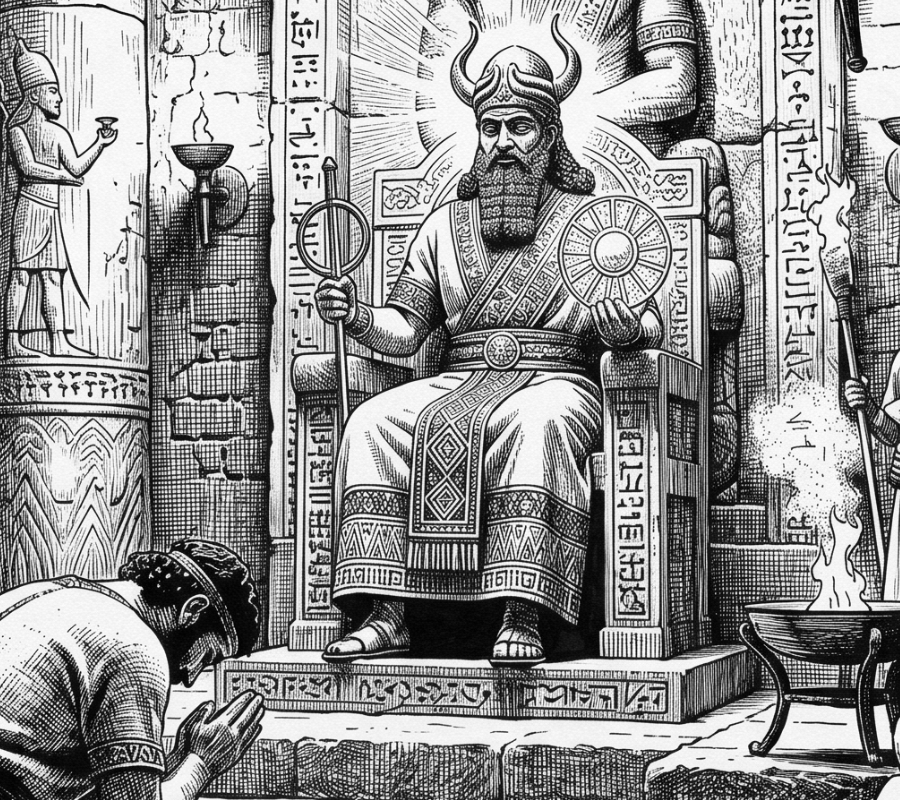



In the context of the Fértil Growing, war was articulated through a religious ideology that legitimized violence as the execution of the divine will. The real inscriptions systematically state that the deities were the true directors of the campaigns, selecting the sovereign and claiming the benefits of the loot for the renewal or building of their temples. The Assyrian national deity, Aššur, commanded the army through its physical banner in campaign, and the Palaciegos reliefs reflect a close formal correspondence between the god and the king: both are represented with the bow tensed during the fight and with the bow at rest upon return. An inscription of Asurnasirpal II in Nimrud begins precisely by indicating that Aššur called him by his name and made his sovereignty supreme. When the monarch marched, he emulated the warrior god Ninurta, whose mythical victories over the powers of chaos provided the model for real triumph. As a result, the rebellion against the Assyrian sovereign was equivalent to a direct offense against Aššur, setting a framework where the violence in combat was unquestionable.
Weapons as sacred objects
The Mesopotamans considered that weapons of war had a sacred dimension: they received their own names and functioned as visible expressions of the divine will. The bow, called qaštu In acadium, it was especially significant in the neo-Assyrian world. The way the king was carrying it —tense, ready to fire, or at rest— He communicated to those who observed him the ritual state in which the monarch was at that time.
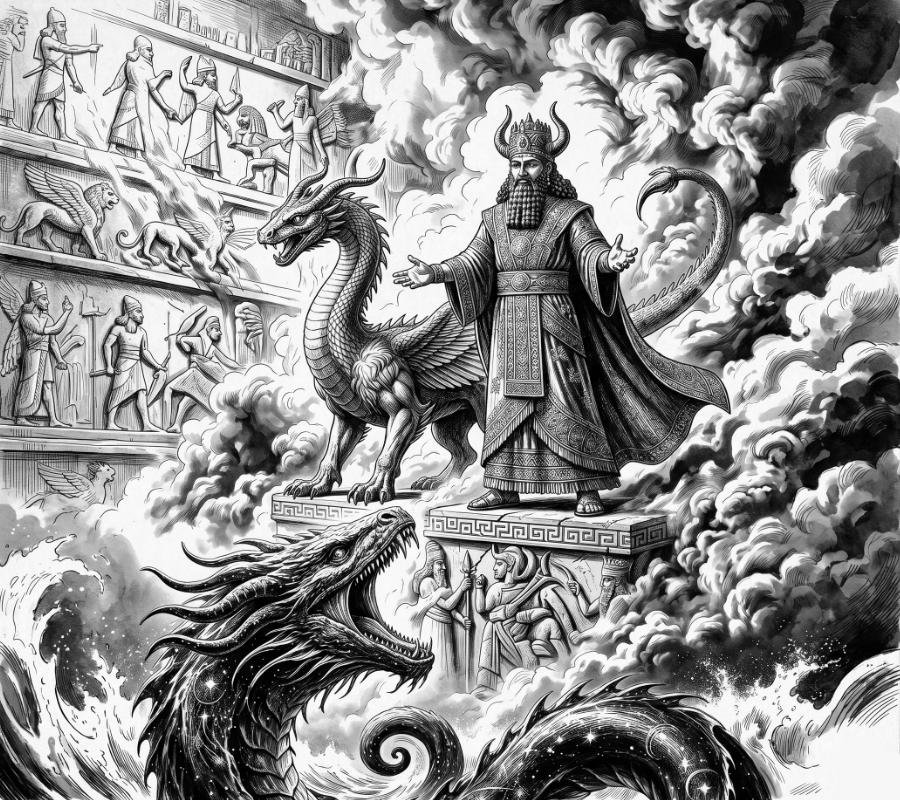
The myth of Babylonian creation, the Enūma Eliš, offers a memorable image of this: after defeating the primordial monster Tiamat, the god Marduk presents his bow before the assembly of the gods, and the god Anu assigns him three ritual names by setting the bow in heaven as a constellation. Some specialists have proposed that this "Arc Star" corresponds to what we call Canis Major today, although the identification is still under discussion.
In the Sumerian tradition, the Ninurta god's war mace was named Šarur —"destroyer of thousands"— and the literary texts describe it with the ability to fly and speak. The poem Lugal-e And Anzu's myth contains these images. It should be noted that these are attributes of the mythical and literary record: in the real war, the weapons received ritual blessings, but the known historical texts do not attribute to them autonomous powers.
The ceremonial dimension of the weapons is confirmed in concrete examples: Gudea de Lagash placed the weapon ru as a protective sign on his city, and the bronze sword--sickle of Adad-nirari I carries real inscriptions that suggest more to a ritual function than to combat.
Consult the gods before marching
No campaign began without the divine sanction. The consultation system was multiple and covered different forms of divination: the oracular dreams, the observation of astronomical phenomena recorded by specialized scribes, and the bārûtu, a compendium of about 100 cuneiform tablets with instructions to read the viscera of slaughtered animals.
Along with the divination, there were active protection rituals aimed at neutralizing enemy magic. One of them, documented in the fragment known as Ki 1904-10-9, 18 (BM 98989) —studied by specialist Daniel Schwemer— He describes the sacrifice of a white pig: his blood was spilled to the four cardinal points as formulas were made to send evil to the adversary territory.
During the battle, the gods accompanied the army materialized on their banners, and priests made offerings to portable altars in the camp. The scenes carved in the reliefs of the Khorsabad Palace testify to this practice.
What happened after the victory
The battlefield, after victory, was also a ritual stage. The Assyrian soldiers cut off the heads of the fallen enemies and took them to the capital. A relief from the Asurnasirpal II palace in Nimrud, today in the British Museum, explicitly shows soldiers stacking heads while musicians play rope instruments. The prisoners, for their part, were led to the king in parades shown in the palacial iconography, sometimes tied with a rope passed by a ring on his lips.
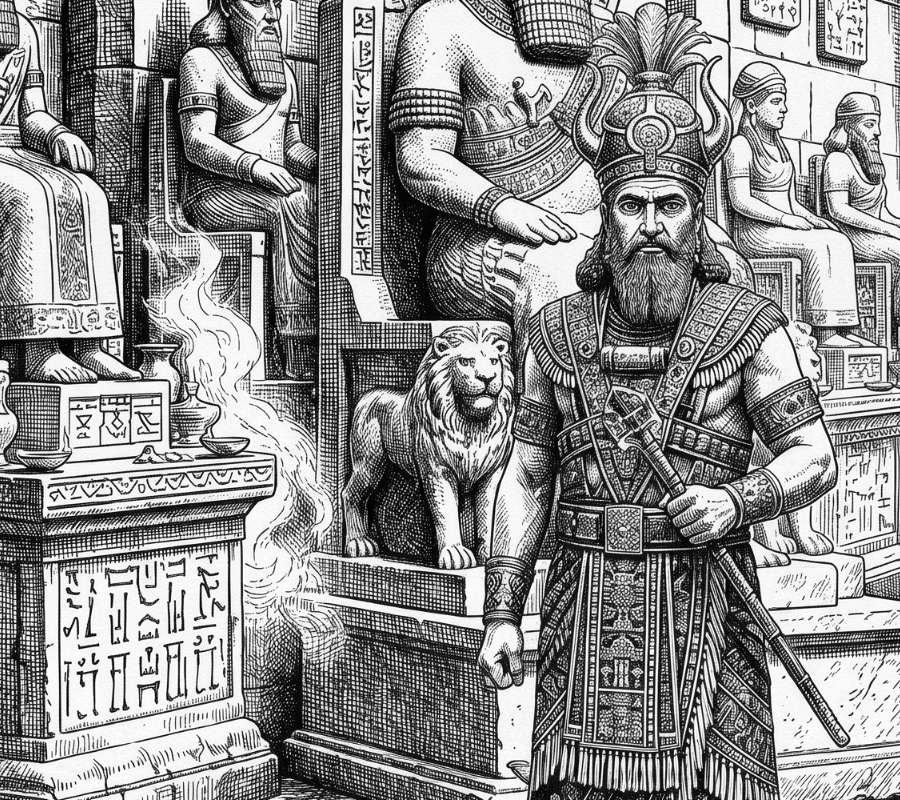
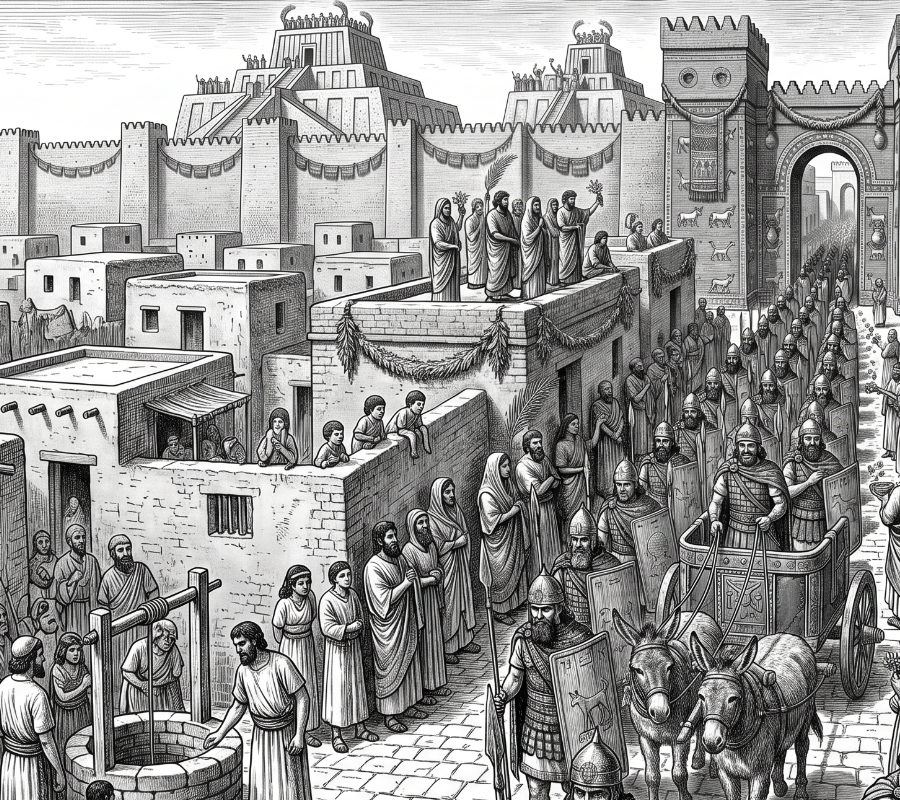
The return to the capital was the moment of greater public visibility: the army was parading with the loot and the captives to different audiences. When he arrived at the temple of Aššur, the king executed the formula. qāt ilim Śabātu —"take the hand of the divine statue"—, reaffirming his position as a servant of the God. The palacegos that adorned the walls of the palace performed a religious function: they represented the obligation of the monarch to extend the lands of Aššur.
The aromas of war:
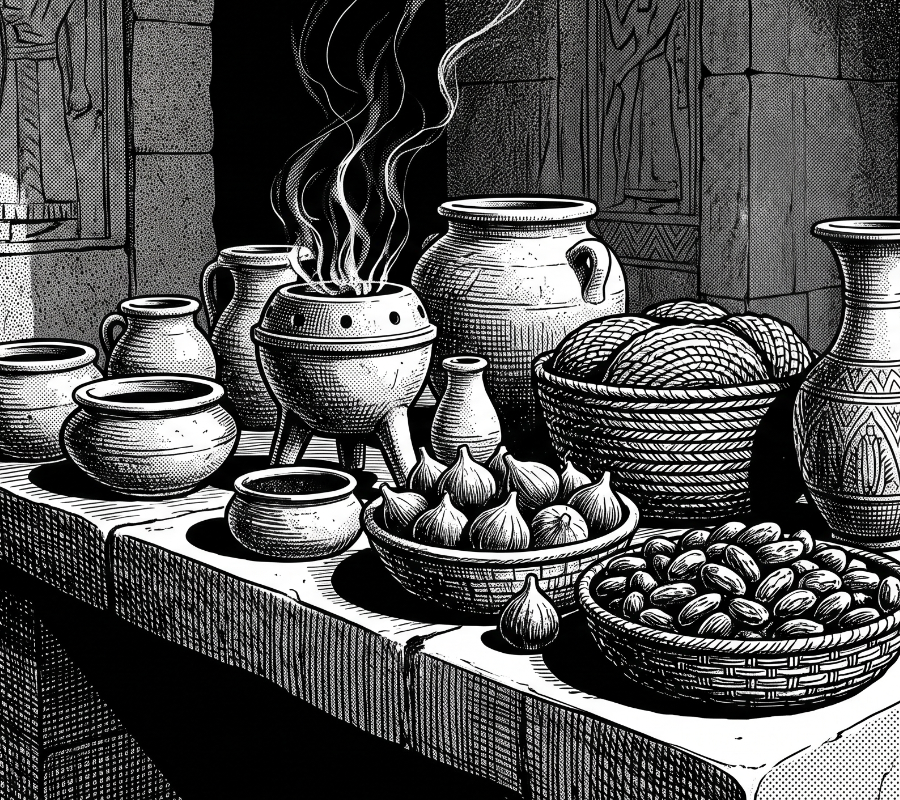
The plant substances were indispensable for establishing communication with the gods and purifying the spaces associated with war. The solar god Šamaš, the divinity of justice and divination, was directly linked to the incense of cedar; the texts record that without him the great gods are unable to perceive the incense offered.
The sources document precise uses for each plant:
Cedro (erīnu) and tamarisk (bīnu): were placed in the ears of the diviner before the extispice ritual —reading of viscers— to ensure the required ritual conditions.
Juniper (burāšu) and cypress (šurmēnu): they were burned in the sacrificial offerings and in the fumigations of the temples.
Sugar (kibrītu): was used to fumigate the soothsayer and ensure its ritual purity before consultation.
The ritual known as Mīs pī —"mouth wash"— His main function was the consecration of divine statues, but his purifying logic extended to every person or space who had come into contact with the sacred. Its mixture included sacred water, tamarisk, aromatic cane, palm, alkali, cedar, cipress, juniper and kukru. In military preparations, this combination could be applied to the monarch both before leaving and upon return from the combat. The existence of the Juniper Garden of Babylon, a space dedicated to the cultivation of these sacred plants, reflects the institutional importance of keeping them available (the exact botanical delimitation of that garden, however, remains under discussion among the specialists).
The banquet of victory
Military success was integrated into the economic life of the temples through the loot, which was intended for the daily food offerings presented to the divine statues in two main meals. The "leftovers" of these offerings —calls naptanu— they were redistributed between the king and the temple officials as a sign of divine favor.
The most detailed example of a mass celebration linked to victory is the Banquet Stele from Asurnasirpal II in Kalhu (Nimrud), dated around 879 BC Although commemorative registration does not use the technical term tākultuThe specialists include this banquet within the tradition of ritual celebrations linked to the legitimization of imperial power and the triumph of the sovereign.
The text accurately lists 69,574 guests: dignitaries of Tyre, Sidon, Hatti and other territories of the empire who for ten days received food and drink by order of the king. The food includes fattened oxen, lambs, deer, gazelas, aquatic birds, fish and thousands of eggs, as well as herbal-flavoured products. Among the drinks, the star is ready ten thousand ounces of wine —luxury item from mountain areas— and ten thousand pitchs of barley beer, šikaru. This beer was made from fermented barley with hugs of malt bread or cookies called bappiruand was drunk in large vessels by long straw to avoid the remains of shells. At the end of the feast, the guests were bathed and anointed with oil, a gesture that expressed the real hospitality and abundance guaranteed by Aššur.
The words that supported the war
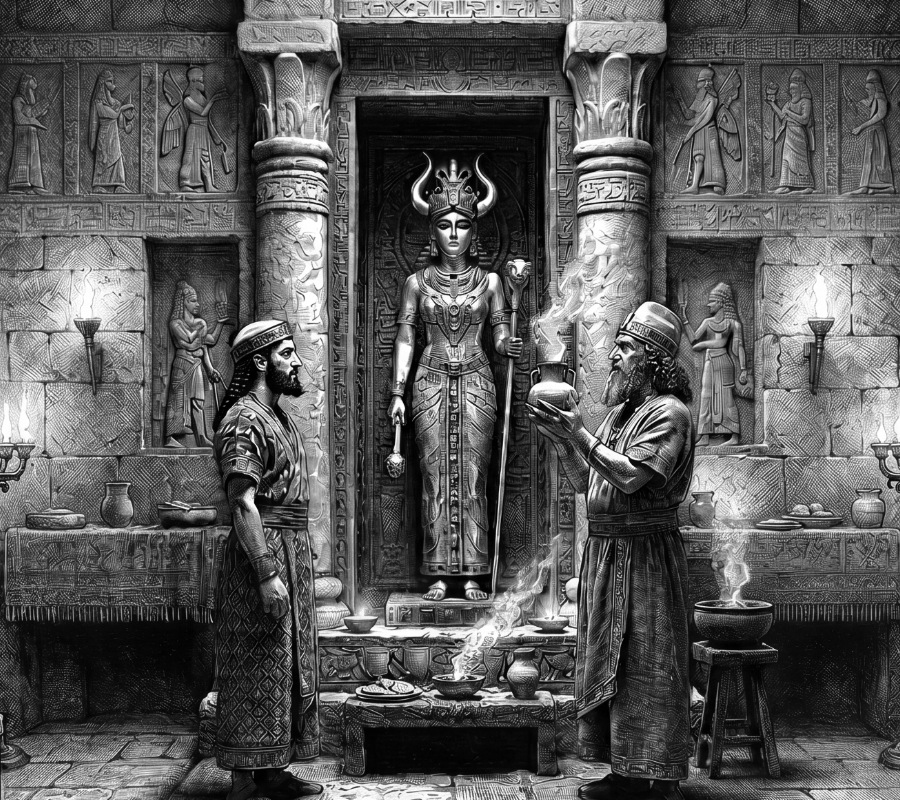
The ideological fabric of all these practices was based on a literary corpus preserved and copied in the libraries of the Assyrian kings. Within the genus of petition prayers known as šuilla —"prayer of the raising of the hand"—the seventh century BC tablets invoke the goddess Ištar in her warrior character, calling her "referee of the battle" and "ruler of arms" before seeking protection for the monarch.
This military character of Ištar has very old roots. The Sumerian compositions attributed to the Priestess Enheuanna (ca. 2300 BC), as Inanna and Ebih (Inninmehusa), describe the warrior goddess carrying the sacred weapon ankar and throwing themselves into the great battles. His work The Exaltation of Inanna (Ninmesarra) established a prayer model in which the political victory of the kingdom depended directly on the intervention of the goddess. The continuity of these texts in the Assyrian archives of the first millennium BC shows that their ritual relevance remained alive for centuries.
Through this fabric where the prayers, the incense of the diviners and the monumental inscriptions formed a coherent system, Mesopotamia consolidated a vision in which the effectiveness of the sword was indissolubly linked to the strict fulfillment of the sacred liturgy.