Uruk period and Jemdet Nasr period

Aromas and rituals in the Uruk culture

c. 4100 - 2900 BC

Uruk, the city that we call Warka today and which rises silent under the desert of southern Iraq, reached 250 hectares around 3200 BC and grew to 600 in the following centuries. It was the first megaurbe in the world, with tens of thousands of inhabitants, a sophisticated administrative apparatus, writing, wheels, authentication stamps and, all point to it, a theology of smell so elaborate that its echoes still resonate in the sacred books of Judeocristianism, zoroastanism and Islam.

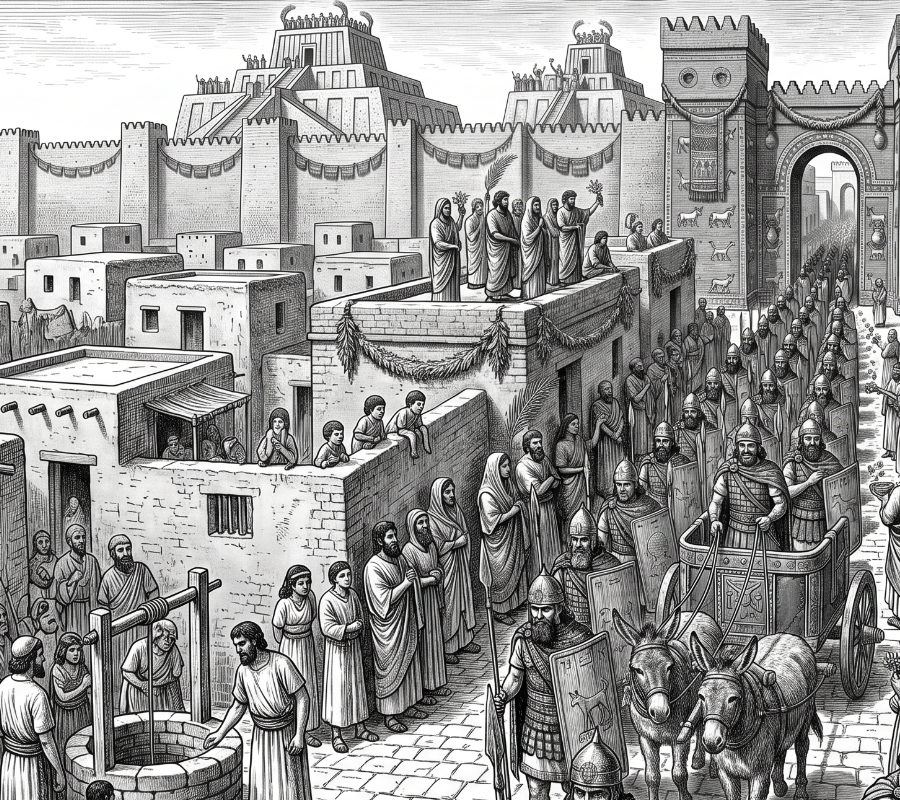
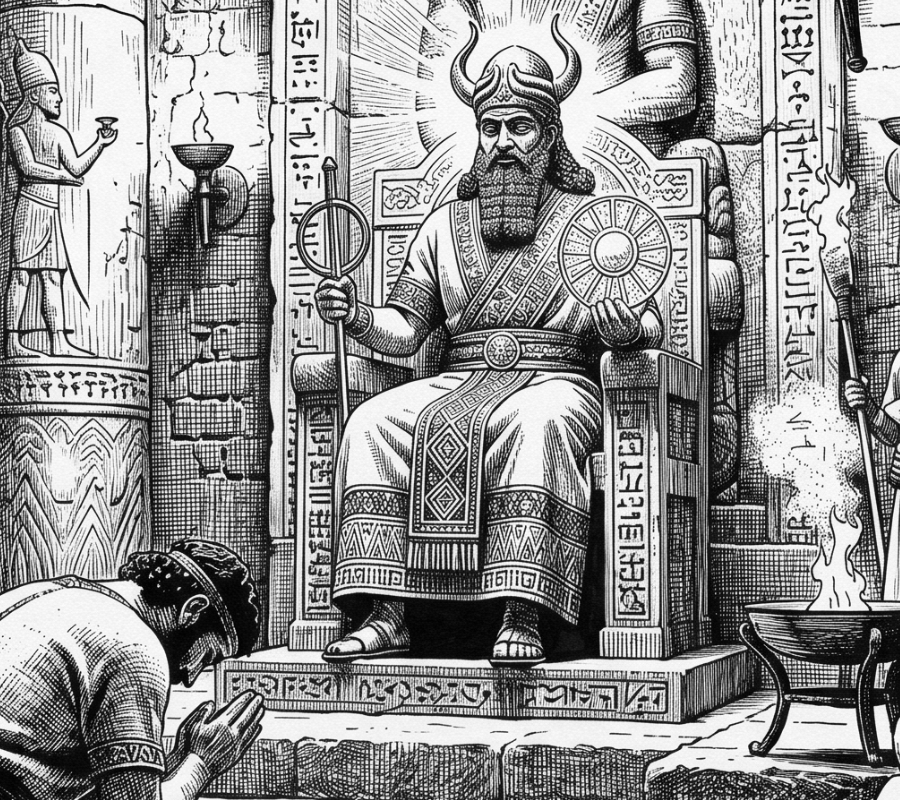
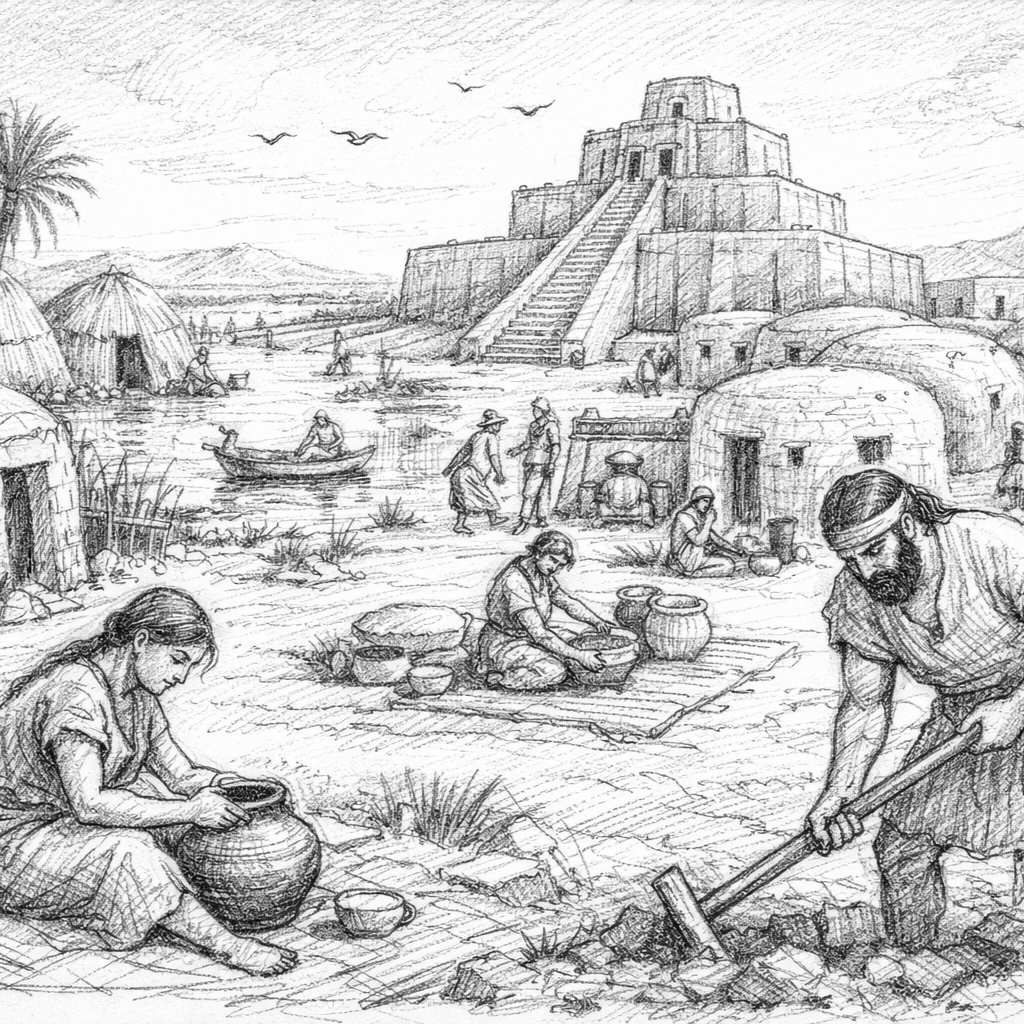
In the year 3200 BC, in a corner of the world's most flat plain, someone burned cedar resin. The wood had arrived from the slopes of the Amanos, more than eight hundred kilometres away, transported in boats by the Euphrates for weeks. The smoke rose slowly on the raw brick platform that dominated the city of Uruk, dissolved in the arid air of southern Mesopotamia and came, tenue, to the neighborhoods where thousands of workers smelled cereal and made ceramics. For them, that aroma was inaccessible. For the priests who burned him inside the White Temple, it was the voice with which the gods responded.

That olfactory gap —between those who could inhale the sacred and those who only perceived it from afar— is one of the keys to understanding how the first urban civilization of history was born.

Algaze, Guillermo. The Uruk World System: The Dynamics of Expansion of Early Mesopotamian Civilization. 2nd ed. Chicago: University of Chicago Press, 2005. | McMahon, Augusta. "The Sensory World of Mesopotamia." In The Routledge Handbook of Sensory Archaeology, edited by Robin Skeates and Jo Day, 326-340. London: Routledge, 2019.| Matthews, Roger, and Amy Richardson. "Cultic Resilience and Inter-City Engagement at the Dawn of Urban History: Protocorical Mesopotamia and the 'City Seals', 3200-2750 BC." World Archaeology 50, no. 5 (2019): 723-747. https: / / doi.org / 10.1080 / 00438243.2019.1592018. | Middeke- Conlin, Robert. "The Scents of Larsa: A Study of the Aromatics Industry in an Old Babylonian Kingdom." Cuneiform Digital Library Journal 2014, no. 1. https: / / cdli.Earth / articles / cdlj / 2014-1. | Myer, C. F. 1975 The Use of Aromatics in Ancient Mesopotamia (Dissertation; Pennsylvania: University of Pennsylvania) | Nissen, Hans J., Peter Damerow, and Robert K. Englund. Archaic Booking: Early Writing and Techniques of Economic Administration in the Ancient Near East. Translated by Paul Larsen. Chicago: University of Chicago Press, 1993. | Kramer, Samuel Noah. The Sacred Marriage Rite: Aspects of Faith, Myth, and Ritual in Ancient Sumer. Bloomington: Indiana University Press, 1969. | Lapinkivi, Pirjo. The Sumerian Sacred Marriage in the Light of Comparative Evidence. State Archives of Assiria Studies 15. Helsinki: Neo-Assyrian Text Corpus Project, 2004.

COMPLETA bibliography and additional research, explanation, teaching and study materials are provided only to Myrodia Khartes subscribers.

The Cedro as an engine

The southern mesopotamic plain is a geographical paradox. It produces the best cereals in the old world, but it lacks almost everything else: quarry stone, metals, large wood, coniferous resins. This structural shortage was, ironically, the engine of Uruk's greatness. In order to build their temples and feed their rituals, the city had to invent trade at a long distance. And what he needed most urgently, above copper and lazuli, was cedar wood.

The cedar of Lebanon —Lebanese Cedrus— It grows in the forests of the Amanos mountain massif, in today's northern Syria, and in the chains of Lebanon and the Anti- Lebanon. To bring it to Uruk required to organize expeditions, load the logs into rafts, descend through the Euphrates and store them in the temple deposits. It was a state operation. The Mesopotamic kings of the third and second millennium BC would make written records of their expeditions to the 'Forest of Cedros' —the same as in Gilgamesh's account the monster Humbaba— as if conquering that aroma was a heroic feat equal to a military victory. And it was, to a certain extent, it was.

Next to the cedar were the juniper of the Tauro and Zagros mountains, the cypress of the Anti- Lebanon, the terebinto resins of the Levant. They were the raw materials of an olfactory vocabulary that the Uruk temple administered with the same bureaucratic rigor with which it counted the cereal and beer. The late Uruk proto- cuneiform tablets —the oldest in the world, dated to 3350 BC— are mainly control lists: oils, wood, animals, workers. The writing was born to manage the resources of the temple, and among these resources were the imported oils and aromatic wood that made the ritual machinery of the city work.

The White Temple: olfactory ascent

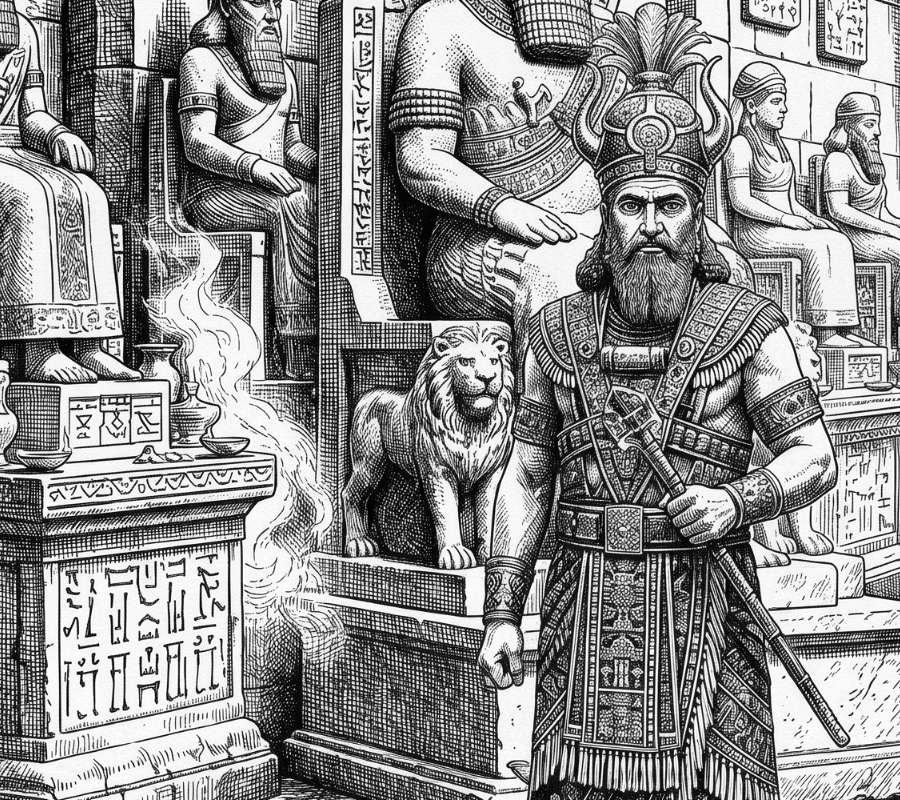
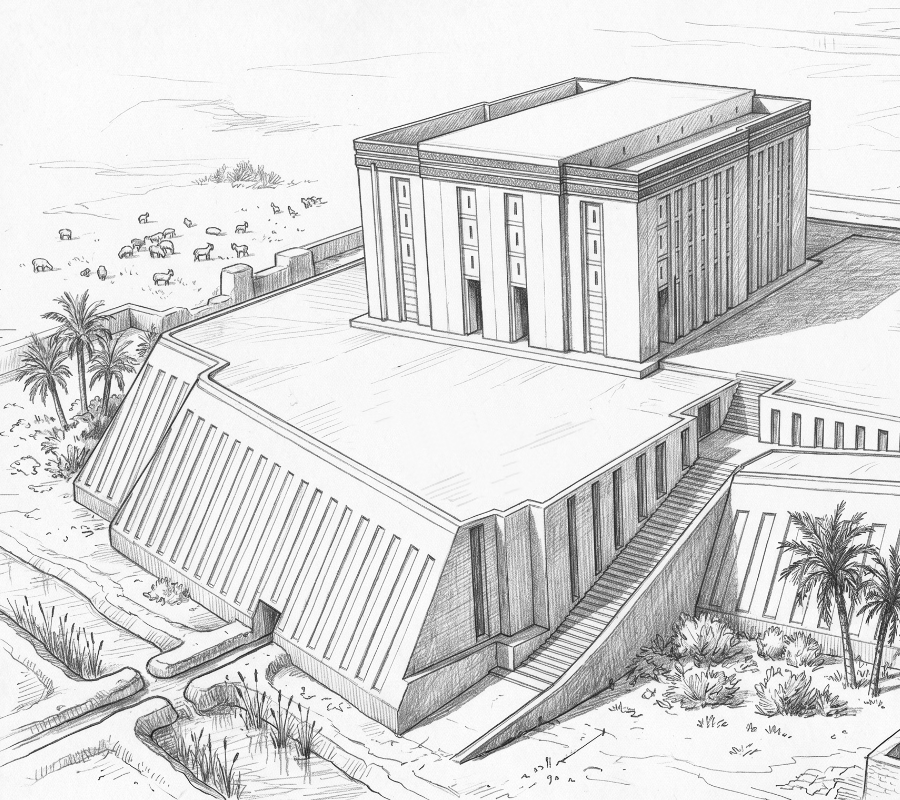
To reach the White Temple of Uruk, the devotee had to go up. The platform of the zigurat Anu was raised 13 meters above the level of the city —an eternity in a plain where the horizon is always perfectly flat— and the ascending ramp was long, deliberate, designed to make the effort feel. As it went up, the city's odors were below: the smoke of the ceramic ovens, the acid smell of the wet clay, the aroma of the fermented beer that was distributed every day in the reed bowls to the temple workers.

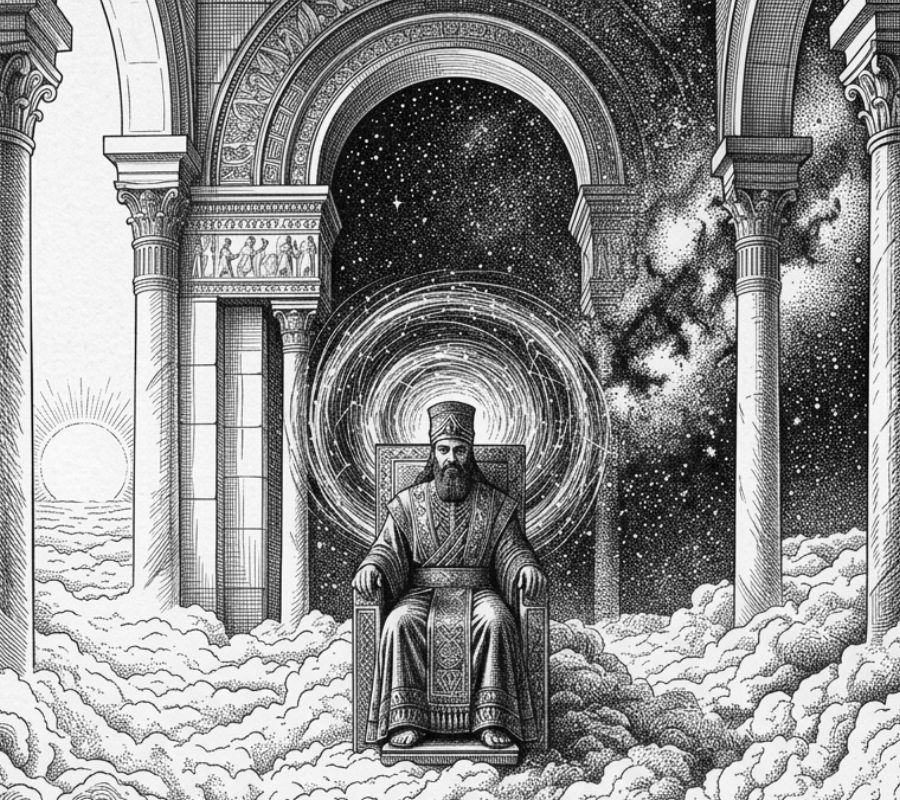
Up there, the world smelled different. The researchers of the German excavations in Warka documented a large well of fire north of the White Temple, two meters from the side, with evidence of intense and sustained combustion. In that well the offerings were burned: cereals, animals, and most likely aromatic materials such as resins and wood that the priests managed with zeal. The smoke of those offerings —carrier of the aroma of the cedar and the juniper— It was, according to everything, the message that humans sent up to the god of heaven An, whose temple crowned the platform.

The Mesopotamian gods inhabited the sky, and the perfume —which naturally rises upwards— was the most suitable physical means to reach them. The zigurat was, among other things, an olfactory transmission machine: a structure designed to bring the human aroma closer to the divine sphere.

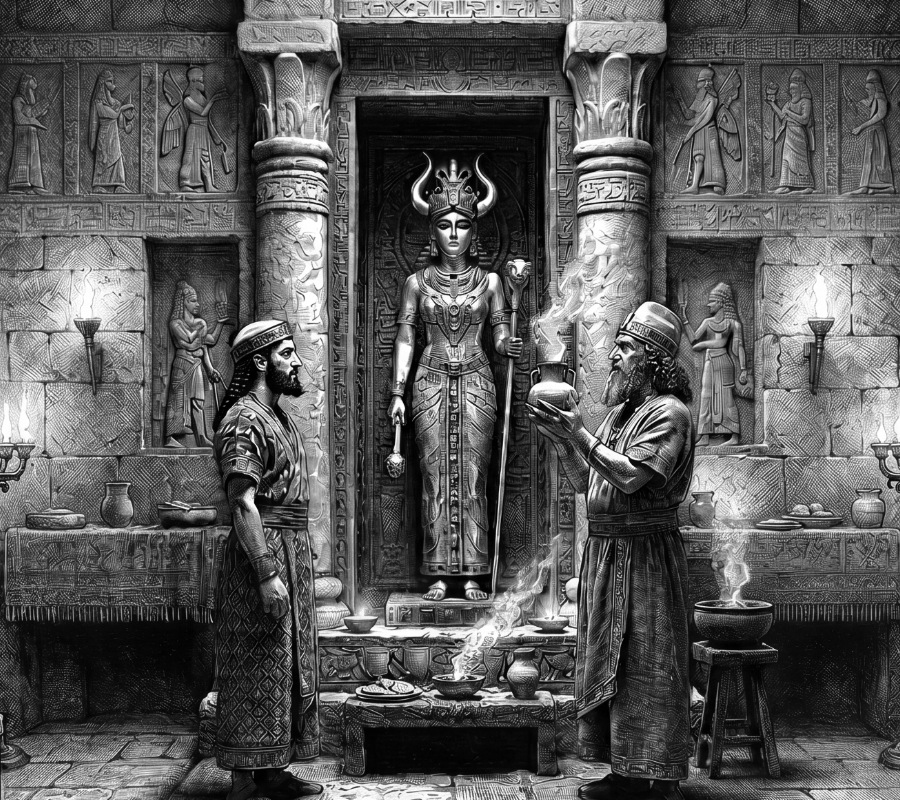
In the Eanna complex —the great seal of Inanna that covered between eight and nine hectares at the apogee of the late Uruk— The priestesses of the god Anu applied a mixture of wine and perfumed oil at the entrance of the temple. This practice created a sensory border between the outside and the inside: those who crossed that threshold passed from the world of daily odors to the world of consecrated aroma. The transition was physical and spiritual at the same time.

The odors of the trades

Uruk probably smelled different in every neighborhood. The archaeological evidence and subsequent texts that reflect older traditions suggest a city with a sensory mapping as rich as its architecture. Each trade had a specific olfactory profile, an aroma that identified the professional in urban space as effectively as any dress.

The gudu —the priestly-purifying that later semitic texts will call āšipu and whose name already appears on the first tablets of Uruk, becoming the first ritual specialist identified in writing in the history of humanity— with it, in all likelihood, the aroma of the cedar and the burning juniper (No specific sign, but GISZ = resinous wood on purification lists. Subsequent tradition confirms ritual use Maqlû). His work was to purify houses, stables and fields using resinous wood smoke, sacred water and demon clay figures. The resinous wood smoke was its tool and its olfactory signature at the same time.

The boat pilot carried the aroma of natural bitumen on his clothes and skin —asphalt of the Euphrates— with whom he was waterproofing his boat. A dark, resinous, mineral smell that identified him as a river carrier. The ceramic manufacturers, who produced in mass the beveled reed bowls in which the temple distributed food to its thousands of workers, released the smell of cooked clay and oven smoke: the first industrial aroma in history, the fragrance of the first standard production system in series.

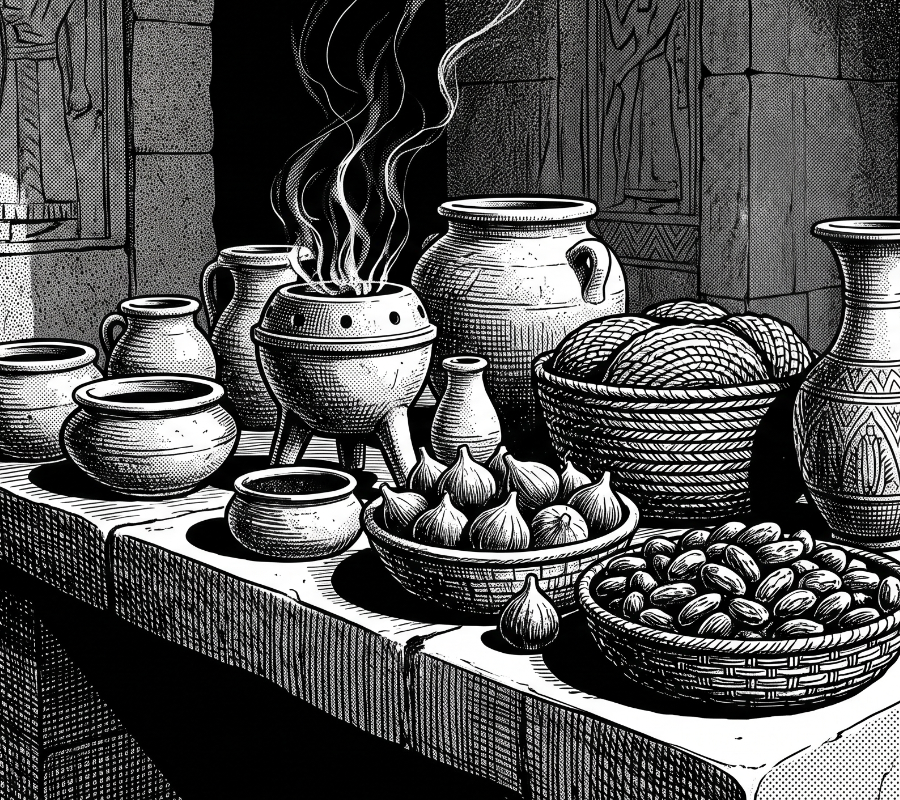
The nupāru —the baker of the temple that prepared the offerings of bread and sweet— It generated the aroma of sesame oil mixed with crushed datile, fermented flour and thick beer. A dense, sweet and slightly alcoholic aroma that impregnated the temple's artisans' neighborhood. And the cane cutters on the margins of the Euphrates carried the fresh and vegetable perfume of the wet joints: the same cane as in the poems of the Sacred Marriage formed the bed where Inanna and Dumuzi consumed their union combined the vegetable smell of aquatic nature with the oils of rite.

The Scripture & The Resources of the Temple

Cuneiform writing is the most important invention in human history. And he was born to manage resources. Between 3350 and 3200 BC, the scribes of the Eanna temple in Uruk developed a system of pictographic signs drawn on wet clay tablets that is the first writing system in the world. The investigations of Nissen, Damerow and Englund have established that these signs were born from the designs of the cylindrical seals that were used to authenticate containers of goods.

Uruk's first tablets are mainly accounting records. They document precisely how many cereal bowls are distributed to which workers, how many sheep produce wool for the temple, how many jars of oil are stored, what products reach the deposits. These products include oils, wood and plant categories which in the following centuries will constitute the aromatic vocabulary of the city. Management of these resources —including imported aromatic wood and sacred resins— It required exactly that type of precise administrative control.

The Jemdet Nasr period —about 3100 BC, when the Uruguayan colonial system collapses and the world is reorganized in smaller cities - state— produces a remarkable evolution: the 243 tablets discovered in the administrative building of Jemdet Nasr, near the present Babylon, show a more mature proto- cuneiform writing. Among his most fascinating data is the so-called 'city seal': an impression containing the names of up to a dozen Mesopotamian cities —Ur, Nippur, Larsa, Zabala and others, as identified by Matthews, R. and Richardson A. (2019)— and authenticated a system of coordinated offerings for the Inanna cult of Uruk.

Matthews, R. and Richardson A. propose that at specific times of the cultural calendar the statues of the deities were loaded in boats and transported between cities to receive offerings at each stop. A river procession of the gods. The priests who led the boats, the perfumed oils used in the reception of the statues, the fruits and the fish offered by each city: a total sensory experience perfectly orchestrated in the midst of a climate crisis, because the aridification documented around 3100 BC had shaken the mesopotamic plain. It seems that the cult was the network of resilience.

The First Globalization of Luxury

The 'Uruguayan World System' —the term that was coined by researcher Guillermo Algaze to describe the exchange network of the late Uruk period— It was, among other things, the first globalized system of aromatic trade. Uruk established colonies and commercial enclaves from the Persian Gulf to the Tauro massif and from the eastern Mediterranean to the Iranian altiplano, in an arch of more than three thousand kilometres. Each enclave controlled access to raw materials that the mesopotamic plain needed.

Habuba Kabira, in the Middle Syrian Euphrates —a planned Uruguayan colony with architecture identical to that of Uruk, active between 3500 and 3100 BC— He controlled the corridor towards the wood of the Amanos and the metals of the north. Godin Tepe, in the Iranian Zagros, opened the way to Afghanistan's lazuli. Arslantepe, in the Eastern Anatolia, was the metallurgical center where arsenic copper was produced with Tauro wood. The same routes that carried these raw materials also carried aromatic resins from the mountains, smelly wood from the forest slopes and spices from the east.

The route connecting the Badakhshan mines in the north-east of today's Afghanistan to the Uruk temple workshops, going over three thousand kilometres through the Iranian altiplane and the Mesopotamic plain, is a predecessor of the Silk Road for more than three thousand five hundred years. All along the same route, the rare aromatic resins of the eastern Zagros were reportedly travelling. The lazuli and aromatic resins were the two great luxury goods on the eastern route of Uruk, two substances that the mesopotamans considered equally precious: the first for sacred jewelry, the second for liturgy. Blue and smell: the two luxuries that justified the longest journey in the ancient world.

WHAT THE WORLD'S IMPORTANT URUK
cedar wood · Amanos / Lebanon / Syria · Caves of temples, resin, ritual oil
Coniferous resins · Amanos / Zagros · Incense, purification, libations
Juniper and cypress · Taurus / Zagros · Compound aromatic oils
Lapis lazuli · Badakhshan, Afghanistan · Holy Jewelry, offering
Copper and bronze · Oman / Taurus / Zagros · Tools, weapons, ritual vessels
Obsidian · Nemrut Dağı Volcano, Anatolia · Cutting instruments

In return, Uruk exported what a city can produce when it has the best bureaucracy in the world: high-quality wool textiles made by thousands of temple workers, technically superior ceramics, alabaster vessels and diorita carved in its workshops; and —essential— manufactured perfumed oils. Mesopotamic sesame oil, perfumed with cedar, juniper, and cipris through prolonged maceration, was in all likelihood a prestigious export product that the elites of the peripheral regions acquired as a marker of status and link to the Uruguayan ideology. Uruk's scent was also his brand.

Collapse and ritual reinvention

By 3100 BC, the Uruguayan world system collapsed. The colonial settlements of the Syrian Euphrates were abandoned. Susa redirected its commercial connections to the proto- elamite world. The great Eanna in Uruk suffered a dramatic reorganization: the monumental buildings of the late Uruk were systematically dismantled up to 50 centimeters high and the space was filled with rubble. In those rubble —which archaeologists call the 'archaic filler'— was most of the proto- cuneiform tablets recovered in Uruk: the temple file, destroyed and buried at the same time of collapse.

Causes combined climate disruptions —a documented aridification towards 3100 BC that reduced rain and river flow rates— with the internal pressures of a system so complex that any disturbance in the periphery shook the center. The first globalized system in history proved to be also the first to show that globalization produces systemic fragility.

But what followed was reinvention. The Jemdet Nasr period —c. 3100-2900 BC— shows a remarkable cultural resilience. Without the colonial system, without the long routes to Anatolia and the Western Zagros, the Mesopotamian cities found a new mechanism of cohesion: the shared rite. The city seal system and the river processions of divine images turned Inanna de Uruk's cult into the network that held cities that already depended on cultural rather than commercial links.

The Jemdet Nasr could not bring cedar from Lebanon with the same ease as the late Uruk. But he found in the interurban ritual exchange —the fish of the Gulf, the fruits of the north, the wine of the hillsides of the Zagros, the oils of each city— a new aromatic vocabulary. The innovation of these centuries was to turn perfume into social cement: the aroma was also a declaration of belonging to a community of cities that shared the same smoke, the same goddess and the same Euphrates.

Human sweat
Chemical sign: Carboxylic acids (isovaleric, butyric), sulphide compounds
Common scenarios: Intense physical activity (hunting, size), inside caves, shared spaces.


Fresh blood and viscers
Chemical signal: 1-octen-3-ol, volatile amines
Common scenarios: Carnicery of large dams (mammoth, bison, horse), initial break areas.

Fresh hides and skins
Chemical sign: Medium-chain fatty acids, nitrogenated compounds
Common scenarios: Initial processing of skins for clothing and shelter.

Excrements and urine
Chemical sign: Scatol, indol, ammonia
Common scenarios: Cave room areas, organic waste areas.

Natural tuna (asphalt of the Euphrates)
Chemical sign: Polycyclic aromatic hydrocarbons (PAH), thiophenes, sulfurated compounds (e.g. benzothiofene)
Common scenarios: Natural asphalt yacitions in the ancient Mesopotamia (Euphrates), waterproofing of ships and structures, mumification, gluing of tools.

Wet clay smell
Chemical sign: Geosmine, 2-methyl-isoborneol (MIB), long-chain compounds derived from actinobacteria
Common Scenarios: Row of rivers and lakes after the rain, pottery workshops, clay soils removed, mud quarries.

Wine
Chemical sign: Ethanol, esters (ethyl ethanoate, ethyl octanoate), upper alcohols (isoamilol), acids (tartaric, malic), tannins
Common scenarios: fermentation bodegas, catas, underground wineries, ceremonial meals.

Beer
Chemical sign: Ethanol, esters (isoamyl acetate), dimethylsulfide (DMS), upper alcohols, volatile fatty acids (isovaleric), hops (humulenes)
Common scenes: Handmade breweries, fermentation barrels, taverns, peasant parties.

Smell of bread or sweet baked
Chemical sign: 2-acetyl-1-pyrrolin (smell of fresh bread), acetylpyrazine, furaneol (sweet caramelised), diacetyl (mantecoso), reductone compounds
Common scenes: Sunrise bakeries, wood ovens, pastry shops, domestic kitchens during baking.
We appreciate your contribution.

Open access sustained by cultural co-responsibility.