

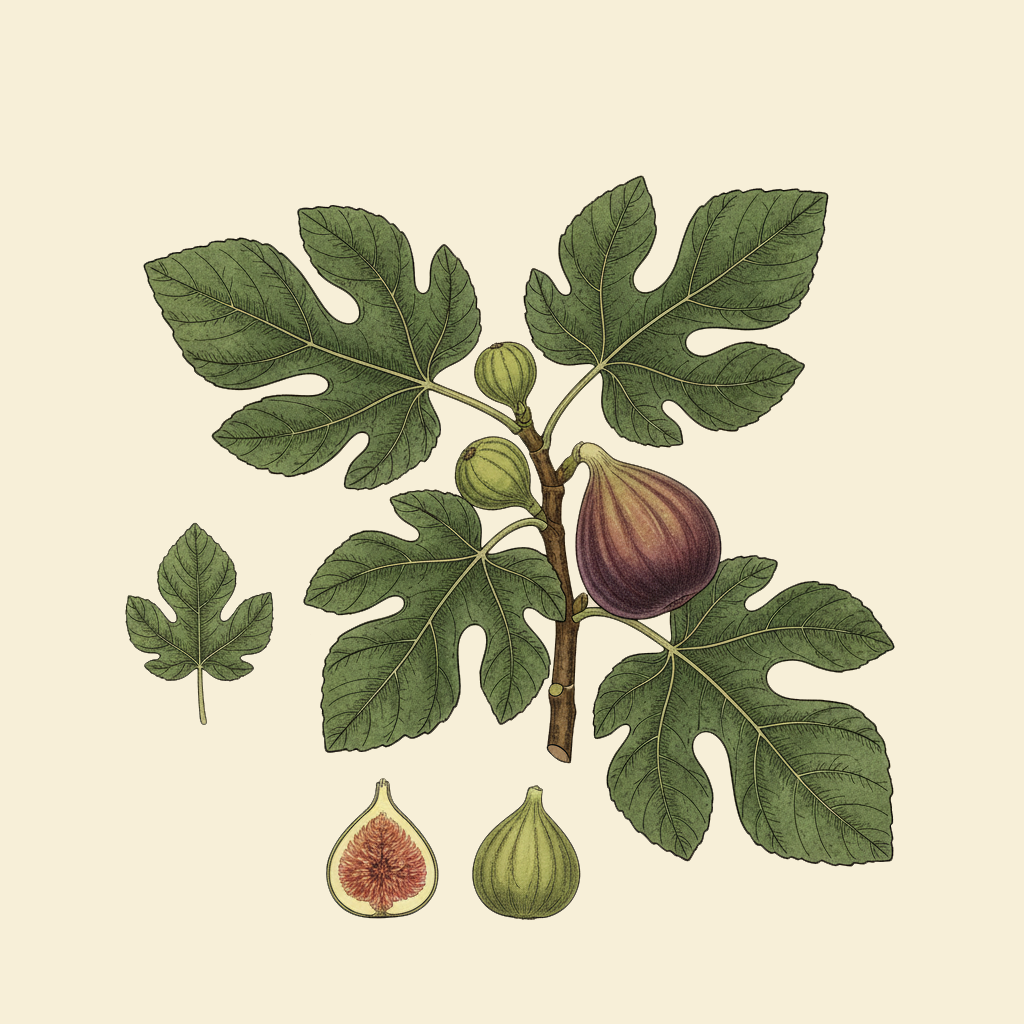
The Higo It is native to a region from the Eastern Mediterranean to Western Asia (Turkey, Afghanistan, Pakistan). Its domestication predates that of cereals, with archaeological evidence of its cultivation dating back to 9000 BC in the Jordan Valley. It was a fundamental plant for Roman, Greek and Egyptian civilizations.
-
Distribution and Biomas: It is originally developed in rocky areas and riverbanks of Mediterranean and subtropical climates. It is currently grown in temperate-warm and dry climate regions around the world, known as the "fig climate."
-
Major Producers: The main producers of figs worldwide are Turkey, Egypt, Algeria, Morocco and Iran. Production is often very located in countries of the Mediterranean basin and the Middle East.
Fast source: Royal Botanic Gardens Kew
Species & Culture
Use: Food (fruits)
Evidence: They've recovered. fruits like those of the wild fig of carbonized remains in Neandertal homes in sites in the Near East such as the Kebara Cave (Israel), Amud and Gibraltar. This suggests that the fig was part of his diet, along with other fruits and nuts.
Fast source: PubMed
Use: Probably the consumption of wild figs as soft, sugary and energetic fruit in the diet of the groups that frequented Göbekli Tepe, taking advantage of the fig trees of vaguada and rocky slopes of the Tek Tek Mountains.
Evidence: Paleoenvironmental and regional vegetation studies for the south-east of Anatolia indicate that, in the early Holocene, the landscape of Tek Tek and related areas combined grassy steppe with woody bushes including Ficus carica, among other Mediterranean-iroturanian taxons. Although the archeobotanic set of Göbekli Tepe itself is poor and dominated by wild cereals and fruits of Prunus and Pistacy identified, the reconstruction of local flora and the parallel with other neolithic deposits in the region (such as Gusir Höyük or settlements of the Tigris and Euphrates) support the presence of wild fig trees in the immediate environment of the sanctuary.
Fast source: https: / / pmc.ncbi.nlm.nih.gov / articles / PMC7822836 /
Name in old languages
Sumerium: peš (fig tree, fig)
Acadio: tittu (fig tree, fig)
The fig is one of the first fruits cultivated by humanity, with evidence of management from ca. 11 000 to. C. in the Jordan Valley, which places it before the beginning of cereal farming. Its cultivation in Mesopotamia is attested from at least the third millennium a. C.
Food: It was a daily food, fresh, dry ingested and fermented preparations. The dried figs (ana suluppī, together with dates and raisins) were used in the production of a kind of fruit wine and a spicy bread. The Sumerian king Urukagina wrote about the fig tree almost 5000 years ago, and the Neobabilonic king Nebuchadnezzar II ordered to plant fig trees in the legendary Pendant Gardens of Babylon.
Medicine: Mesopotamic medical texts include fig as a therapeutic ingredient. The fig tree (tittu) appears in recipes for gastrointestinal diseases. Sumerian cca. 2500 a. C. record the culinary and medicinal use of the fig, the oldest known written testimonies of its application. Both fruit and leaves were used medically.
ritual and economic use: The fruits and their milky sap were known elements in the ritual pharmacopoeia of āšipu (exorcist-healer). The figs appear next to the dates and grapes in the lists of provisions of the temples and the mesopotamic palaces.
Quick links:
Aladabj, University of Baghdad, 2021. "Fruits and their uses in Mesopotamia light of published Cuneiform texts." Al-Adab Journal.
American Herb Products Association (2022). "Herbs in History: Fig."
Şlez-Tejero, M. R. et al. (2008). "Medicinal plants in the Mediterranean area." Journal of Ethnopharmacology.
Haines, R. C. (1971). Excavations in the Plain of Antioch, II. Oriental Institute Publications 95. Chicago.
The Spruce Eats (2019). "The Sweetness of Figures From Garden of Eden to Modern Day."
The fig is not directly extracted by essential oils due to its low volatile compound content.
Synthetic Molecules Used
Due to the limitations of natural extraction, the perfumistic industry mainly uses synthetic molecules to recreate the smell of the fig:
- 3- phenylpropionic acid: Provides balsamic notes and sweet fig features
- Lactonic compounds: Recreate the creamy and lactic notes of the fig tree
- Synthetic acordes: Molecular combinations that reproduce aromatic complexity (pulp, skin, sap)
Fast sources: Patent
Synthetic molecules used to recreate the fig are subject to standard IFRA regulations according to their specific molecular classification. There are no particular restrictions on the use of fig chords in perfumery, but individual components must meet the limitations established by product category.
The European legislation governing flavourings, including fig, is Regulation (EC) No 1334 / 2008 on food flavourings and their ingredients, together with Regulation (EC) No 1331 / 2008 establishing a common authorisation procedure. The permitted flavourings are listed in Annex I to the first Regulation, which is updated by EU 234 / 2011 and EU 872 / 2012.
Space under construction by collaborators.
The section Technical information and has a general arguative character. It is presented for information purposes to promote responsible knowledge. Because of the risks associated with the incorrect use of botanical extracts, aromatic molecules and the increase in unregulated practices in the production of aromatic products, Myrodia Khartes has chosen not to disclose complete extraction methodologies or specific concentrations that may compromise public safety. Health, ethics and scientific integrity guide our decision to limit the exposure of certain technical data.
- European Commission. (2009). Regulation (EC) No 1223 / 2009 on Cosmetic Products. Official Journal of the European Union, L 342, 59-209.
-
IFRA (International Fragrance Association). (2023). IFRA Standards Library: 52nd Amendment.
- The Good Scens Company. (2025). Fragrance Raw Materials Database

