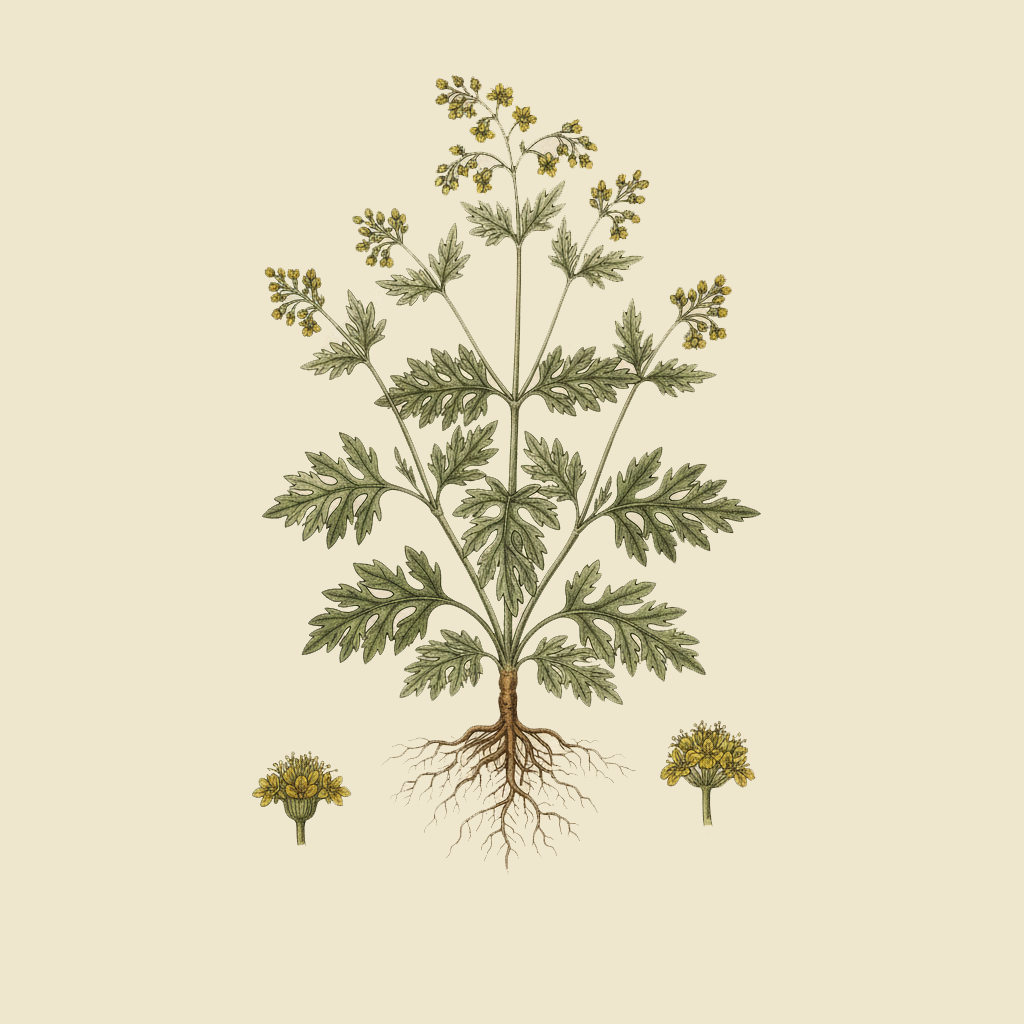

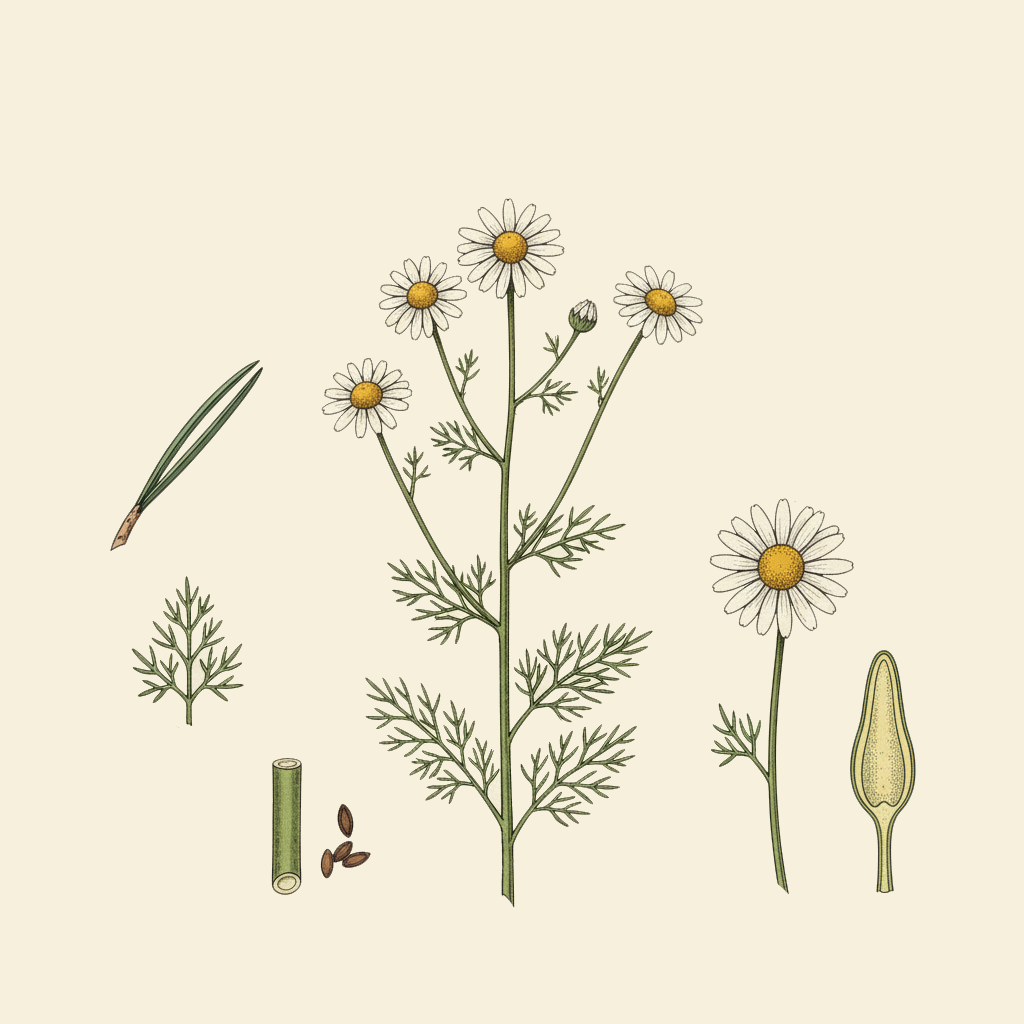
The Apples is native to South and East Europe (Balkans, Eastern Europe) and Western Asia. Its medical use has been documented since ancient Egypt, Greece and Rome. It should not be confused with the Roman chamomile (Chamaemelum nobile), which is another species.
-
Distribution and Biomas: It grows wild in meadows, abandoned fields of cultivation and the edges of roads in temperate and steppe grassland biomes. It is grown extensively in temperate regions with well drained soils.
-
Major Producers: It is an important cultivated medicinal plant. The largest producers are Egypt, Argentina, Spain, Bulgaria and Hungary.
Fast source: Royal Botanic Gardens Kew
Species & Culture
Use: Medical.
Evidence: In the El Sidron field in northern Spain, traces of likely chamomile were identified in the dental calculation of neandertal. Although the exact motivations are vague, its use for medicinal purposes has been suggested, since chamomile is a medicinal herb. However, it may also be used as a flavour in food. Part of the environment: Its presence in dental calculation indicates that it was part of the environment accessible to neanderthals in that region.
Fast source: PubMed
The chamomile is mainly extracted by steam distillation:
- Optimal method: Pilot distillation at controlled temperature
- Performance: 0.06-0.08% of dry weight of plant material
- Duration: 3-7 hours of distillation
- Material: Dry flowers mainly
Main Aromatic Components
The essential chamomile oils contain:
- α-bisabolol: 4.8-50.5 per cent (main component)
- Chamazulene: 2.3-15.1% (responsible for blue)
- α-bisabolol oxides A and B: 25.5-30.9%
- (E) -β-pharnesene: 4.9-8.1%
- Farnesol: Terpenic alcohol with aromatic properties
Fast sources: Sterno
According to IFRA 51st Amendment regulations:
- α-bisabolol: Regulated with specific maximum concentrations per product category
Category 1 (lip products): 10.50%
Category 4 (perfumes): 600.00%
Category 5A (body lotions): 3%
The chamomile is included in the European Cosmetics Regulation (EC No. 1223 / 2009) and must meet the established standards of purity and safety.
Space under construction by collaborators.
The section Technical information and has a general arguative character. It is presented for information purposes to promote responsible knowledge. Because of the risks associated with the incorrect use of botanical extracts, aromatic molecules and the increase in unregulated practices in the production of aromatic products, Myrodia Khartes has chosen not to disclose complete extraction methodologies or specific concentrations that may compromise public safety. Health, ethics and scientific integrity guide our decision to limit the exposure of certain technical data.
- European Commission. (2009). Regulation (EC) No 1223 / 2009 on Cosmetic Products. Official Journal of the European Union, L 342, 59-209.
-
IFRA (International Fragrance Association). (2023). IFRA Standards Library: 52nd Amendment.
- The Good Scens Company. (2025). Fragrance Raw Materials Database