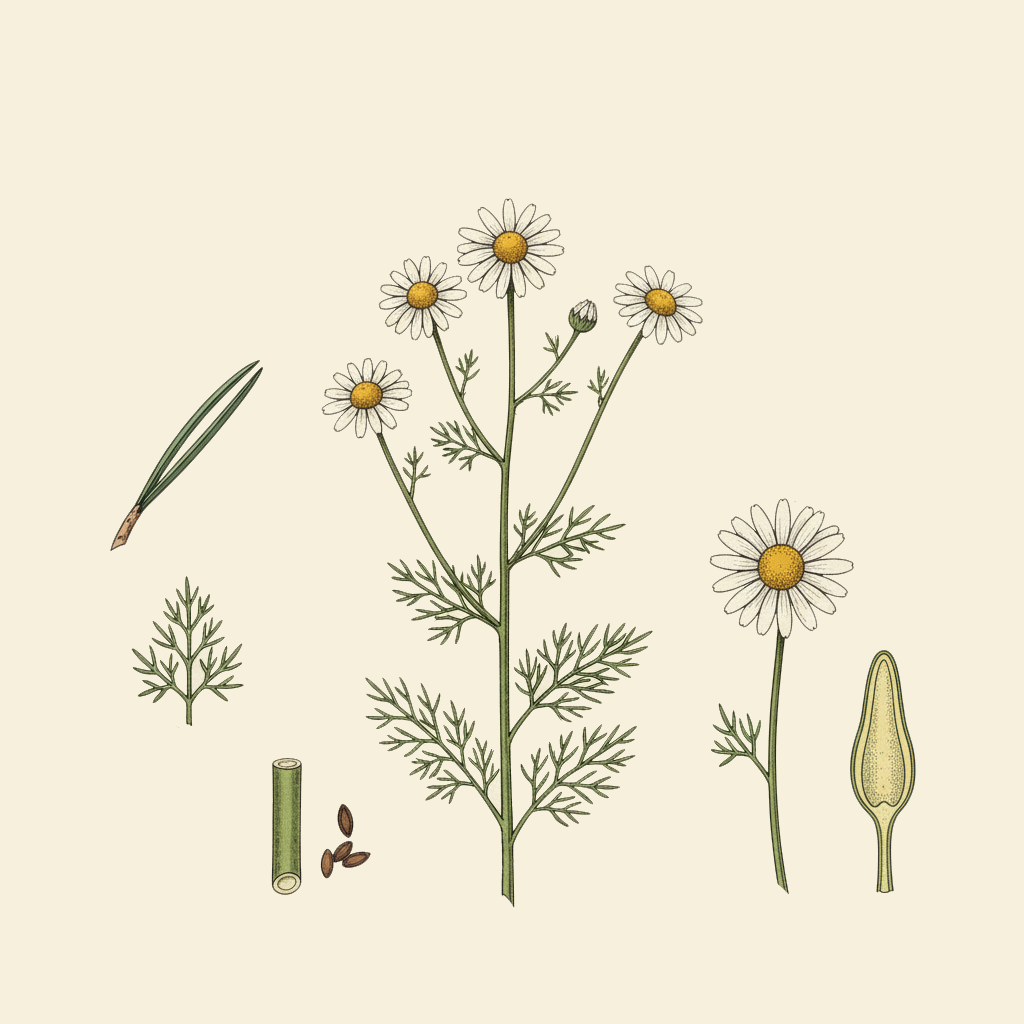

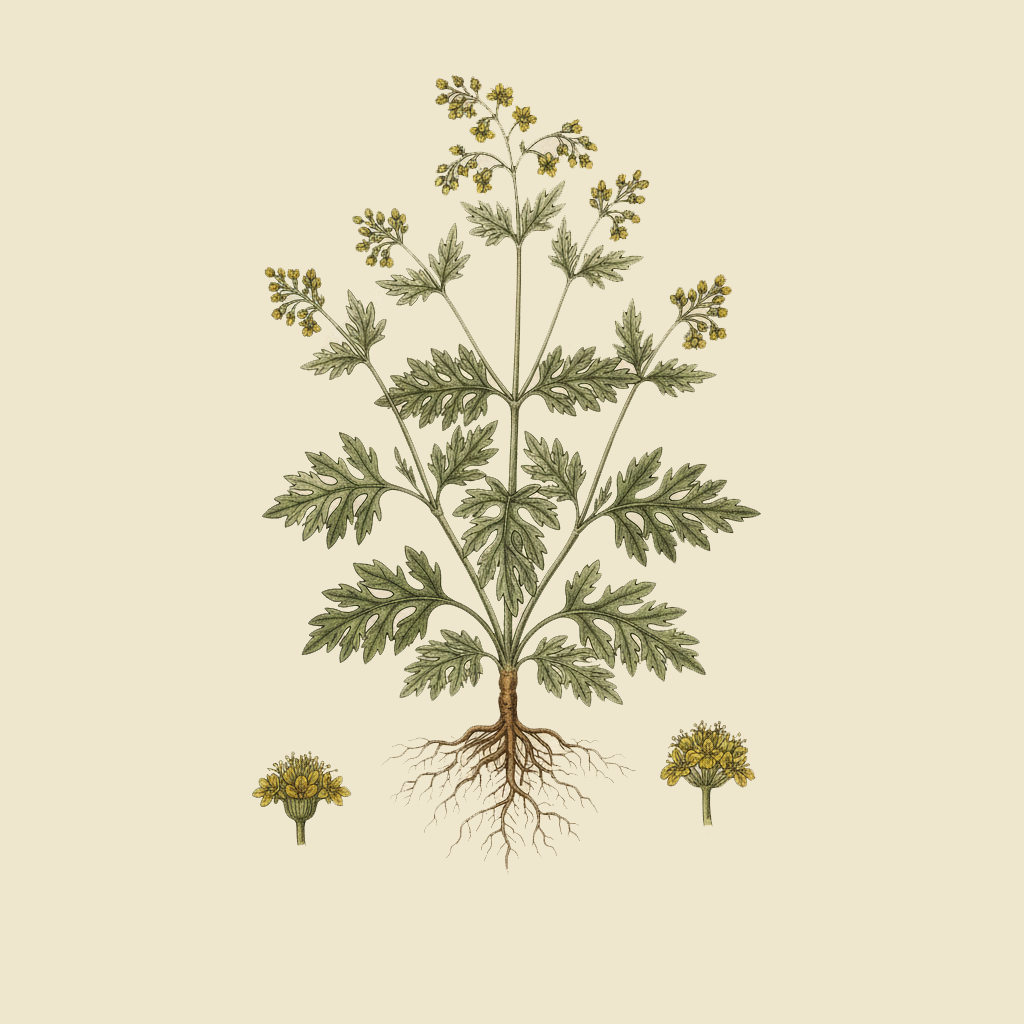
Gender Artemisia It is native to the temperate regions of the northern hemisphere, particularly Asia, Europe and North America. Many species are from dry steppes and mountainous areas of Central Asia and the Mediterranean basin. Their history with humans is very long; their medical use is recorded (for example, the Artemisia annua in traditional Chinese medicine) and ritual since ancient times. It is mentioned in Egyptian papyrus and ancient Greek texts.
- Distribution and Biomas: Although from the north, many species have naturalized in other parts of the world. Prosperan in Arid and semi-arid biomassuch as steppes, dry meadows, Mediterranean bushes (maquia / garriga) and on well drained mountain slopes. They are pioneers in disturbed soils and are very adaptable to drought conditions and poor soils.
- Major Producers: Commercial production is mainly concentrated on species for the pharmaceutical industry (Artemisia annua to extract artemisinin, an antimalaric), perfumery and liquors (such as Artemisia absinthium for the wormwood). The largest producers are: China and Vietnam: They are the leaders in the cultivation of A. Annual for the production of artemisinin. Europe (Spain, France, Eastern Europe): They produce species such as A. absinthium and A. vulgaris for distillery and herboristery.
Fast source: Royal Botanic Gardens Kew
Species & Culture
Use: Environment.
Evidence: Epresent in at least one site associated with the denisovans, the Cobra Cave in Laos. Specifically, in the Cobra Cave (Tam Ngu Hao 2 Cave), it is documented that approximately 160 thousand years ago (160 ka), the areas of savannah and wooded forest replaced the steppe of Artemisia. This suggests that, before this environmental change, the Artemisia was a component of the landscape in that region, although it was later replaced by grasses and cyperaceae. The individual Denisovano of the Cobra Cave lived in an age range of 164-131 ka.
Fast source: Elsiever
The main method for obtaining essential artemisia oil is the steam trawl distillation, which extracts the aerial parts (leaves and stems) of different species of the genus Artemisia. This process uses water vapour to separate volatile aromatic compounds from the plant.
In the specific case of Artemisia vulgaris (common artemisia), the vapour distillation process of the leaves produces an essential oil with performance of 0.15% to 0.7%. The parts of the plant are harvested preferably in autumn, when they lose approximately 65% of their weight after drying. The result is a yellow- greenish liquid with a characteristic tujonic aroma.
Stop Artemisia absinthium (wormwood), the vapour distillation of leaves and flowers produces an essential dark green oil with an acute herbaceous green opening that evolves towards warm, dry and well-willed notes.
Solvent Extraction (Absolute)
As an alternative method, it is possible to obtain a Artemisia absolute treating floral sumities and rhizoma with oil ether. The concrete obtained is then treated with alcohol to precipitate the waxes by freezing, resulting in an absolute of dark green to brown with an anisated and canned aroma.
Other Extraction Methods
For species such as Artemisia annua, the use of microwave-assisted extraction using solvents such as hexane and cyclohexane has been documented, although this method focuses mainly on the extraction of artemisin rather than on aromatic components.
Main Aromatic Components
Characteristics
The species of Artemisia contain mainly oxygenated monoterpenes as main aromatic compounds:
- α-Tujona: The majority component in many species is between 40.1 and 50 per cent of essential oil in Artemisia vulgaris. It is a monoterpenic ketone with an alcanforate aroma.
- β-Tujona: Present in lower concentrations (4.1% to 8.38%), it complements the aromatic profile of the α-tujone.
- Alcanfor (Camphor): Second most abundant component (8 to 35 per cent depending on the species), it provides characteristic notes.
- 1,8-Cineol (Eucaliptol): It is present between 3.5% and 14.5% and contributes fresh and mentholated notes.
- Tamphene: Monoterpeno that provides herbaceous notes (2.6 to 5 per cent).
Aromatic profile
The essential oil of artemisia is characterized by being green, herbaceous, sour and bitter, with nuances that include notes of bitter chocolate and camomile. This unique aromatic profile makes it an exotic ingredient with great potential in perfumery compositions when properly combined.
Fast sources: MDPI
IFRA regulations set specific limits for the use of essential artemisia oils due to their tujone content, considered a neurotoxic substance:
For artemisia oils (Armoise), the maximum permitted concentrations according to IFRA 51 are:
- 2.641% in finished products
- These concentrations are derived from calculations that do not replace chromatographic quantification in individual lots
Space under construction by collaborators.
The section Technical information and has a general arguative character. It is presented for information purposes to promote responsible knowledge. Because of the risks associated with the incorrect use of botanical extracts, aromatic molecules and the increase in unregulated practices in the production of aromatic products, Myrodia Khartes has chosen not to disclose complete extraction methodologies or specific concentrations that may compromise public safety. Health, ethics and scientific integrity guide our decision to limit the exposure of certain technical data.
- European Commission. (2009). Regulation (EC) No 1223 / 2009 on Cosmetic Products. Official Journal of the European Union, L 342, 59-209.
-
IFRA (International Fragrance Association). (2023). IFRA Standards Library: 52nd Amendment.
- The Good Scens Company. (2025). Fragrance Raw Materials Database