

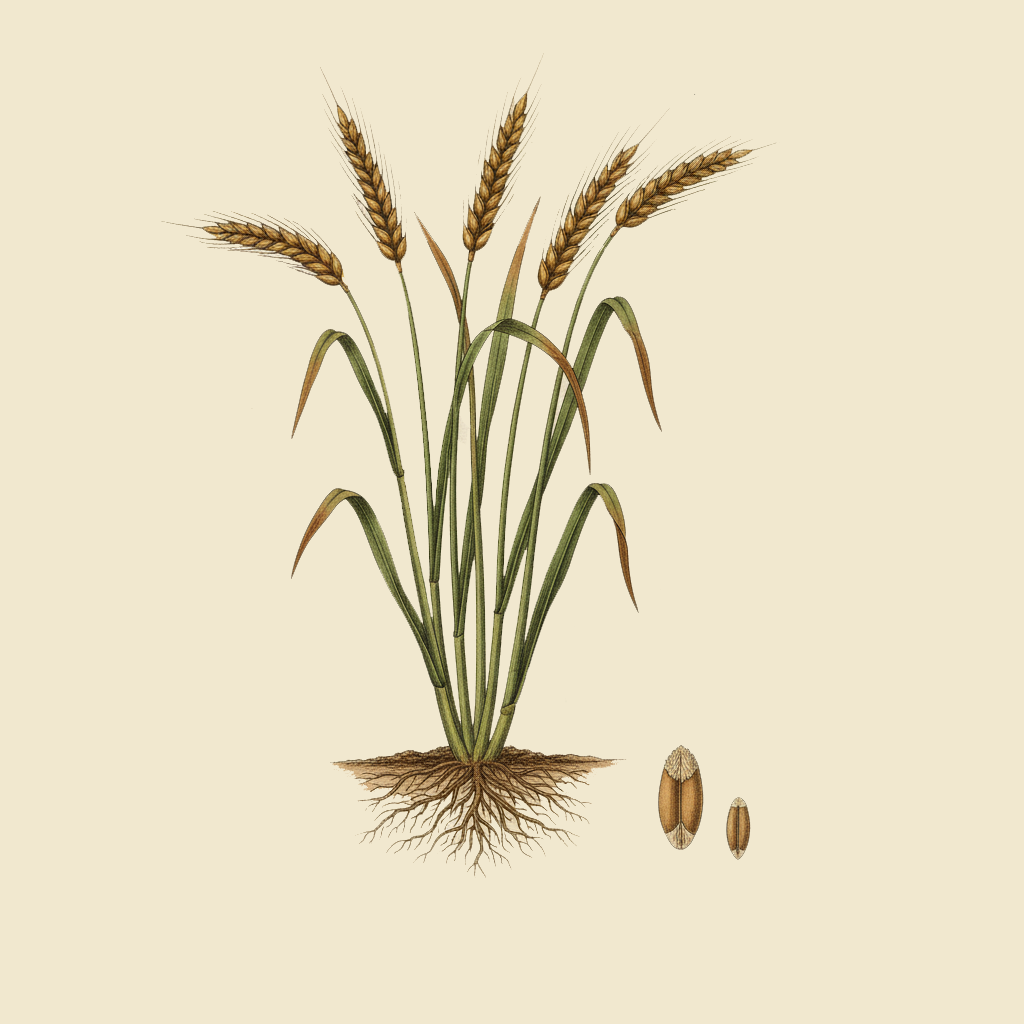
Family Poaceae is one of the most successful and ancient on the planet. The oldest confirmed fossils of grasses date from the Paleocene (about 66-56 million years ago), shortly after the extinction of dinosaurs. However, evidence of phytolytes (silica microorganisms) suggests that they may have existed in the late Cretaceous. Its global expansion coincided with the cooling and aridification of the global climate during the Miocene (about 23-5 million years ago), when the meadows and savannas began to replace the forests. Its domestication (wheat, barley, rice, corn) some 10,000 years ago marked the beginning of agriculture and modern human civilizations.
-
Distribution and Biomas: The grasses are ubiquitous and are found on all continents, including Antarctica. They are the dominant components of pasture, savannah, steppe and prairie biomas in tropical, subtropical, temperate and even Arctic climates. They are also crucial in other biomas such as wetlands, deserts (annual grasses) and as part of the underforest in many forests.
Fast source: Smithsonian National Museum of Natural History
Species & Culture
Use: Environment.
Evidence: Consumed directly or indirectly through the herbivores they were hunting, especially in meadow and steppe environments. Main component of grasslands, steppes, tundras, savannah and alpine grasslands (e.g. Tibetan altiplano). Cave Cobra (Laos), Cave Denisova (Siberia), Baishiya Karst Cave (Tibet), Asia (general).
Fast source: Nature
The green grass as an aromatic note in perfumery is not traditionally obtained by direct extraction of common grass, as it does not contain commercially viable levels of essential oils. Instead, they recreate synthetic using specific molecules that faithfully imitate this aroma.
Main Aromatic Molecules
The most important molecule to recreate the aroma of green grass is the cis-3-hexenol (CAS 928-96-1), also known as "leaf alcohol." This natural molecule:
- It is found naturally in plants
- It is naturally released by the grass when cut as a defense mechanism
- Provides the characteristic aroma of "newly cut grass"
- It has an olfactory profile. Intensely green, fresh and herbaceous
Other complementary molecules include:
- cis-3-hexenyl acetate - esterified version of the cis-3-hexenol
- Triplal - with more metallic tones
- Hexanal (Aldeído C-6) - provides green and aldeidic notes
- Nonadienal - known as violet leaf aldehyde
Synthesis and Obtaining Process
Chemical synthesis
The cis-3-hexenol is obtained mainly by chemical synthesis in laboratory, as natural extraction is not economically viable at industrial level. Synthetic production allows:
- Increased purity and consistency of the product
- Precise control of olfactory characteristics
- Production at commercial level
- More competitive costs
Fast sources: Fraterworks
Regulations for cis-3- Hexenol
According to IFRA standards 51:
- No specific restrictions for category 4 (products applied to the skin)
- Recommended average concentration: 0.15% in perfumistic compounds
- Maximum level of use: It is recommended to dilute to 10% or less due to its high olfactory intensity
- Safety classification: Non-reactive material with a dermal awareness threshold of 900 μg / cm ²
Space under construction by collaborators.
The section Technical information and has a general arguative character. It is presented for information purposes to promote responsible knowledge. Because of the risks associated with the incorrect use of botanical extracts, aromatic molecules and the increase in unregulated practices in the production of aromatic products, Myrodia Khartes has chosen not to disclose complete extraction methodologies or specific concentrations that may compromise public safety. Health, ethics and scientific integrity guide our decision to limit the exposure of certain technical data.
- European Commission. (2009). Regulation (EC) No 1223 / 2009 on Cosmetic Products. Official Journal of the European Union, L 342, 59-209.
-
IFRA (International Fragrance Association). (2023). IFRA Standards Library: 52nd Amendment.
- The Good Scens Company. (2025). Fragrance Raw Materials Database

