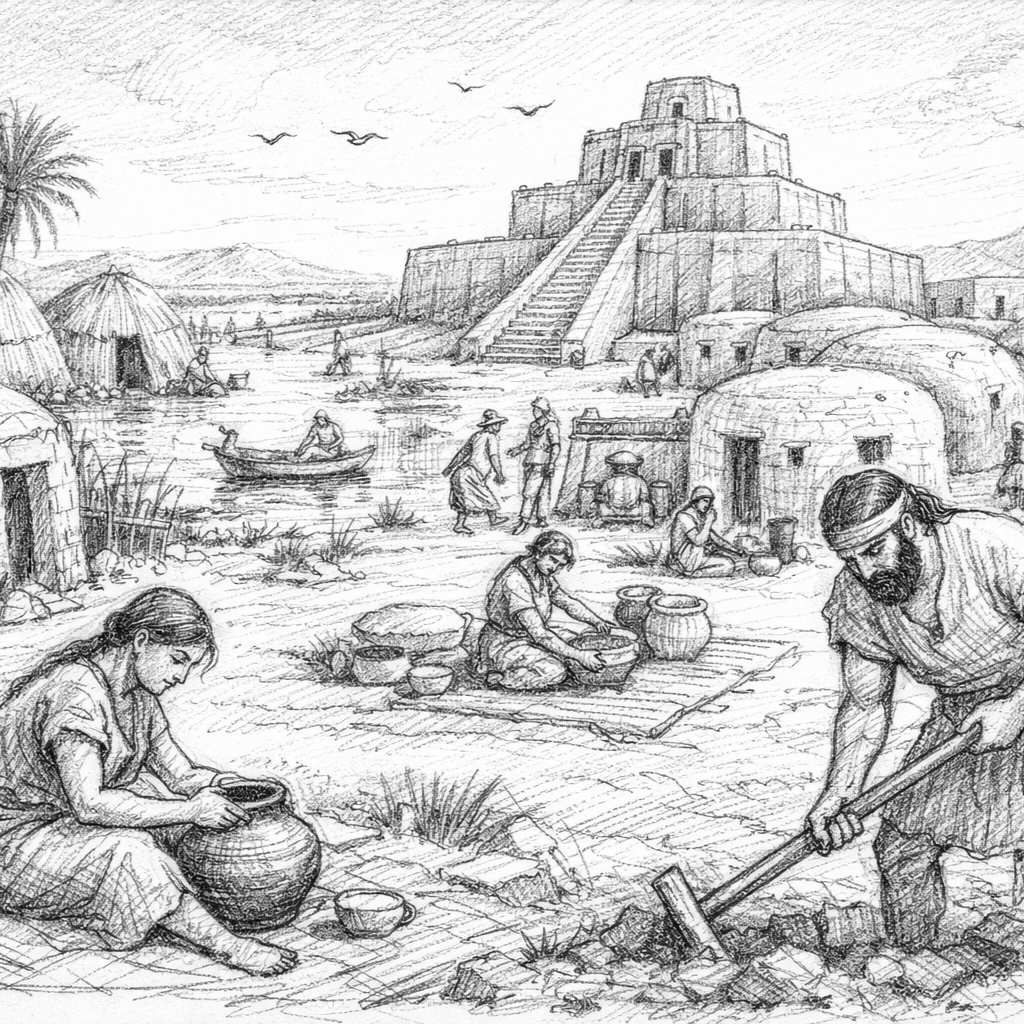



Close your eyes. Imagine a city walled under a sun of justice, in the south of today's Iraq. It is Uruk, towards the third century before our era, in the middle of the Seleucid era. The heat limeals the mud of the streets, but as you approach the great high temple, the air changes. A dense, sweet, bitter aroma at the same time, it hits your nose. It's the smell of divine power. It's the smell of Anu, the god of heaven.
Archaeologists and philologists have been rebuilding flavors, textures and, above all, the odors of mesopotamic ritual life for decades. The clay tablets written in cuneiforme keep lists of ingredients, perfumes recipes and resin delivery records. There is a fascinating technical vocabulary: šim (aromatic in a broad sense), šim ∞ i-a (aromatic mixture), qutrīnu (incense to burn), i (fine oil, literally "good oil" to ungir). Anu, despite being such a high deity that he barely stepped on the earth in the myths, received in his sanctuary a very earthly sensory treatment: smoke, anointing and perfume.
The White Temple and the zigurat that smelled of cedar
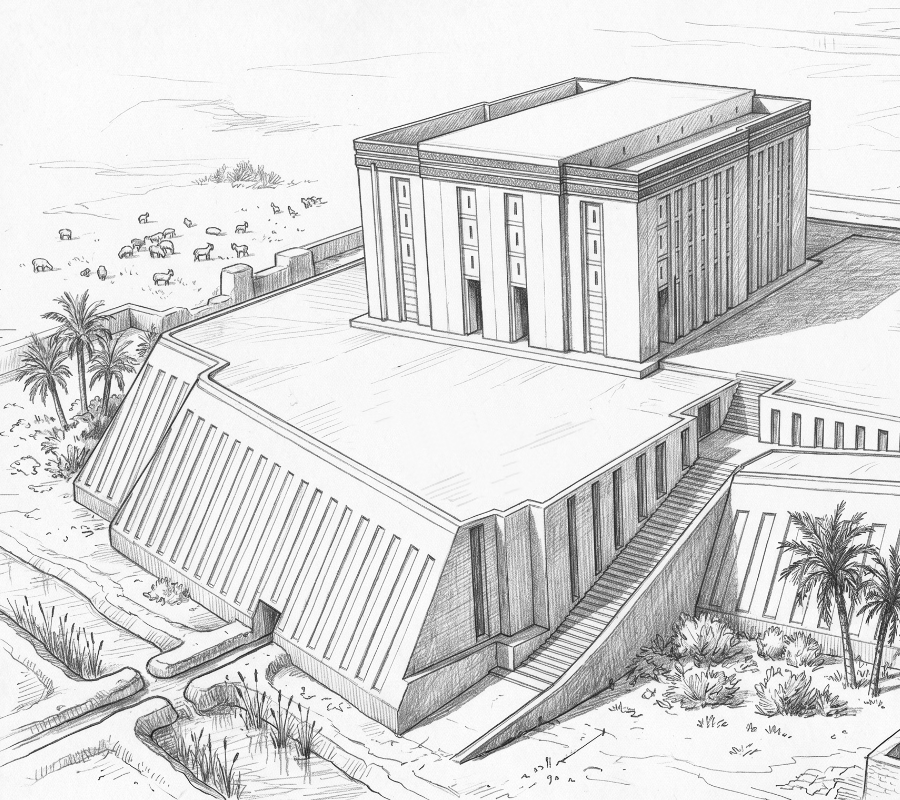
The main house of Anu in Uruk the great elevated temperary complex known as Eanna, the "House of Heaven," was traditionally the domain of Inanna. However, in the late Uruk, when the cult of Anu regained prominence, this monumental space was closely linked to the veneration of the god of heaven. From the steps of the zigurat, the priests ascended with the very aroma of the heavenly abode.
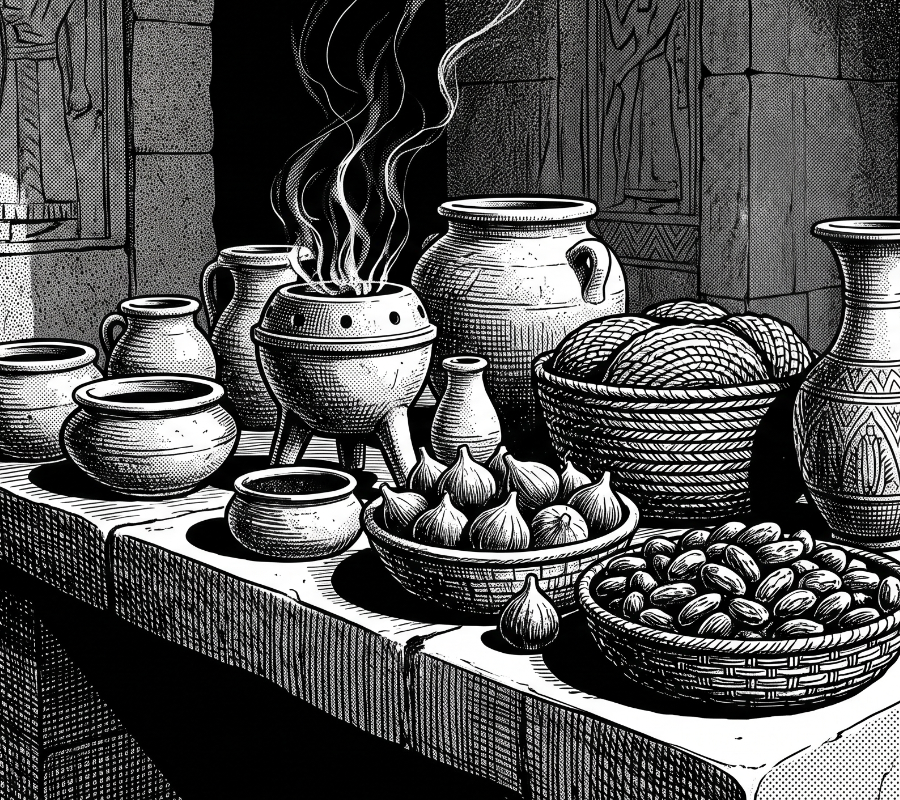
The textual evidence of the second and first millennium before Christ shows a constant flow of aromatic wood into the temples. The cedar (ēru), cipris (šurmin or burāšu) and probably the juniper appear over and over again in the inventories. The woods had different types of uses, were construction materials, but they were also shredded from these woods, mixed with sesame oil and cooked slowly to get thick and perfumed ointment. They were also burned directly on brases, filling the sanctasanctomum with a resinous, clean and penetrating smoke.
The administrative boards of cities such as Larsa, contemporary of the cult of Anu in the paleobabilonic periods and house, record pieces of "shredded cedar wood" intended for the qutrīnuthat is, the incense that was burned for the gods. The name of deity varies according to the temple, but the principle is the same: the supreme divinity deserves the best of woody aromas.
Resins of Arabia: the myrrh, the olive tree and the blood of the trees
Long-range trade led Uruk to even more exotic products. From the coast of Oman and southern Arabia came resins of Boswellia (olive oil or frankincense) and Commiphora (myrrh or bdelio). They were precious substances, sometimes called Ο īlu or akal in the texts, which were paid by weight of silver. Archaeometric analyses of incense burners found in Taymāğ and other enclaves of the commercial route show that these resins were in ceremonial contexts connected with mesopotamic culture.
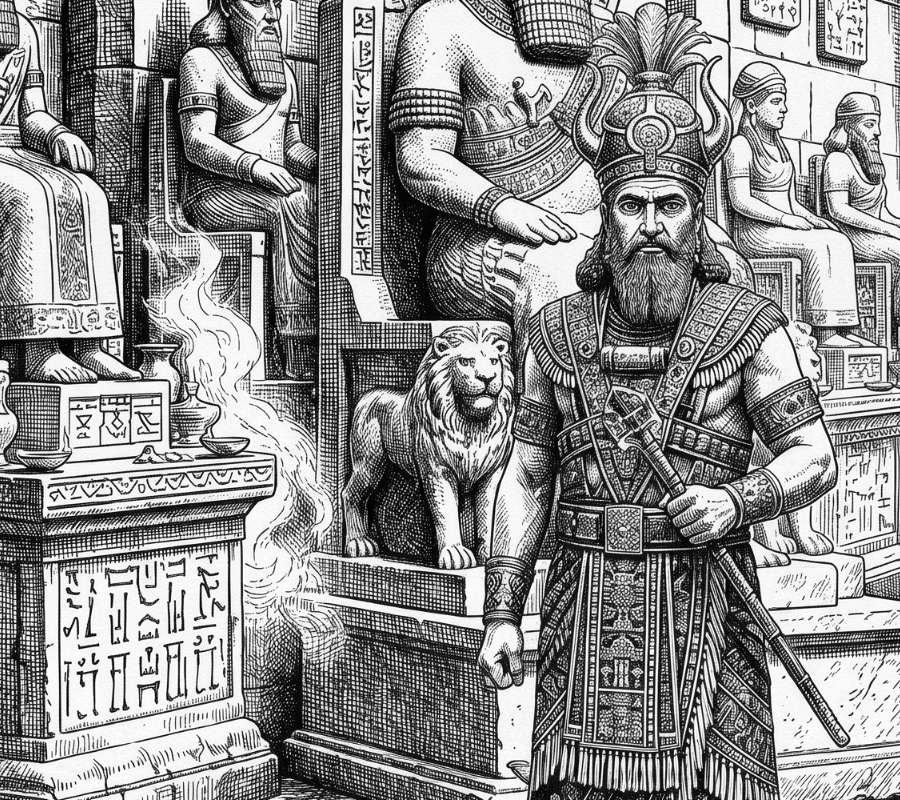
What were they used for? The answer is in the rituals of night fire that Julia Krul has studied in the Seleucid Uruk (3rd to 1st centuries before Christ). In that late time, the priests promoted a rebirth of the worship of Anu and his wife Antu. One of the central ceremonies took place at night, around a fire on in the temple yard. The texts do not always detail the list of ingredients, but the ritual logic is clear: aromatic smoke purifies, protects and makes visible the divine presence. Burning myrrh and olive tree was opening an olfactory window to the sky. The sparkling of the resins in contact with fire, that smell of hot balm and distant spices, turned Eanna's courtyard into a terrestrial copy of the heavenly court.
The use of pistacy resins is also documented (Pistacia terebinthus or Pistacia lenticus), a common tree on the Levant. Its smell is more terrous and green, but equally sacred. The texts mention "resin of buħnu"in mixtures for ointment, suggesting that mesopotamic perfumers knew how to combine different aromatic profiles. If we described them in the language of modern perfumery, we could talk about higher (cedar), mean (pistacy) and severe (myrrh) notes, braided with almost contemporary sophistication.
perfumed oils: the anointing of the divine statue
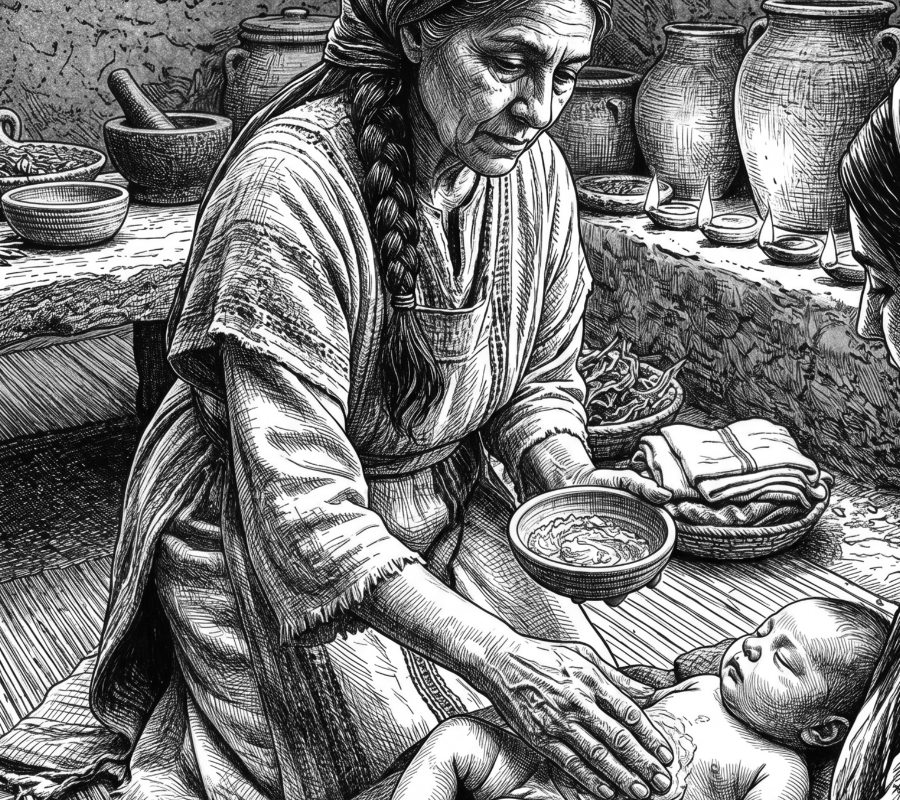
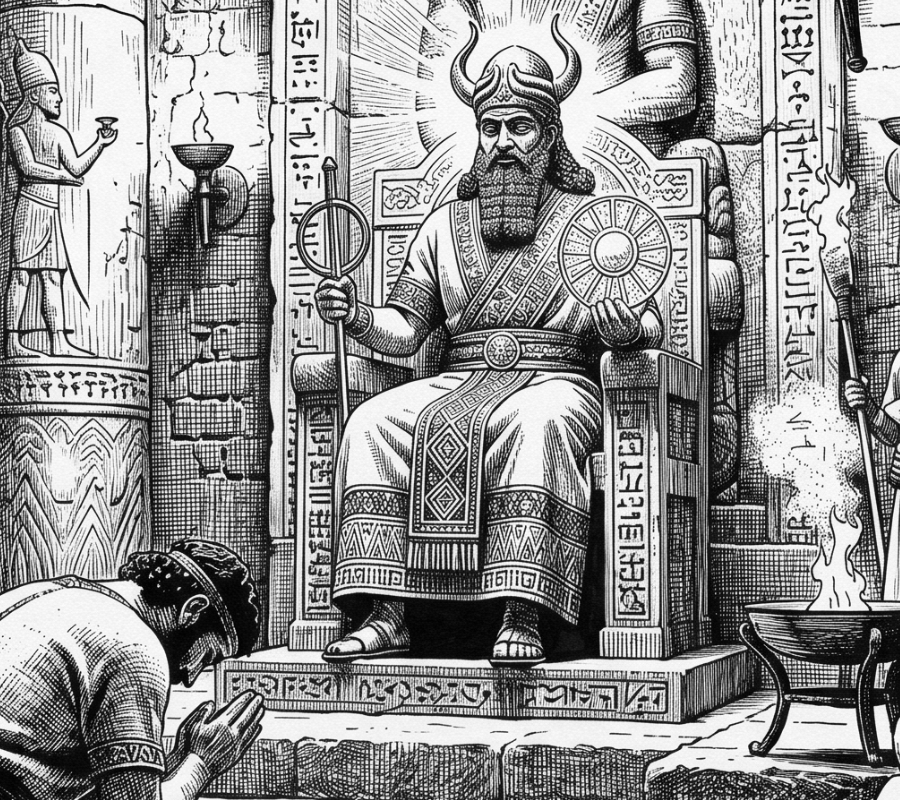
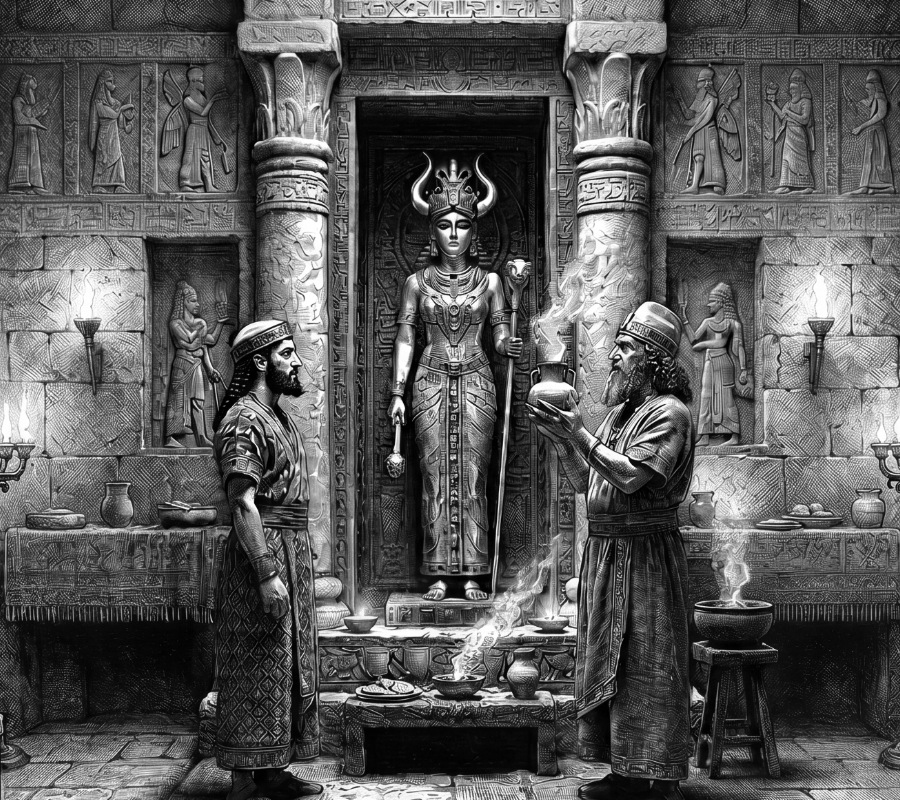
The statue of Anu within the cello was the god itself, materialized in wood, precious metals and stones. Every day, the priests šangû They dressed it, adorned it and anointed it with special oils. The procedure is described in Larsa and Uruk's own tablets: sesame oil was taken as a base, crushed resins and powdered aromatic wood were added, and the mixture was heated over slow heat for hours. The result was a dense, dark amber oil that perfumed the statue for days.
This smell of liquid incense was to be impregnated in the linen clothes of the God, in the curtains of the temple and in the ritual utensils. When a devotee entered the cello —something that only happened in great festivities—The first impression is very likely to be olfactory. In the dark, with the light of the oil lamps tilting on the reliefs, what involved the visitor would be a warm cloud of myrrh, cedar and roasted sesame. The aroma was probably the first proof that Anu was there.
The divine banquet and processions
Four times a day, the priests placed tables with food and drink in front of the statue of Anu. These divine banquets, in addition to being symbolic, were food for a few: after a ritual time, the offerings were redistributed among the temple staff. The rations tablets show that, next to the bread, beer and meat, small dishes with incense were also lit. The smoke accompanied the god's food just like a perfumed tablecloth accompanied an important dinner.
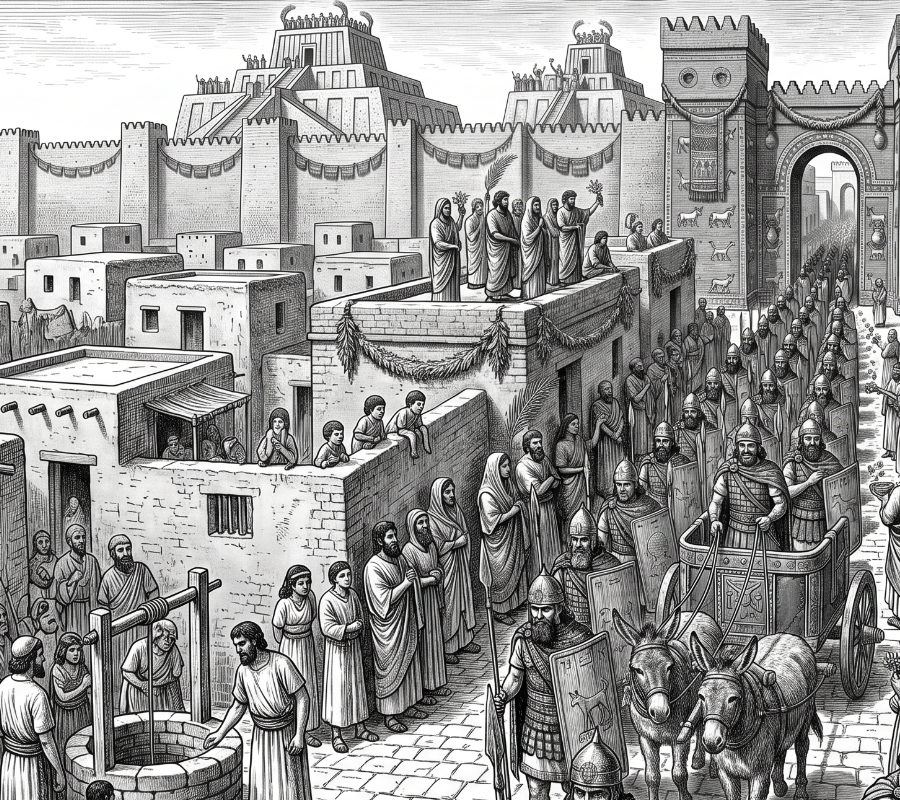
In the processions, when the statue of Anu came out of the temple to visit other sanctuaries during the holidays, the courtship drew a aromatic stele. The priests carried portable censaries, and the attendees sprayed perfumed oil on the ground. Thus, even the humble neighbourhoods of Uruk smelled for a few hours the spices of Arabia and the wood of the cedars of Lebanon. The sky touched the earth through the smell.