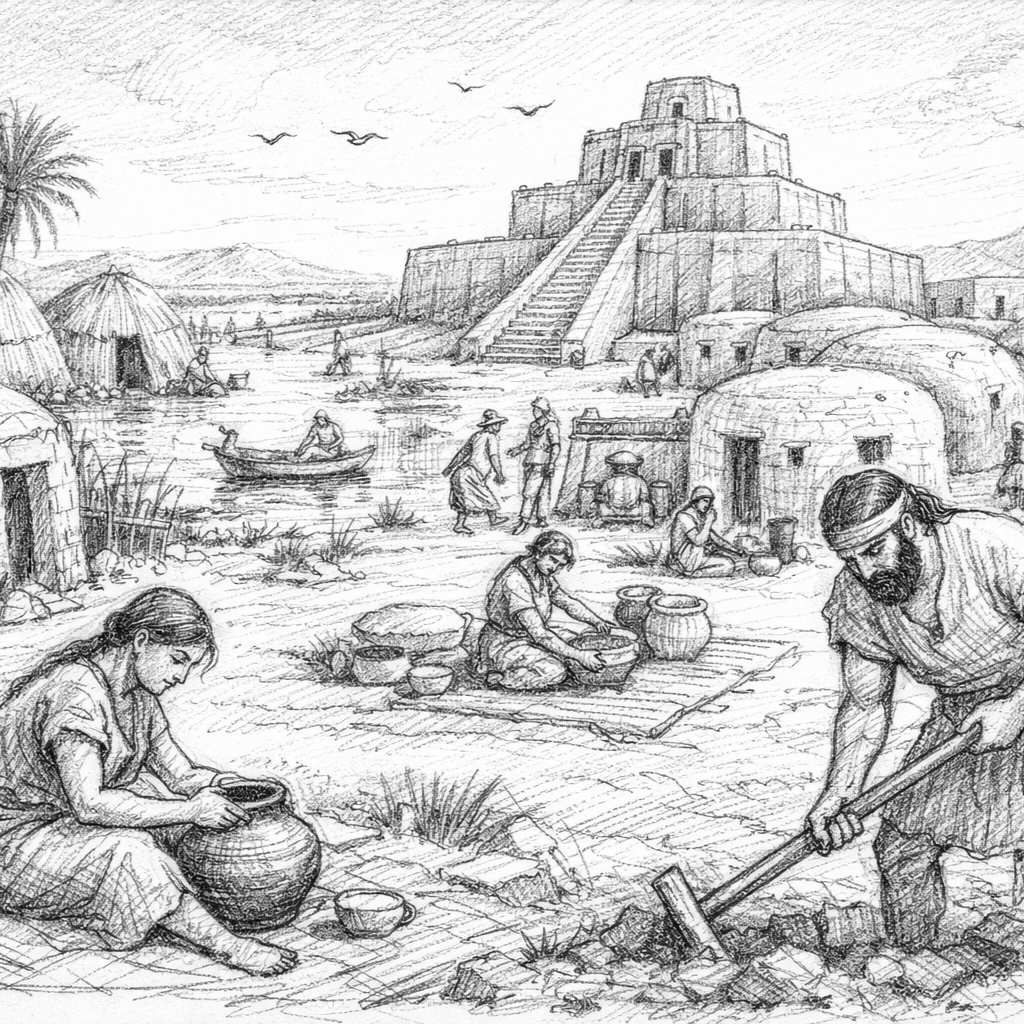



In today's Iraq, about 2,600 years ago, the city of Babylon woke up every March-April with a different smell. During the month of Nisannu, the smoke of the cedar and the juniper filled the temples, the streets, the barges of the Euphrates and the extravamurous gardens. That was the sign of the Akitu, the most important celebration of the Mesopotamic calendar: twelve days in which the divine order was disarmed and built again piece by piece.
Today we know the Akitu thanks to clay tablets written in cuneiform, many of them copied in the last centuries before our age, when Babylon had already lost its political independence but its priests clung to tradition as an act of identity. This party could well be a total cosmic drama. And in that drama, the aromas built the invisible bridge between men and their gods.
The God who defeated the primordial sea
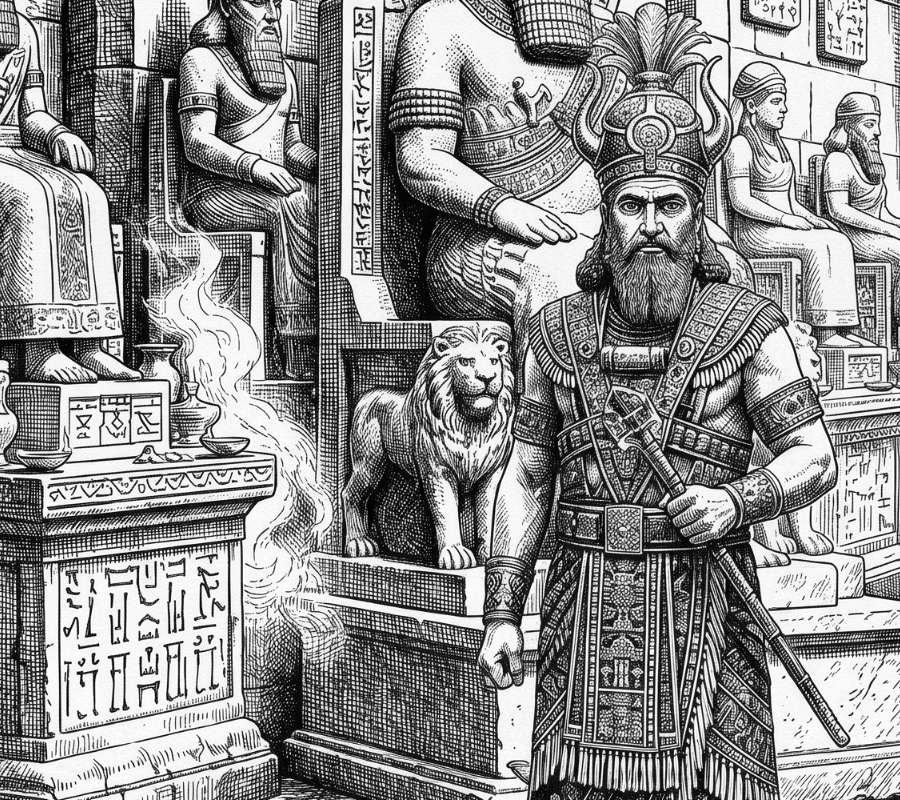
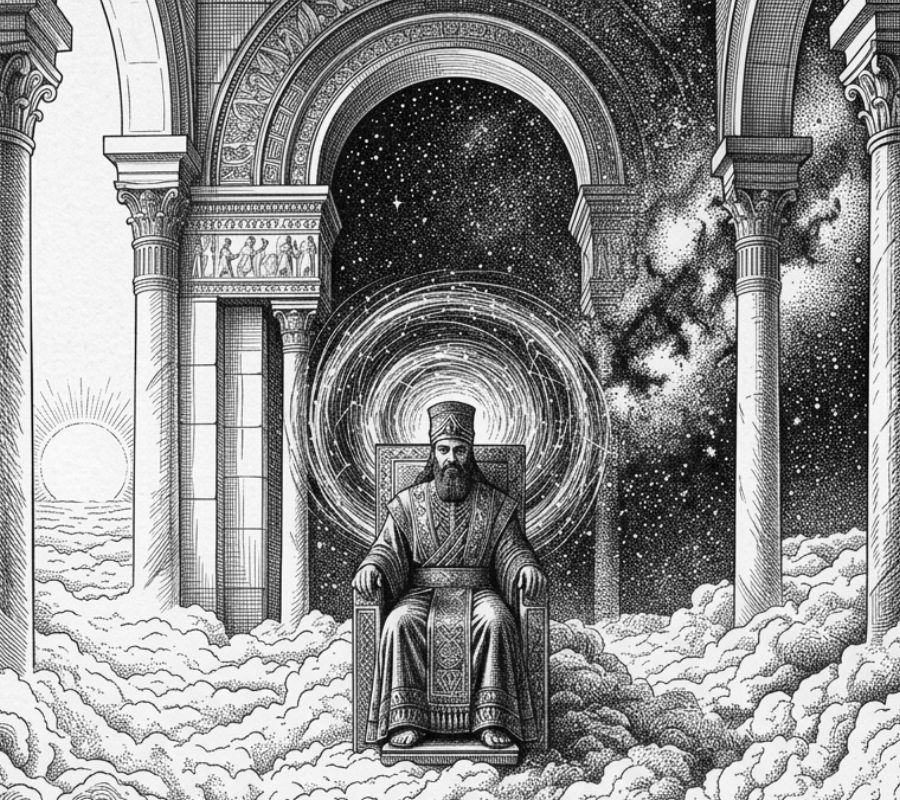
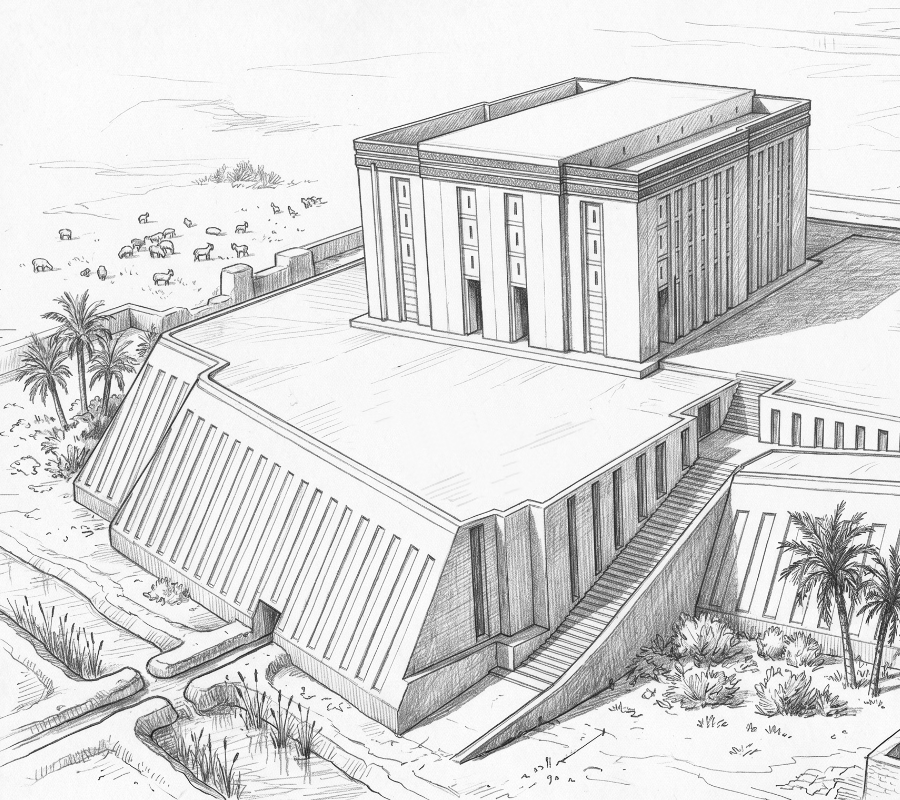
To understand the Akitu you must first meet its main protagonist: Marduk. The patron of Babylon, Marduk was a god of humble origins. —perhaps an ancient deity of storms— who ascended to the throne of the pantheon as his city became the capital of an empire. His temple, the Esagila, was the religious center of the known world, a complex of courtyards and sanctuaries where statues of solid gold were kept.
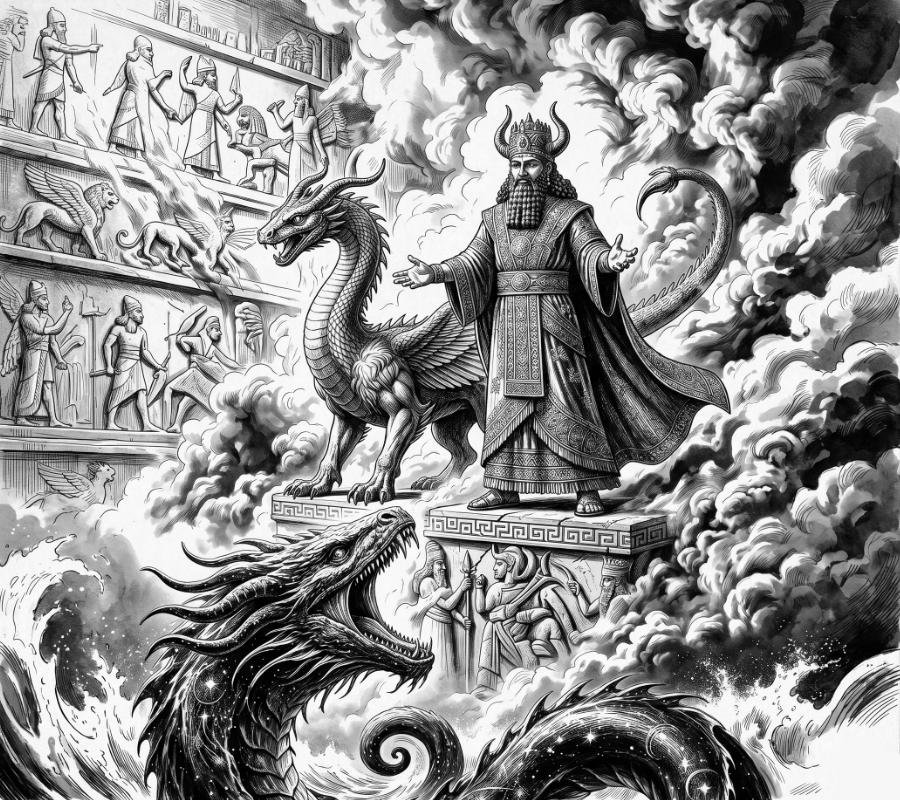
The theology that justified his power was narrated in the poem Enuma Elish ("When on top..."), a seven-tablet epopeia. According to this myth, at first only chaotic waters existed: the sweet Apsu and the salt Tiamat. After a war between divine generations, Marduk faced the monstrous Tiamat —an ocean dragon mother of all gods—He caught her in a net, split her in two, and with her halves formed heaven and earth. Then, with the blood of Tiamat's husband, he created humanity to work in place of the gods.
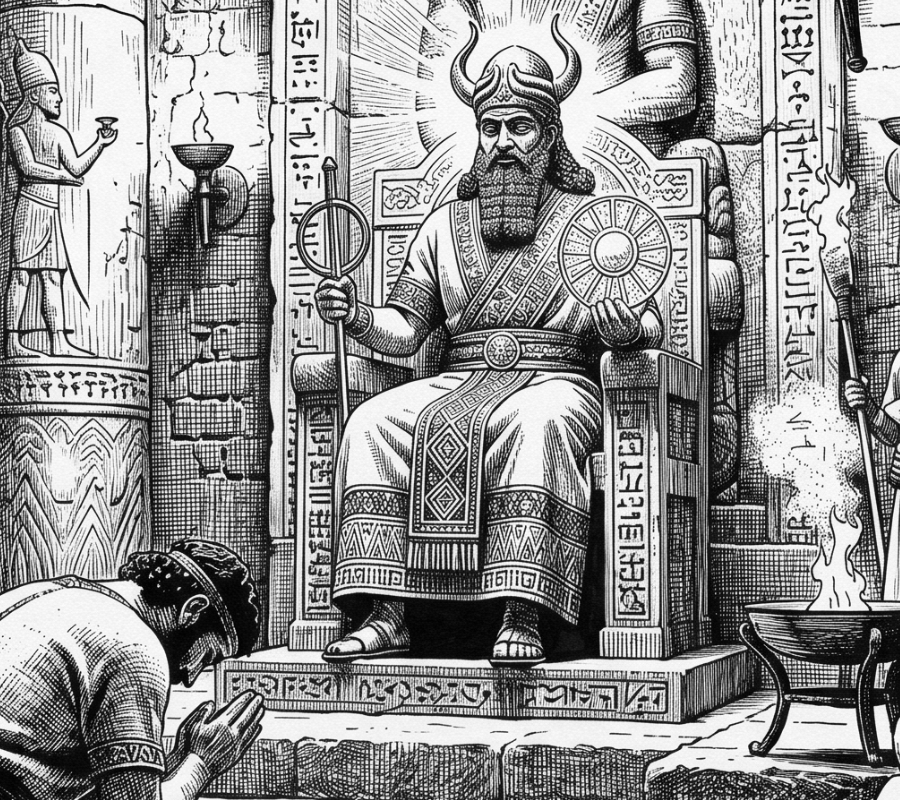
The entire Akitu festival was an active recreation of that victory. Therefore, on the fourth day of the celebration, the high priest recited Enuma Elish complete to the statue of Marduk. The reading personified, in each word intended to reweave the cosmic order and to drive away into chaos.
Twelve days between lament, humiliation and perfume
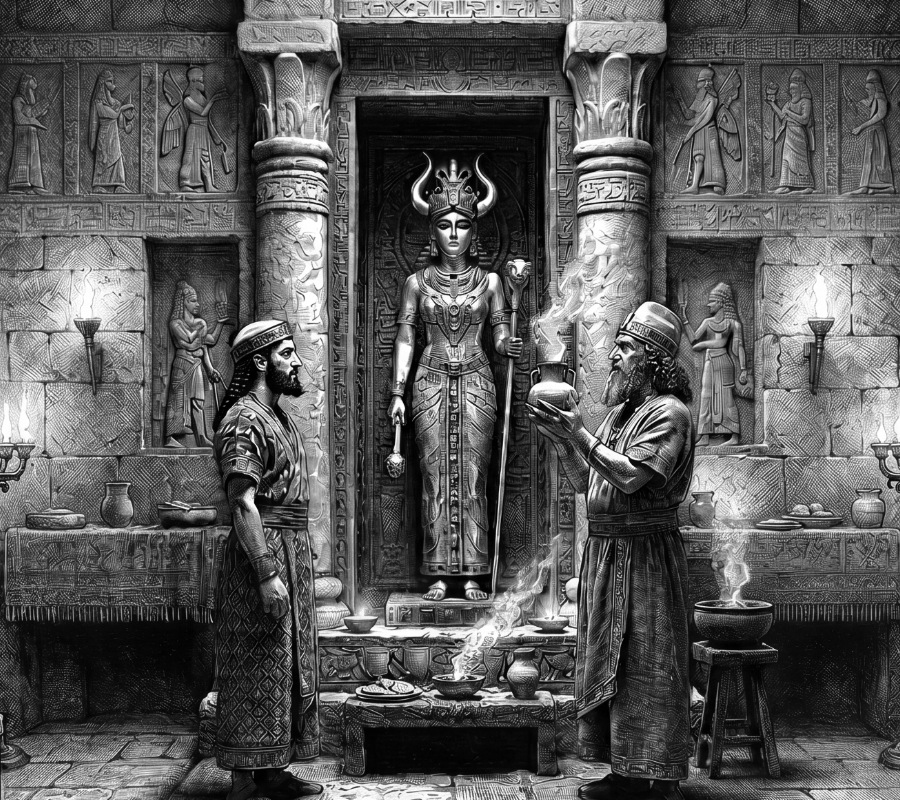
The Akitu calendar was set. The first three days had a somber tone: fasting, lamentations and a real fear that the new year would not be born. In the temple, only the šešgallu (the high priest) entered the sanctasanctomum before dawn and sang prayers of supplication. There was no incense yet, no joyful ointment; it was a time of olfactory emptiness, dust and absence.
The decisive day: the king's humiliation
The fifth day changed the atmosphere. It was the most extreme ritual. Before dawn, the king of Babylon was led before the statue of Marduk. There, the priest took away the scepter, the ring, the mace and the crown. Then he hit him on the cheek and forced him to kneel. The monarch was then to recite a "negative confession": "I have not sinned, Lord of the Lands. I didn't destroy Babylon. I did not humiliate your citizens..." Only after hearing the absolution of the God (through the priest) did the king recover his insignia. And then he got a second hit. If tears sprout, it was a good sign: Marduk was happy. If not, the year would be bad.
At the same time, outside of the temple, an exorcist was beating a sheep. His body was thrown into the Euphrates and his head, taken into the desert. It was the Scapegoat Babylonic: evil, sin and chaos were physically expelled from the community.
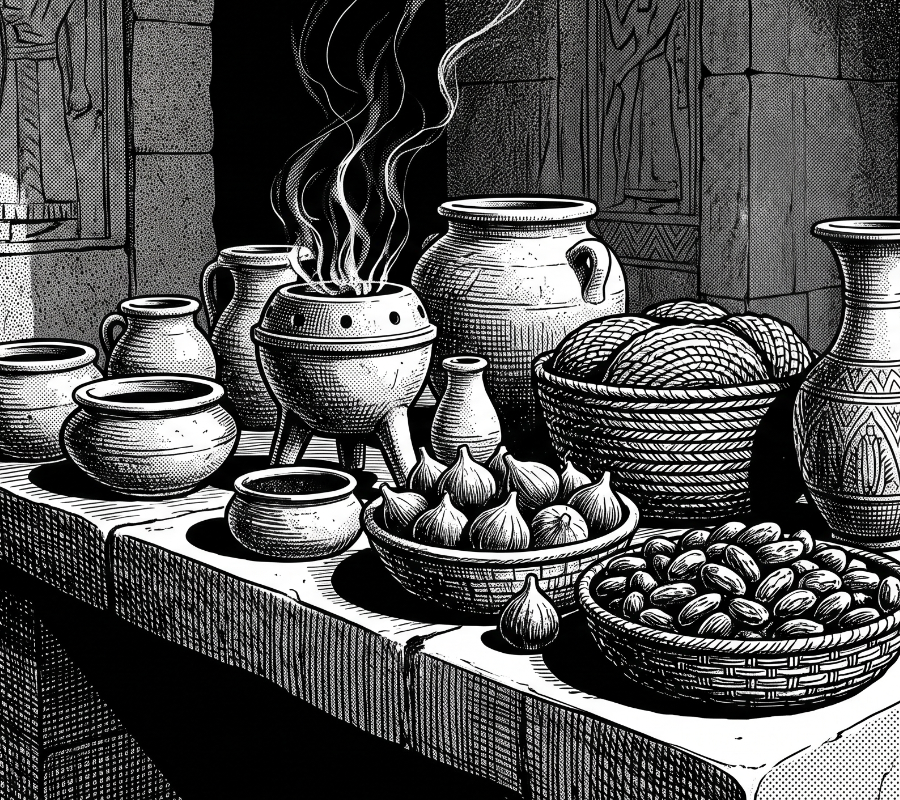
But it wasn't all ritual violence. The purification of the temple included fumigations with cedar incense (erēnu), juniper (šurmēnu) and cypress (burāšu). As instructed by the ritual Mīs Pī ("washing of the mouth"), the divine statues were anointed with aromatic oils extracted from these coniferous, whose resins came from the mountains of Lebanon and northern Syria. The smell of sacred wood impregnated the Sagila and mixed with the blood of sacrifices, it was surely a powerful and terrifying fragrance.
The great procession: when the gods go out into the street
The public climax arrived on days 8, 9 and 10. The statues of all the gods of the empire —Nabu from Borsippa, Nippur, Uruk, Cutha...— were transported in barges by the Euphrates to Babylon. The most expected god was Nabuson of Marduk, pattern of writing and wisdom. His statue "took the hand of Bel" (Marduk) and headed the comitiva.
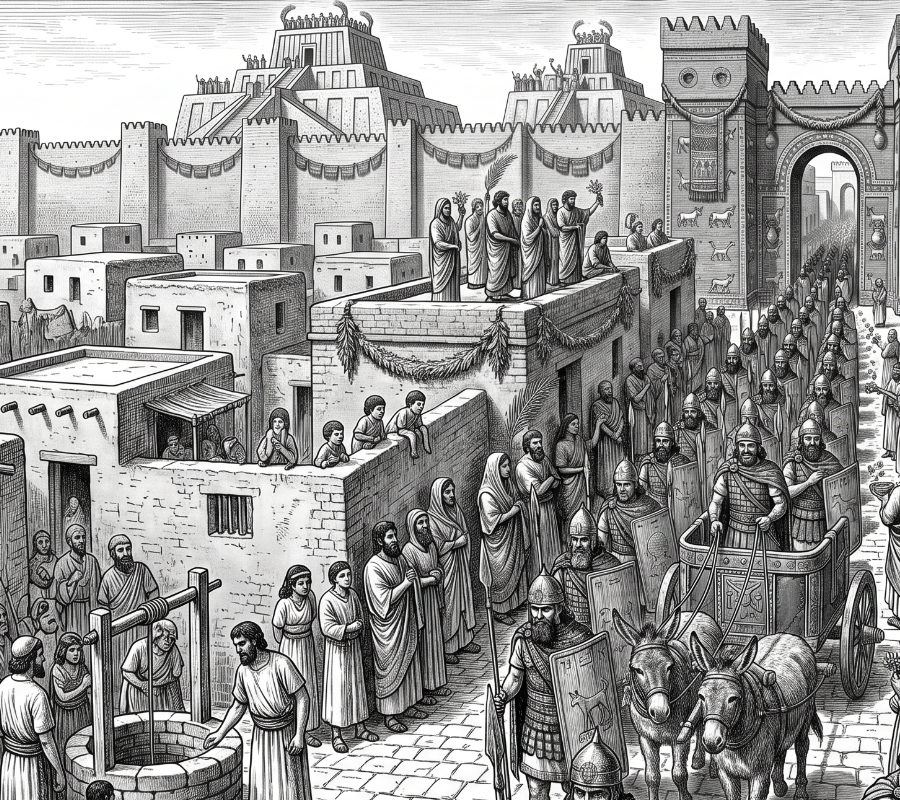
La Via Procesional (Aibur-šabû) was a road of more than a kilometre flanked by brick walls enamelled in cobalt blue, decorated with lions (symbol of Ishtar), bulls and dragons (ušššu). On that pavement of red and yellow stones the courtship advanced: musicians with harps and drums, carriers of portable incissaries (nignakku) and, in the end, you walk them with divine images.
The aroma was part of the show. The ritual texts order to burn "cedar and juniper on the burner" as the statues pass. In addition, perfumed oils were spilled on the ground; the Babylonian poet describes how "fragrant cedar oil is sprayed on the road." The crowd, which could not normally see the gods locked in their sanctuaries, saw them and olia Now: a cloud of resinous smoke that preceded the gods as an announcement of their supernatural presence.
The procession ended outside the walls, in a special building called Bit Akitu ("festival house"). Surrounded by carefully planted gardens, this sanctuary contained a large tree yard and a banquet room. There was symbolically the battle of Marduk against Tiamat. —perhaps with a "cultual struggle" of actors—And then there was a cosmic banquet in which all the gods participated.
On the night of the tenth day, Marduk returned to the Esagila to join his wife. Sarpanitu in Let's go.Holy marriage. The poetic texts associated with this rite are explicit as to the aromatic preparations: "The people clean the rods with fragrant cedar oil / fix the rods for the bed. / Juniper resin is burned, washing rites are performed, / and incense of sweet fragrance is piled." Once again, coniferous resins and aromatic herbs (myrrh, chalamus, cipero) turned the divine alcoba into an olfactory explosion that guaranteed the fertility of the earth for the following year.
The next day, day 11, deities met again in the "House of Destinations" within the Esagila. There, Nabu, the God, wrote, inscribed on the Table of Destinations the decrees for the coming year. The flocks of the kings, the crops, the river floods and the health of the population were fixed forever. The order had triumphed. On the 12th, each statue returned proctively to its city of origin, and Babylon returned to daily life... until the next Nisannu.
A perfume called legitimacy
The Akitu was the most effective mechanism of political legitimacy in the former Middle East. By voluntarily submitting to humiliation and then receiving its attributes again, the king demonstrated that he governed with divine consent. By "taking the hand of Bel" in the procession, he became the guide of the cosmos for the next twelve months.
When a monarch was missing the party, the chronicles scored it with alarm. King Nabonido (556-539 BC) was absent from Babylon for ten years, residing in the oasis of Tema. The chronicles say, "The god Bel did not go out in procession." The result was popular discontent and, finally, the fall of his reign before Cyrus the Great.
Today, the remains of the Way of Procedure and the bricks of the Gate of Ishtar can be seen in the Museum of Pergamo in Berlin. But the smells are missing. For Babylonians, the smoke of the cedar, the juniper and the myrrh may have been the accompaniment of the festival or perhaps the very breath of the gods. Every spring, for twelve days, that breath filled temples and streets: collective aromas that made the divine tangible at the summit of Akitu.