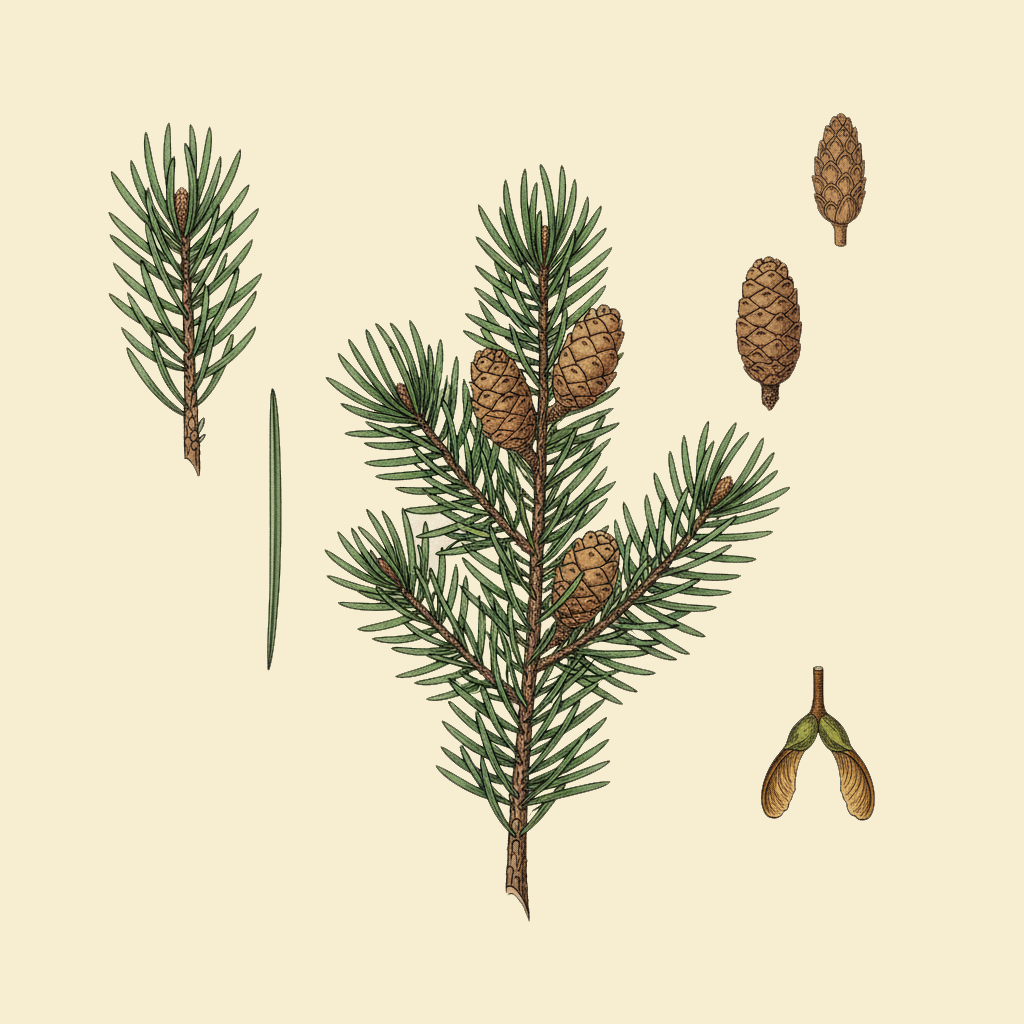

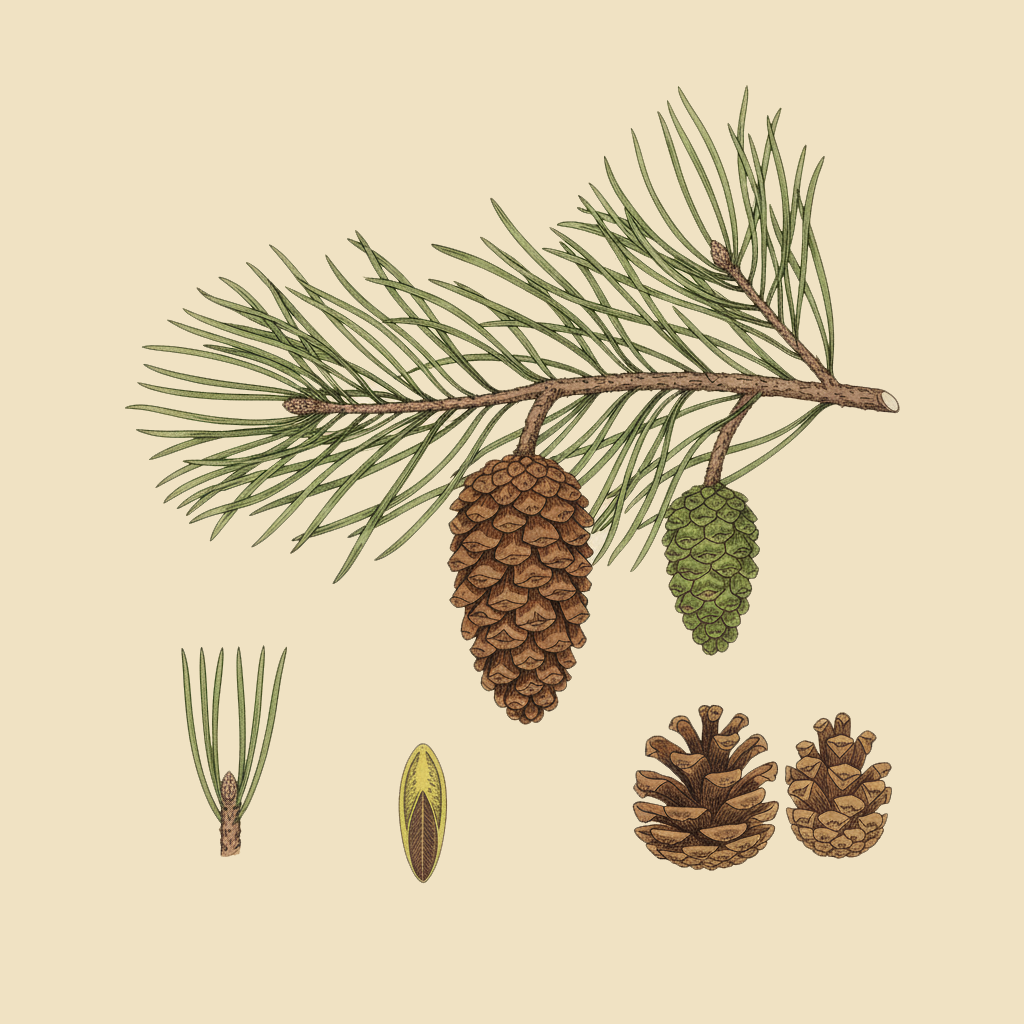
The Pino is very old, with a fossil record dating from the Jurassic (about 150 million years ago). It originated in Laurasia and diversified enormously, becoming a dominant component of the boreal and mountainous bosses of the northern hemisphere.
-
Distribution and Biomas: Pines are mainly native to the northern hemisphere, occupying a huge variety of biomas: from the taiga boreal forests (e.g., Pinus syllvestris), to tropical mountain forests (e.g., Pinus oocarpa), Mediterranean forests (e.g., Pinus halepensis) and coastal temperate forests (e.g., Pinus pinaster).
-
Major Producers (for wood and pulp): The main timber producers include the United States, Russia, China, Canada and the Nordic countries (Sweden, Finland).
Fast source: Global Biodiversity Information Facility
Species & Culture
Use: Food (pineapples), raw material (wood, resin).
Evidence: In the El Salt field, Spain, pine was found among the wood coal waste in households approximately 55,000 years ago. Pine was the most common woody species used as fuel in these fires, along with juniper and, to a lesser extent, perennial oak. Pine resin or coniferous resin was used by neanderthals in the manufacture of tool adhesives. Resin residues were found in small lascas of the caves of Fossellone and Sant'Agostino in Lazio, Italy, dating from 55,000 to 45,000 years ago. In the case of Sant'Agostino, the pine resin was mixed with bee wax, which demonstrates a more complex technology. Pine resin is less shock resistant than birch tar, but the addition of wax made it almost as good. Coniferous resin, possibly heated, was also detected in the dental calculation of at least one individual in El Sidron, suggesting contact or consumption. The Doñana National Park, in the south-west of Spain, is an ecosystem that resembles the landscape that the Neanderthals could have seen in Gibraltar 30,000 years ago, and mention is made of the presence of pine piñonero (stone pine), as well as alcornoques and oaks. This indicates the existence of pine trees in temperate Mediterranean habitats inhabited by hominines.
Fast source: Gibraltar National Museum
Use: Environmental, raw material (wood, resin).
Denisovans: The descriptions of the landscape around the Denisova Cave mention a river serpenting through meadows and pine forests. Like birch, pine was a component of temperate forests around the Denisova Cave during warm periods.
Fast source: Gibraltar National Museum
Steam distillation: Main method for essential pine oil
- Material: Pinus sylvestris needles and branches
- Performance: 0.13-0.48 mL / 100g in cones, 0.611% in fresh needles
- Result: oil with canforated, resinous and balsamic notes
Extraction with CO) supercritical: For high quality extracts
- Process: CO
- Result: oil that preserves the full aromatic spectrum
Dry distillation: From dry needles
- Traditional method
- Variable performance according to the Pinus species
Main chemical composition
The essential oils of Pinus contain:
- α-Pinene and β-pinene: resinous freshness and medicinal nuances
- Limonene: bright and tonic citrus note
- Camphene: dry wood with sharp nuances
- Borneol: terpenic alcohol
- Miscellaneous esters: contribute to aromatic complexity.
Fast sources: NC State University
The essential oils of Pinus follow the IFRA standard regulations. Species such as Pinus Mogo and Pinus Pumila are included in the expanded list of fragrant allergens that require individual labelling when they exceed 0.001% in unrinsed products and 0.01% in rinsed products.
Pine oils comply with Regulation (EC) No 1223 / 2009. According to the new Regulation (EU) 2023 / 1545, some Pinus species require specific labelling as fragrant allergens.
Space under construction by collaborators.
The section Technical information and has a general arguative character. It is presented for information purposes to promote responsible knowledge. Because of the risks associated with the incorrect use of botanical extracts, aromatic molecules and the increase in unregulated practices in the production of aromatic products, Myrodia Khartes has chosen not to disclose complete extraction methodologies or specific concentrations that may compromise public safety. Health, ethics and scientific integrity guide our decision to limit the exposure of certain technical data.
- European Commission. (2009). Regulation (EC) No 1223 / 2009 on Cosmetic Products. Official Journal of the European Union, L 342, 59-209.
-
IFRA (International Fragrance Association). (2023). IFRA Standards Library: 52nd Amendment.
- The Good Scens Company. (2025). Fragrance Raw Materials Database