
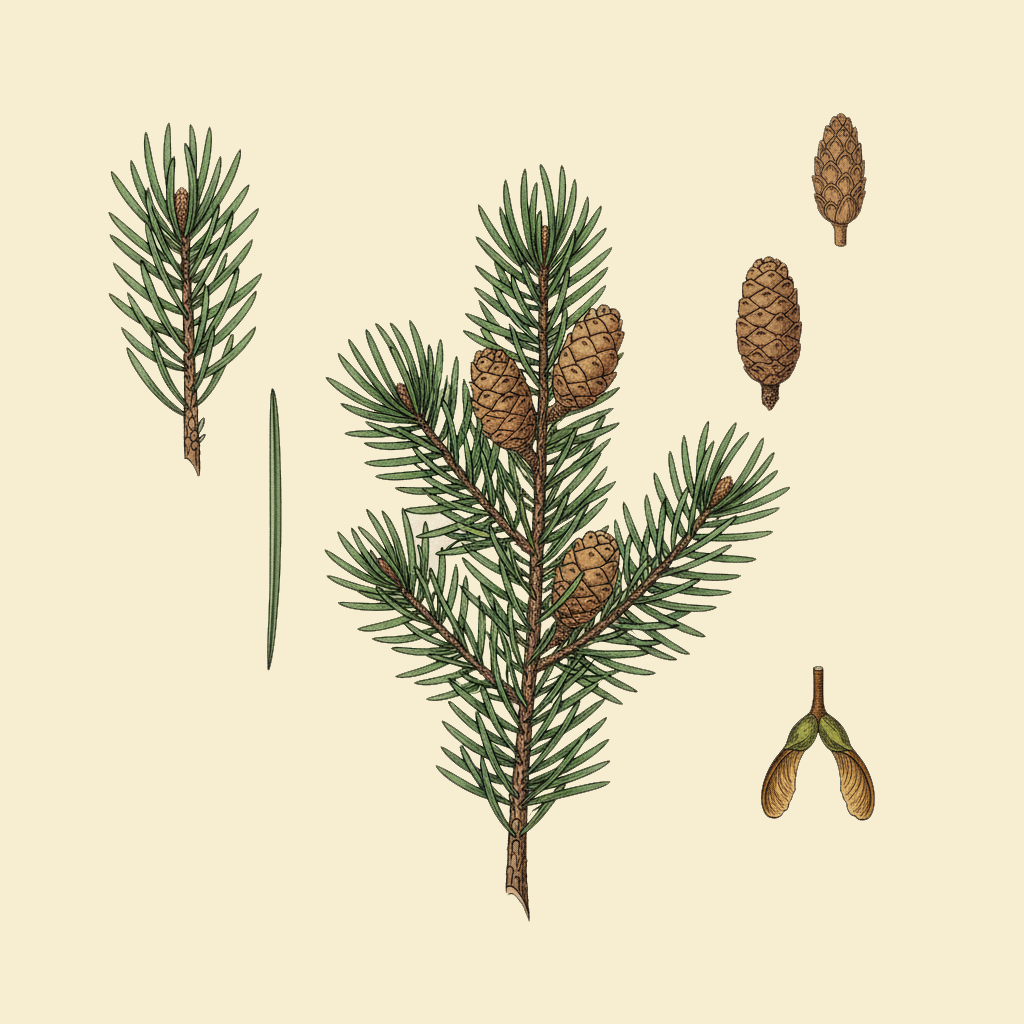
The Alerce It is a native and endemic coniferous of the mountains of Central Europe, particularly the Alps, Carpathos and Pyrenees. It is a remarkable species because it is of the few coniferous of a caduca leaf, losing its needles in winter.
-
Distribution and Biomas: It is developed in the forest biome of mountain coniferous (subalpine and alpine floors), typically between 1000 and 2500 meters of altitude. It forms pure or mixed forests with other coniferous forests such as pineas and pines.
-
Major Producers: Its wood, very sturdy to rot, is valuable for outdoor construction and banneries. The main producers are countries in their natural distribution area: Austria, Switzerland, Germany, France, Italy and Slovenia. It is also planted as a forest species in other regions.
Fast source: Royal Botanic Gardens Kew
Species & Culture
Use: Environment (forests), raw material (wood).
Evidence: Neandertal of interglacial populations has been indicated They walked through golden alerts in the fall, which suggests that this species of tree was part of its tree environment and its daily life.. Neanderthals probably had a detailed knowledge of trees ("tree lore") as extensive as their knowledge of the stone.
Fast source: University College Cork
The essential warning needle oil is obtained by steam distillation of needles and branches. It also occurs. Alerce oleoresin by natural exudation of the trunk, with essential oil performance of 7,8-19,0%.
Main Aromatic Molecules
- α-pinene (80-56-8): 36,7-50% - Dominant component
- Bornyl acetate (5655-61-8): 18-35%
- β-pinene (127-91-3): 11,1%
- Caffen (79-92-5): 10,9%
- Delta-3-carine (13466-78-9): Variable
- Limonene (5989-27-5): 2,5%
- α-terpineol (98-55-5): >0,9%
Use in Perfume
It is used for:
- Resinous and balsamic notes warm
- Fresh wood cords
- Forest-type fragrances
- Base for coniferous compositions
- Arotherapy products
Fast sources: Luminescent
IFRA 51: No specific restrictions. Natural terpenic components are generally allowed but a more detailed search of each component and not general is needed.
EU Regulation 1223 / 2009: Classified as a dangerous substance with:
- H226: flammable liquid and steam
- H304: May be fatal in case of ingestion
- H315: Causes skin irritation
- H317: May cause skin allergic reactions
Space under construction by collaborators.
The section Technical information and has a general arguative character. It is presented for information purposes to promote responsible knowledge. Because of the risks associated with the incorrect use of botanical extracts, aromatic molecules and the increase in unregulated practices in the production of aromatic products, Myrodia Khartes has chosen not to disclose complete extraction methodologies or specific concentrations that may compromise public safety. Health, ethics and scientific integrity guide our decision to limit the exposure of certain technical data.
- European Commission. (2009). Regulation (EC) No 1223 / 2009 on Cosmetic Products. Official Journal of the European Union, L 342, 59-209.
-
IFRA (International Fragrance Association). (2023). IFRA Standards Library: 52nd Amendment.
- The Good Scens Company. (2025). Fragrance Raw Materials Database