


Political philosophy and classical sociology have privileged discursive and rational as the foundations of social pacts. It seems that discourse, creates and is a column in culture. However, if we deepen with a historical-anthropological look, we will find that certain collective sensory experiences, especially olfactory ones, operated as pre-cognitive mechanisms of synchronization and cohesion. In ritualized contexts, the aromas were not mere symbolic accompaniments, but mechanisms of the social that generated a shared affective base, necessary for the internalization of abstract concepts such as order (Ma'at) or the sacred.
Egypt Faraonic case: The ritual burning of kyphi at sunset in ancient Egypt transcends his religious function. Egyptian studies (e.g. Lise Manniche's work on Egyptian perfumes) indicate that its use was strictly regulated by the temple and linked to astronomy. The aromatic smoke, by impregnating public and private space with a predictable periodicity, acted as an olfactory timer. This sensory rhythm not only marked the time, but materialized the concept of Ma'at (cosmic order and justice). It was a universal inhalation (the least in that world), coming from Pharaoh to the peasant, was a unifying body practice. As the anthropologist Constance Classen points out, the senses are culturally organized in "sensory cosmologies." In Egypt, aroma was a key sense for perceiving divinity and order.
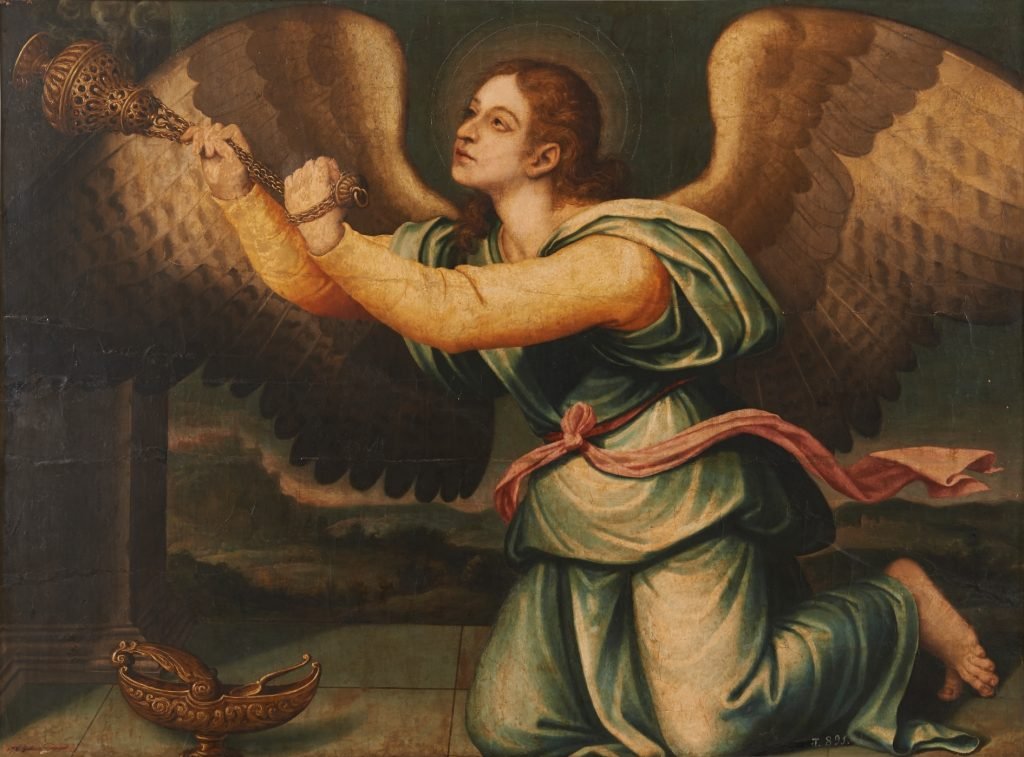
Mesoamerica case: The bishop in Mesoamerica not only "summoned the gods"; his visible and penetrating smoke physically demarcated a common ritual space. Archaeological studies of structures such as the Major Temple in Tenochtitlan show ventilation systems and spaces for mass burners. Smoke did not discriminate by status, but its unifying effect occurred within an already established hierarchy. The sensory experience was massive, but its interpretation was shaped by the social position (the priest saw the ritual, the common felt it). Here, Victor Turner's "communite" theory is useful: ritual, through overwhelming sensory stimuli, can temporarily create an undifferentiated sense of unity that, paradoxically, strengthens the social structure by temporarily dissolving its tensions.
The collectivizing power of these odors lies in its inescapable character within a given space. Unlike an image or a speech that can be ignored or criticized, a saturated olfactory atmosphere is unintentionally inhaled. This triggers a synchronized physiological response (changes in breathing, limbic activation) that precedes cognitive interpretation. As the philosopher Gernot Böhme argues in his theory of atmospheres, these are "realities between the subject and the object" that change the affective tone of a space and, therefore, the disposition of the bodies in it. The smell of the bishop or incense did not "explain" the order as it was, but if it created the somatic conditions to feel it.